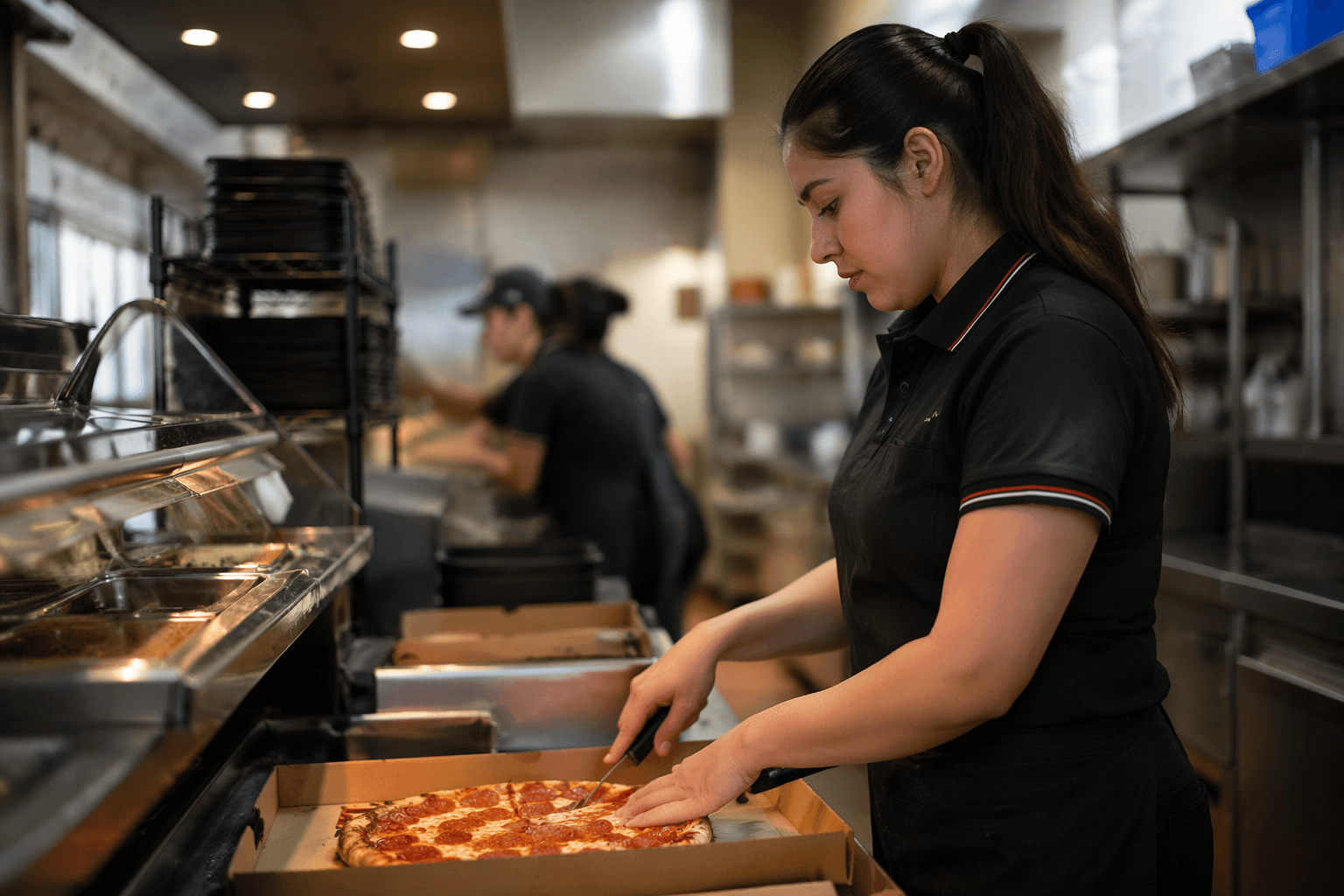
FDA study gives Pizza Hut crews practical steps to prevent allergen cross-contact
A quick wipe is not enough in a Pizza Hut rush. The FDA says full cleaning, better training, and the right tools can stop a kitchen mistake from turning into an emergency.
The real risk in a pizza rush
At a Pizza Hut make line, the allergy problem is not theoretical. Cheese, sauce, dough, meats, and a long list of custom toppings all move through the same kitchen flow, which is exactly where cross-contact happens when the room gets busy and people start reaching for speed instead of procedure. The stakes are high: allergic reactions to food are the most common cause of anaphylaxis in the United States, and about 33 million people in the country have at least one food allergy.
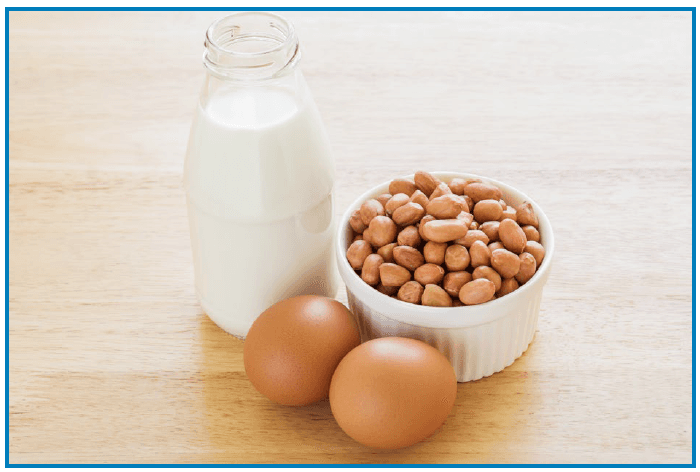
That is why an allergy note on an order is not a favor for the guest or a nuisance for the crew. It is a request for a process that can prevent a medical emergency. Pizza Hut says it prepares and serves products containing milk, eggs, peanuts, tree nuts, wheat, soy, sesame, or other allergens, and it also says those products are made on shared equipment and in the same kitchen, which means cross-contact cannot be ruled out by wishful thinking.
What the FDA found about cleaning
The most useful part of the FDA’s work is that it gets specific about what actually removes allergens from retail and food service surfaces. In its study of wiping and cleaning methods, the agency found that full cleaning using the wash-rinse-sanitize-air-dry method recommended in the Food Code was effective at removing allergens and minimizing transfer. In plain language, a real clean works better than the kind of half-step a crew might try when the order screen is backing up.
The study also showed that the details matter. Pre-scraping food off a surface before cleaning improved results, which matters on a pizza line where sauce smears, cheese bits, and topping crumbs can cling to pans, boards, tools, and counters. Wet cloths and alcohol or quaternary ammonium wipes performed better than dry wipes, and allergens were harder to remove from textured plastic than from stainless steel or maple wood.
That finding should change how crews think about a “quick wipe.” A dry towel may make a counter look clean, but the FDA’s work suggests that looking clean is not the same as being safe. If a surface holds on to residue, the next pizza, peel, cutter, or glove can carry allergen particles into the next order.
Where Pizza Hut crews can cut risk in the real world
Pizza Hut’s kitchen flow is built around repetition and speed, which is exactly why allergy safety has to be a system. The FDA’s broader allergen-control guidance emphasizes separation by time and space between allergen-containing and non-allergen-containing foods, which means the safest move is to keep risky items away from other prep as much as possible and to clean deliberately when that is not feasible.
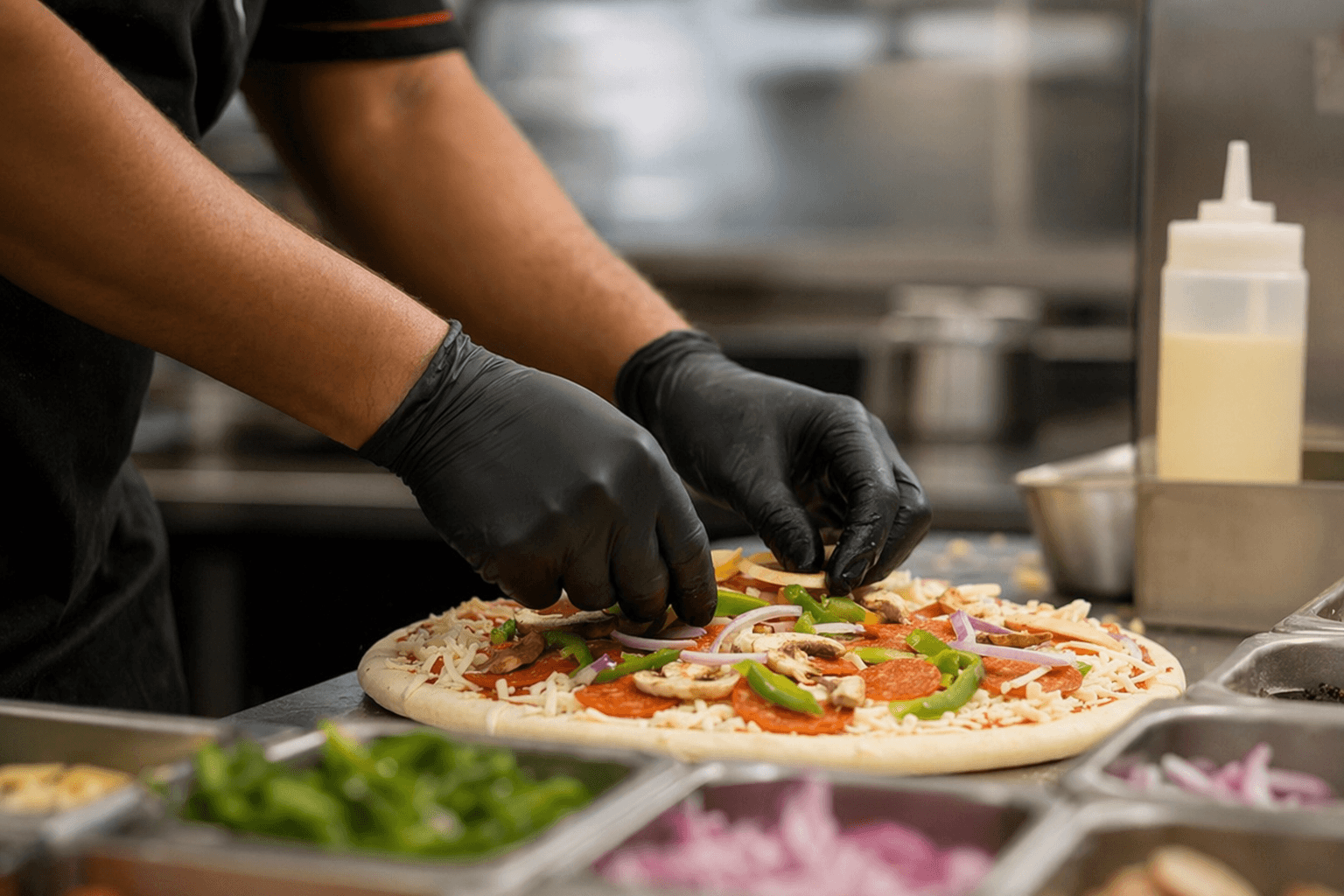
That translates into a few practical habits on the floor:
- Remove visible food first. Pre-scrape before any wipe-down or sanitizing step, especially on shared prep surfaces.
- Use the right cleaning sequence. Wash, rinse, sanitize, then air-dry. Skipping any step creates a weak point.
- Treat dry wipes as a backup, not a solution. The FDA found wet cloths and alcohol or quaternary ammonium wipes worked better.
- Watch the surface itself. Textured plastic is harder to clean than stainless steel or maple wood, so managers should know which stations, bins, and tools need extra attention.
- Keep allergen and non-allergen prep separate when possible. Time separation and space separation are both part of reducing risk.
For kitchen crew, the lesson is blunt: a fast wipe can spread the problem instead of solving it. For managers, the harder job is building a line culture where the allergy order does not get rushed through by the fastest person on shift. If new staff do not know which toppings, utensils, and surfaces need special handling, the store is relying on luck.
Why the CDC says planning matters
The Centers for Disease Control and Prevention gives restaurants the same operational message from a different angle. It says restaurants should train staff on food allergies, use separate equipment and areas when feasible, keep ingredient lists or recipes available, and have a plan for serving customers with allergies. CDC research on restaurant practices found that staff knew more about food allergies when they worked in restaurants with a food-allergy plan, which is a strong argument for writing the plan down instead of leaving it in someone’s head.
That matters at Pizza Hut because the chain’s menu is built around customization. The more topping combinations a store can produce, the more chances there are for a topping spoon, glove, pan, or counter to become the weak link. An ingredient list or recipe is not bureaucracy in that setting; it is one of the few tools that lets a worker answer a guest accurately instead of guessing.
The Pizza Hut allergy notice makes the same point in corporate language, though the operational meaning is what matters most on the floor: shared equipment and a shared kitchen mean the team has to assume cross-contact is possible unless the process is controlled from start to finish.
What drivers and managers need to remember
Drivers are part of the allergy chain too, even though they are not working the make line. A correct order delivered promptly is still only part of the job if the kitchen missed the allergy instruction or if the bag handling on the way out creates confusion. For delivery staff, the practical habit is to treat allergy-specific orders as special all the way through handoff, not as just another pizza in the stack.
For managers, the real test is whether the plan survives a Friday night rush. That means newer staff know what to do, ingredient information is easy to find, and the store has enough discipline to stop and reset a station when an allergy order comes through. The FDA’s study suggests the safest kitchens are the ones that respect the boring steps, because those steps are what stop cross-contact from traveling from one surface to the next.
Food allergies affect millions of households, but the consequence in a pizza kitchen is immediate and local. One contaminated wipe, one rushed prep surface, one misread ingredient list can turn a routine delivery into an ambulance call. The crews that get this right are not just avoiding complaints. They are running the kind of kitchen where safety is built into the pace, not sacrificed to it.
This article was produced by Prism’s automated news system from verified source data, official records, and press releases, then run through automated quality and moderation checks before publishing. The system is built and supervised by the people who set the standards it runs under. Read our full AI policy.
Did this article answer your question?