Little Caesars growth puts pressure on Pizza Hut labor-light model
Little Caesars is growing by simplifying the job, and that puts Pizza Hut’s heavier, labor-sensitive store model under sharper pressure across the brand.
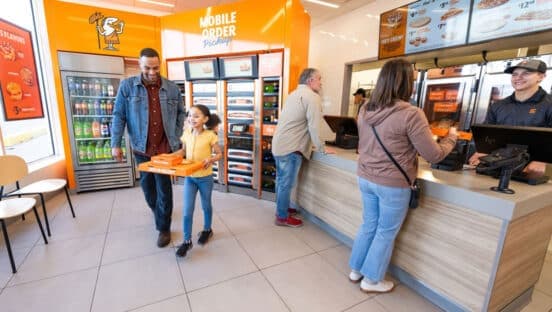
Little Caesars is proving that pizza growth can come from fewer moving parts. With 4,374 domestic locations at the end of 2025 and a net gain of 200 restaurants over the prior three years, the chain has built momentum around a simpler store design, lower buildout costs, and a self-service pickup model that cuts friction for both customers and staff. For Pizza Hut, that is more than a competitor update, it is a warning about where the market is heading.
Little Caesars is scaling simplicity
Little Caesars is not winning by adding complexity. Its Elev8 prototype is built to support off-premises sales while lowering construction costs and making stores easier to run, which matters in a business where labor is tight and every extra step slows the line. The chain also opened a self-service concept in Rockford, Illinois, then followed with a second in Dearborn, Michigan, giving it a real-world test case for a model built around advance orders, warming stations, and kiosk payment.
That matters to Pizza Hut managers because it shows what can happen when a brand strips away friction. A tighter menu, more pickup-friendly layout, and fewer front-counter demands can make staffing easier to manage and service more predictable. In a category where delivery rushes, walk-in pickup, and kitchen prep all collide in the same shift, simplicity is not just an operating preference. It is a competitive edge.
Pizza Hut has been trying to make the same pivot
Pizza Hut has been working toward this shift for years, but it is doing so from a much heavier starting point. The brand’s U.S. modernization effort began in 2019 with a $130 million transformation agenda aimed at moving away from older Red Roof dine-in stores and toward smaller delivery and carryout units. At the time, about 90% of Pizza Hut’s business already came from off-premises orders, which made the old footprint look increasingly mismatched with the way customers were actually buying pizza.
The numbers show how hard that transition has been. Pizza Hut had 7,559 U.S. locations in the second quarter of 2019, then 6,474 U.S. restaurants at the end of the first quarter of 2025. By that point, nearly half of the chain’s older traditional restaurants were dine-in units, while close to 90% of new builds were delivery and carryout stores. Pizza Hut also reported 19,786 total restaurants globally at the end of the first quarter of 2025, with 19,763 franchised and just 23 corporate stores in the U.S.
For store teams, that history explains a lot about the brand’s day-to-day tension. Many Pizza Hut locations still carry the burden of older layouts, older trade areas, and labor structures that were built for a different era. The modern version of the business wants speed and off-premises volume, but the legacy system still demands enough staffing to cover kitchen production, driver dispatch, and customer handoff without letting service slip.
The sales pressure is now impossible to ignore
The competitive backdrop has gotten harsher, not easier. Restaurant Business reported in February 2026 that Yum! Brands planned to close 250 U.S. Pizza Hut restaurants in the first half of 2026 as part of a broader “Hut Forward” push tied to marketing, technology, and franchise-agreement changes. The same report said Pizza Hut’s U.S. same-store sales fell 3% in the fourth quarter of 2025, marking the brand’s ninth straight decline and 10th straight quarter of flat or negative same-store sales.
That is a brutal run for any restaurant chain, and it lands directly on the people running shifts. Full-year U.S. system sales fell 7% in 2025, while full-year same-store sales fell 5%. Restaurant Business also said Pizza Hut’s unit volumes were the lowest among the four big pizza chains by about $200,000 per store per year, which leaves less room for waste, labor inefficiency, or slow turns on the make line.
For drivers, that kind of pressure usually shows up as tighter dispatching, more emphasis on speed, and more scrutiny on whether routes are worth the labor they consume. For kitchen crew, it means the margin for error shrinks when orders stack up. And for managers, it means every schedule decision is now part of a larger fight over whether the store can deliver value fast enough to keep customers from drifting to a rival, or to a third-party delivery app.
Franchise turbulence makes the labor question even sharper
Pizza Hut’s challenges are not just about sales. They are also about who runs the stores and how stable those operators are. In January 2025, Pizza Hut itself was among the buyers in an auction for 77 bankrupt restaurants previously run by EYM Group, which had operated 142 Pizza Hut locations before bankruptcy. By the time of the auction, 65 of those stores had already been shuttered.
That kind of turnover matters on the ground because franchise ownership shapes everything from staffing to local hiring to how aggressively a market is managed. When an operator is under stress, workers often feel it first through leaner schedules, more pressure to hit sales targets, and a sharper focus on keeping labor in line with traffic. It also explains why brand leadership keeps talking about support systems, stable franchisee economics, and flexible formats. Operators want stores that are easier to run because easier stores are usually cheaper stores, and cheaper stores are less likely to become a local crisis.
The broader history points in the same direction. In 2019, Pizza Hut said it would accelerate the transition of its U.S. asset base toward “truly modern delivery/carryout assets,” with as many as 500 older dine-in restaurants potentially closing as part of the shift. That was not a one-time cleanup. It was the start of a long reset, and the current round of closures shows how unfinished that work still is.
What workers should take from the Little Caesars comparison
Little Caesars’ rise is a reminder that labor-light pizza can still win when the value promise is clear and the store model stays simple. The brand is not just selling price, it is selling an operation that looks easier for the customer and easier for the crew. That combination is especially powerful in a market where delivery drivers are competing with gig platforms, tips can rise and fall with speed, and kitchen teams are expected to do more with fewer hands.
Pizza Hut still has scale, brand recognition, and a huge franchised footprint. But the chain’s future now depends on whether it can turn that scale into a lighter, faster operating model without losing the value customers expect. Little Caesars is showing the rest of the pizza business that simplicity is not a compromise. It may be the strategy that keeps the line moving.
This article was produced by Prism’s automated news system from verified source data, official records, and press releases, then run through automated quality and moderation checks before publishing. The system is built and supervised by the people who set the standards it runs under. Read our full AI policy.
Know something we missed? Have a correction or additional information?
Submit a Tip