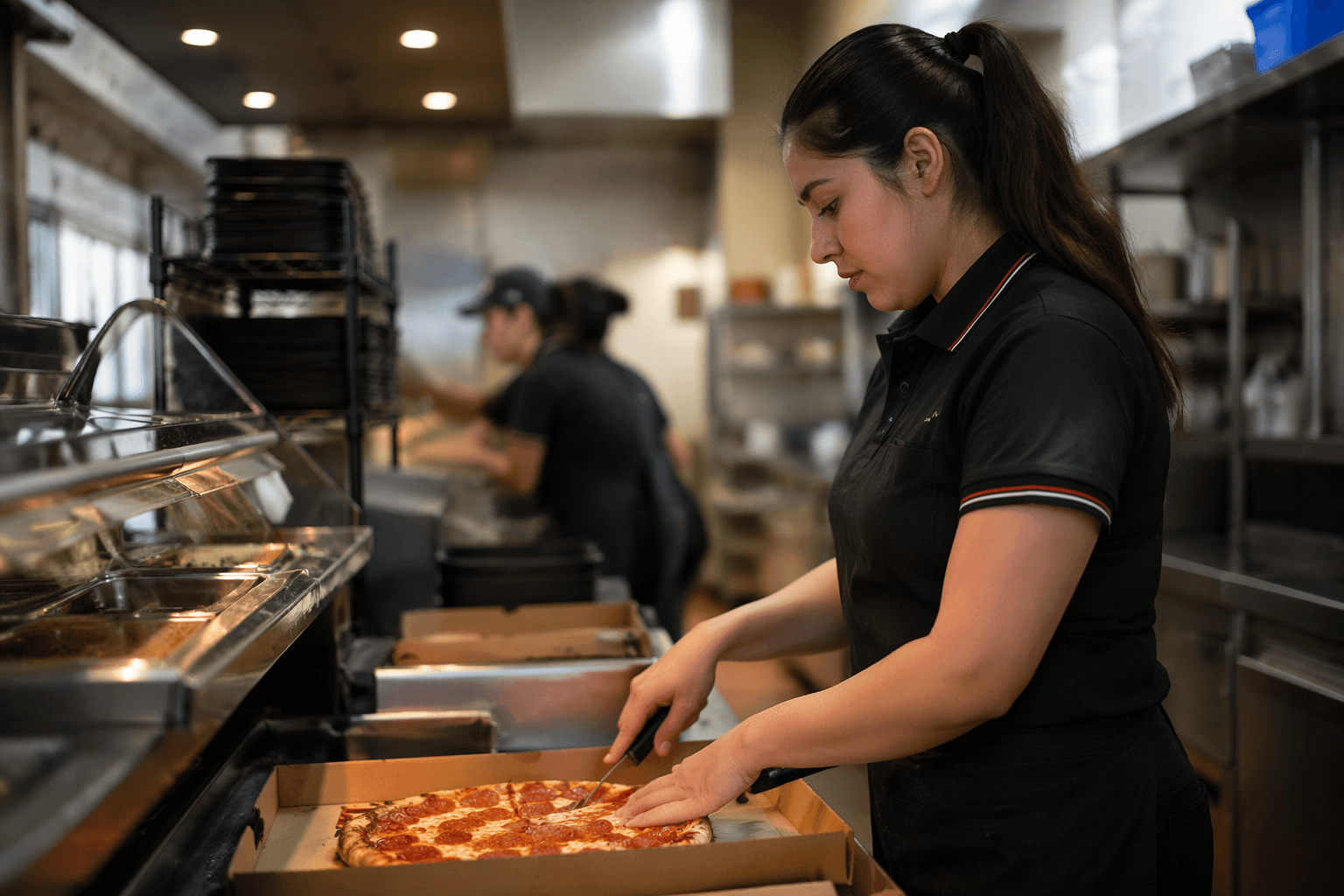
OSHA warns Pizza Hut workers on wet floors, cluttered walkways
Wet floors and cluttered walkways are still knocking Pizza Hut crews off schedule. OSHA says the fix is basic: dry floors, clear paths, better footwear, and faster cleanup.
The hazard that keeps taking workers off the floor
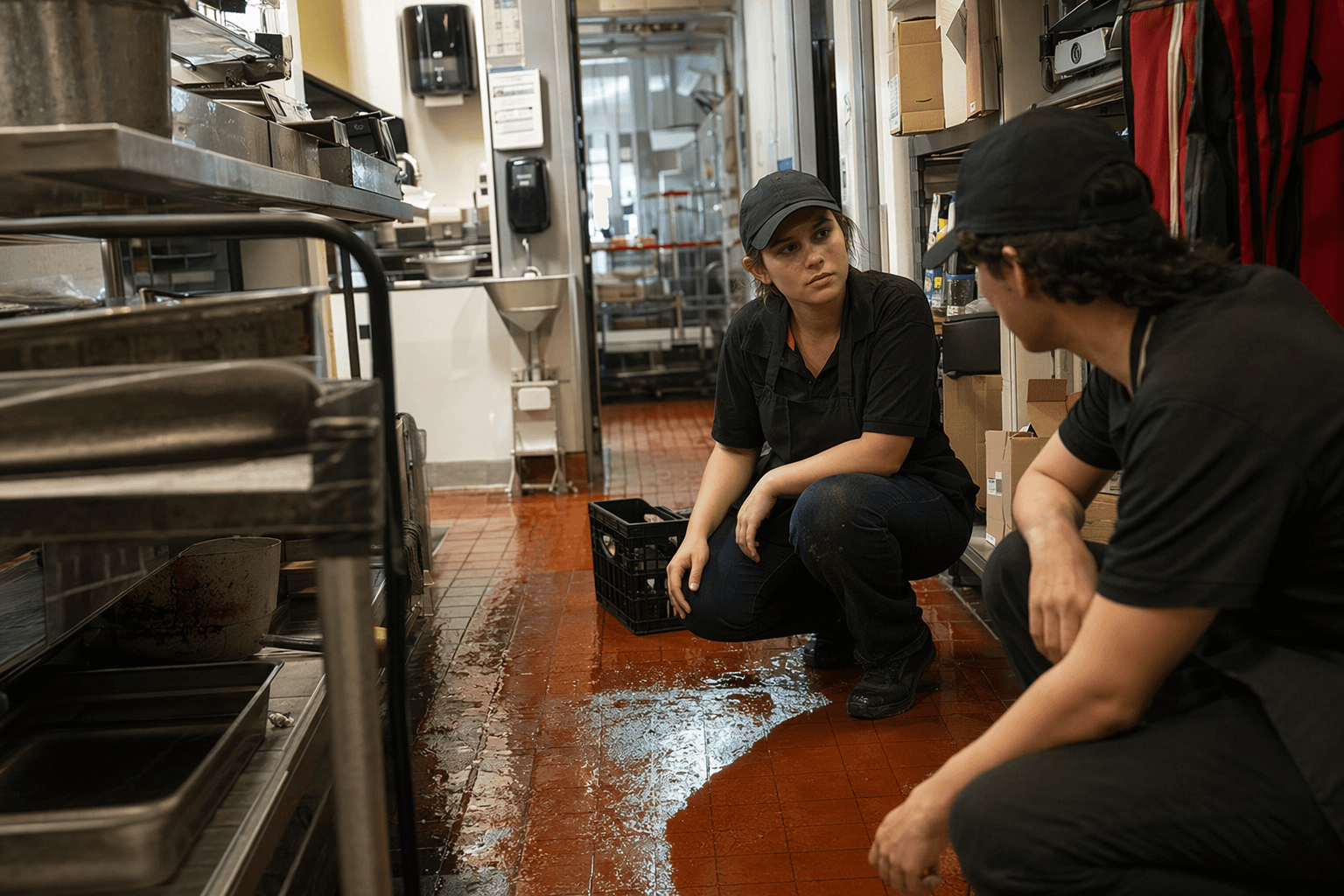
The most expensive safety failures at Pizza Hut are often the ones crews have learned to ignore. A wet patch by the make line, a box left in a hallway, a tight turn near the delivery entry, or a rushed mop job between lunch and dinner can turn a normal shift into lost work time, a workers’ comp claim, and a gap in the schedule.
OSHA’s message is blunt: wet kitchen floors, spills, and clutter can cause slips, trips, and falls, and floors should be kept clean and dry. In a Pizza Hut store, that warning lands everywhere at once. Drivers are moving in and out with bags. Kitchen crews are carrying trays, pans, and dishes. Managers are trying to push tickets through a lobby that can turn crowded fast. The risk is not abstract. It is part of the daily flow of the store.
Why Pizza Hut layouts make routine hazards worse
Restaurant floor injuries often happen because the path through the store is full of friction points. OSHA flags ice bins, crowded serving areas, blind corners, and single-door entries as places where falls become more likely, especially when people are moving quickly with food or dishes in hand. That is a familiar setup in Pizza Hut units, where the driver door, the prep line, the dish area, and the front counter can all collide during a rush.
The problem gets sharper when a store is understaffed or running behind. A driver stepping around a mop bucket, a cook carrying hot pans past a damp threshold, or a shift lead hurrying to clear a boxed-up staging area all face the same basic mistake: treating a temporary hazard like a minor inconvenience. In a delivery business where every minute matters for tips and completed runs, a fall can cost far more than the time it takes to wipe the floor.
What OSHA expects on the floor, not just on the wall
OSHA’s walking-working-surface standard says floors should be kept clean and dry. Its restaurant safety materials go further and spell out the controls that actually matter on a busy shift: warning signs around wet areas, clear aisles and passageways, non-slip mats, better lighting, repaired flooring, and appropriate footwear.
That is the checklist Pizza Hut managers should care about most. A wet-floor sign is useful only if it goes out immediately, not after someone already slips. Non-slip mats matter most where people turn, stop, and pivot, especially near sinks, the make line, and delivery handoff points. Better lighting matters in back corners, not just in the dining room. Repaired flooring matters because a loose tile or torn transition strip can turn a near-miss into a fall.
For workers, the footwear piece is not optional. Shoes that grip the floor help when a line gets slick from tracking water, sauce, ice melt, or frequent cleaning. That is especially important in stores that rely on a fast, repeated cleanup cycle to keep orders moving.
Young workers and the jobs most likely to put them on the floor
OSHA’s restaurant guidance also highlights young workers, who can slip or fall while carrying trays or bins, washing dishes, mopping floors, emptying trash, or cleaning outdoor areas. That matters at Pizza Hut because younger employees are often the ones doing the moving, the wiping, and the hauling that keeps a shift on track.
Those are exactly the jobs that create the danger if the store is not disciplined about housekeeping. A dishwasher carrying a full rack across a wet threshold, a newer team member hurrying a trash run through a side door, or a teen worker cleaning while the lunch rush still has traffic in the aisle can get hurt in seconds. The lesson is simple: the people doing the lowest-paid cleanup work are often the ones exposed to the highest slip risk.
What managers and crews can change today
The safest stores do not wait for a near-miss to become a policy. They build a routine that makes the floor the first thing checked, not the last.
- Wipe spills immediately, even if the next order is hot.
- Put out wet-floor signs before the area becomes a shortcut.
- Clear cords, boxes, and empty trays from walkways as part of the shift handoff.
- Keep supply areas from forcing workers to squeeze past one another with loads in hand.
- Use non-slip shoes and replace worn footwear before the tread is gone.
- Check lighting and floor repairs at the same time as prep and closing tasks.
- Slow the movement pattern during a rush if the floor is crowded or wet, rather than pushing harder through the hazard.
That last point matters more than it sounds. A store can be technically busy and still be safe if people are routed around the wet area and the cleanup happens before the next wave of traffic hits. In a franchise system, that usually comes down to local management habits. If the owner-operator and store manager treat housekeeping as part of labor control, not as a side task, fewer workers get hurt and fewer shifts get blown up by injuries.
Why the numbers make this a labor issue, not just a safety memo
The scale of the problem is still large. The U.S. Bureau of Labor Statistics says there were 479,480 private-industry nonfatal cases involving falls, slips, and trips in 2023-2024, and 844 fatal work injuries from falls, slips, and trips in 2024. The National Safety Council says falls accounted for 17% of workplace deaths in 2024.
Restaurants sit in the middle of that risk pattern. A CDC and National Institute for Occupational Safety and Health review says same-level falls make up the largest proportion of days-away-from-work cases in restaurants, about 26%. That is why simple housekeeping is not small-bore compliance work. It is one of the main ways a store keeps people on payroll instead of sending them home hurt.
OSHA enforcement is already looking at Pizza Hut stores
This is not just theory. OSHA maintains public injury, illness, and enforcement data, including establishment search tools and inspection summaries, and its inspection detail records include Pizza Hut locations. Those records reflect both referrals and complaints, which is a reminder that floor hazards can surface in different ways before they turn into serious injuries.
OSHA’s public establishment search shows inspection data through April 27, 2026. For workers and managers alike, that makes the point plain: if a store keeps letting wet floors and cluttered walkways slide, it is not just taking a safety risk. It is inviting the kind of preventable injury that can take a good crew member off the schedule and push the whole shift into damage control.
At Pizza Hut, the fix is not mysterious. Dry the floor, clear the path, light the corner, repair the damage, and slow the traffic before someone goes down.
This article was produced by Prism’s automated news system from verified source data, official records, and press releases, then run through automated quality and moderation checks before publishing. The system is built and supervised by the people who set the standards it runs under. Read our full AI policy.
Did this article answer your question?