Pizza chain cuts ties with a major delivery app over high fees — a signal for how aggregator economics could affect Pizza Hut workers
Pizza Inn's parent company quit Uber Eats after fees reached 30% per transaction. Here's what a similar move could mean for Pizza Hut drivers and crew.
Rave Restaurant Group CEO Brandon Solano pulled Pizza Inn and Pie Five off Uber Eats in March after the platform raised its Lite-tier commission from 15% to 20%, a change that pushed some operators as high as 30% per transaction. It was the most visible act of operator pushback against aggregator fee hikes in recent months, and the math behind Solano's exit is the same math Pizza Hut franchisees and their workers are running right now.
Uber Eats' changes, effective March 11, hit two of its three pricing tiers. The Plus tier held at 25% on standard orders but climbed to 30% on any order placed by an Uber One subscriber. Pickup commissions across all tiers rose from 6% to 7%. For Rave's brands, operating on the Lite tier, the 5-percentage-point jump in delivery commission was the breaking point.
Solano said the fee increases arrived without negotiation, leaving what he described as "minimal profits" on individual menu items. He canceled the partnership rather than raise customer-facing prices or push the cost onto franchisees, describing the exit as having "successfully negotiated the rates down to zero." He was direct about the trade-off: "We're going to lose some volume as a result of this. But at the end of the day, it's volume that we make almost no money on." Franchisees supported the decision. Rave simultaneously entered talks with DoorDash about an exclusive deal, though one had not been finalized as of early April.
Solano framed the decision as an industry-level challenge to platform pricing. "Do we really think technology is more valuable than food?" For a chain already running on thin margins, a 5-point commission increase converts a marginally profitable delivery order into a loss.
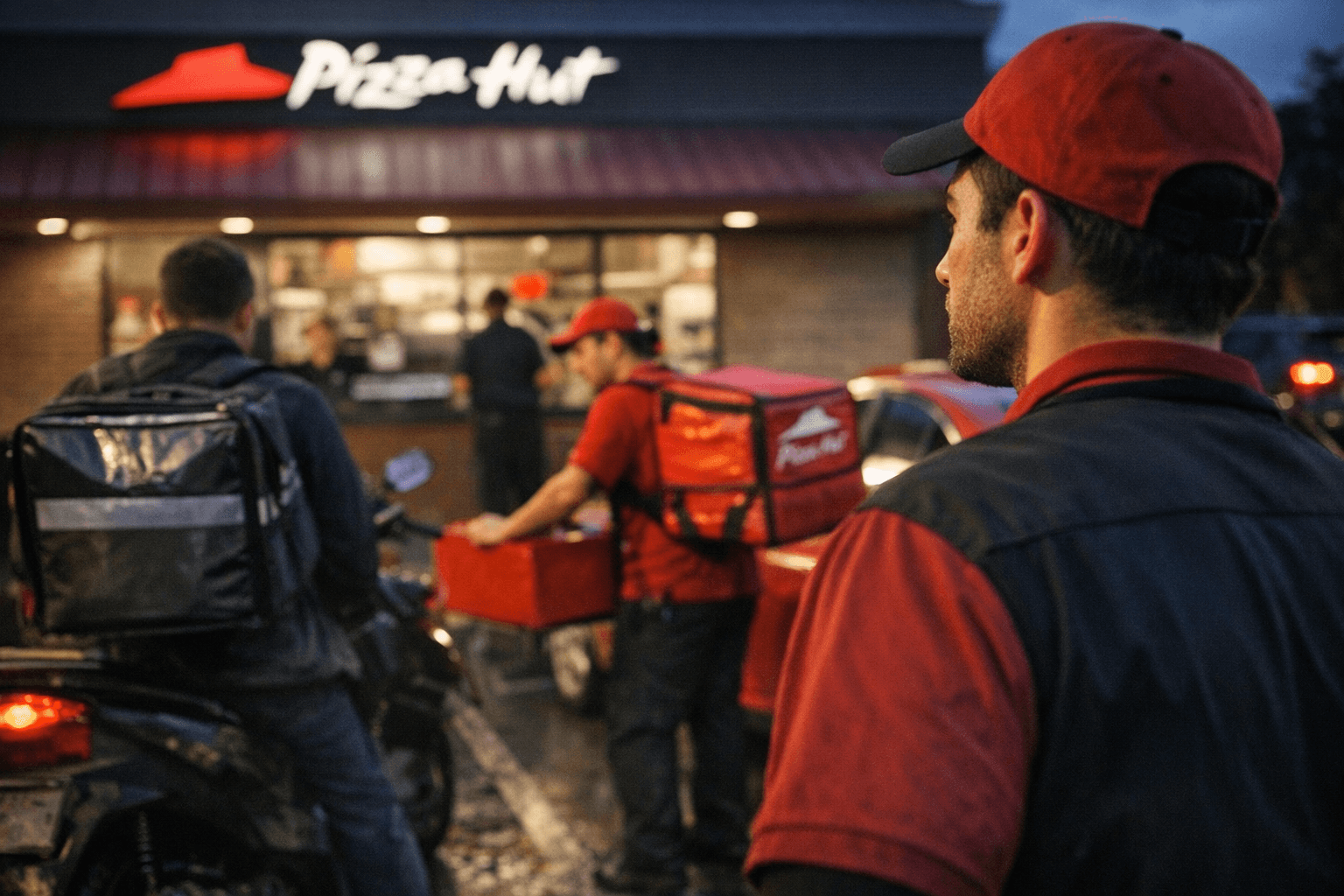
About 90% of Pizza Hut's U.S. system already works with at least one third-party delivery company. The chain has shifted delivery volume from in-house drivers to gig platforms before, most visibly in California, where franchisees replaced hundreds of in-house drivers with app-based couriers. If a Pizza Hut operator pulled off a platform or consolidated onto a single exclusive partner, the shift would surface in four specific places on any given shift.
Order timing would change first. A marketplace exit concentrates volume into fewer channels, making peaks less predictable during any transition. Prep and pack flow adjusts next: managers losing a platform's ticket stream would likely see carryout and phone orders climb temporarily as customers migrated. Delivery routing shifts as well; in-house drivers absorb volume that previously moved through the dropped app, while stores that leaned on gig couriers from that platform could face coverage gaps during dinner rushes. Tips are the fourth variable. In-house Pizza Hut drivers collect tips directly under franchisee policy; gig drivers on DoorDash or Uber Eats operate under platform pay structures that handle tips at different rates and on different timelines.
Rave posted its 23rd consecutive profitable quarter in February, a cushion that made the walkaway less risky. Most Pizza Hut franchisees are making the same fee calculation without that buffer. When commission rates rise and operators respond, the changes land at the store level first: in schedule adjustments, in tip flows, and in which app tablet stays powered on during the dinner rush.
This article was produced by Prism’s automated news system from verified source data, official records, and press releases, then run through automated quality and moderation checks before publishing. The system is built and supervised by the people who set the standards it runs under. Read our full AI policy.
Did this article answer your question?