Yum! Brands Byte Platform Now Powers 38,000 Restaurants Worldwide
Yum! Brands' Byte platform cut failed DoorDash and Uber Eats orders by 75% in pilot stores; it now runs in 38,000 restaurants globally.
A 75% drop in failed DoorDash and Uber Eats orders sounds like a number from a pitch deck. At Pizza Hut locations where Yum! Brands' Byte platform went live early, it was already a shift-level reality, and the broader rollout means every manager, cook and driver will feel it soon.
Yum!'s chief digital and technology officer, Jim Dausch, confirmed the deployment scale: at least one Byte product is now live in roughly 38,000 restaurants globally. The Smart Operations bundle, combining point-of-sale, menu management and kitchen display systems, was running in more than 7,000 locations by the end of 2025. The Digital Ordering bundle, consolidating web, mobile and marketplace connections into a single feed, was live in more than 18,000, all within the first year after the platform's February 2025 introduction.
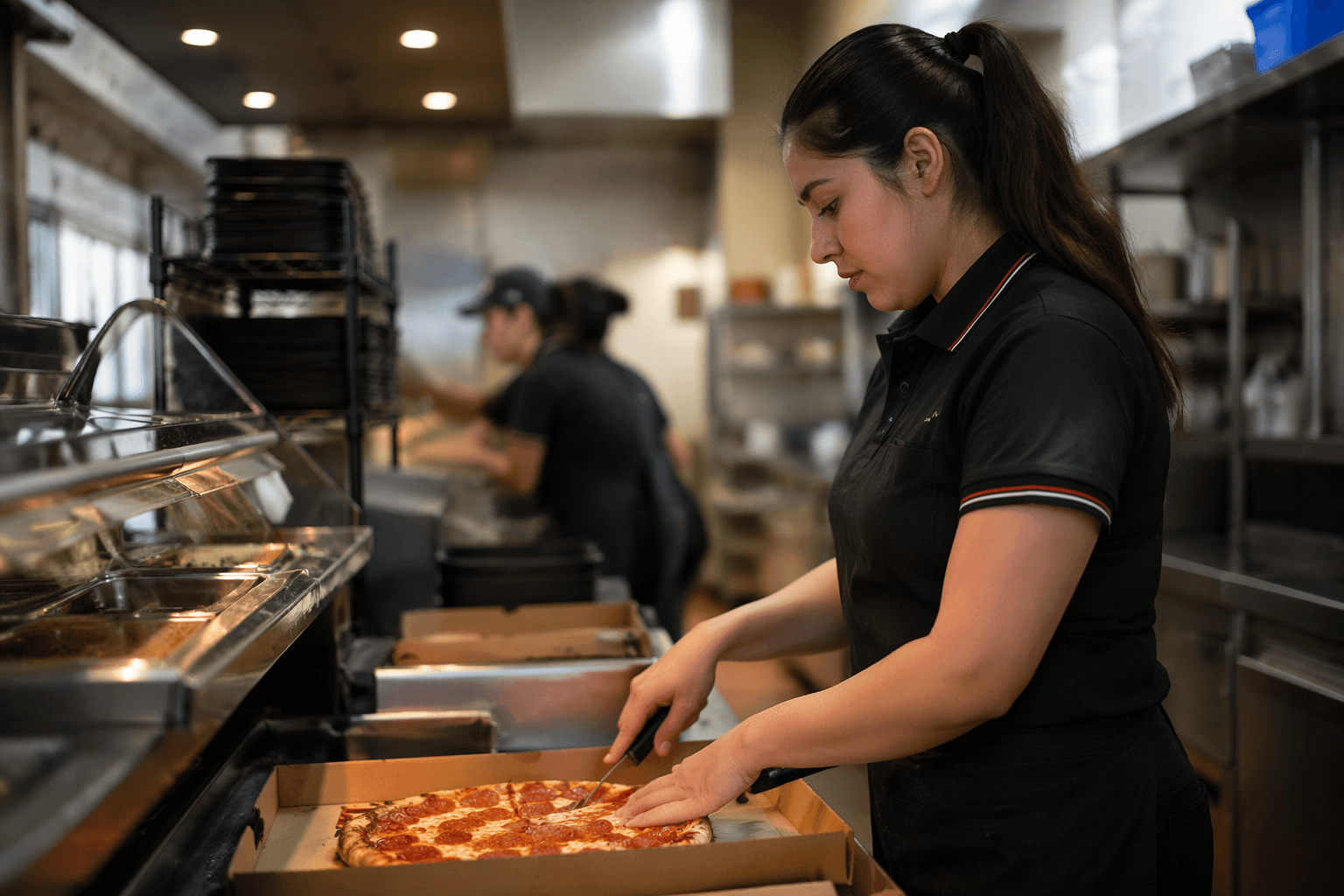
The case for the rollout starts with a familiar frustration. Pizza Hut stores historically ran on a patchwork: one vendor for POS, another for kitchen display, another for marketplace routing, another for inventory counts. Each handoff between systems was a potential failure. Dausch said Byte's unified platform "reduces this traditional point-to-point integration" and shrinks the overall surface area of failures. Early results backed the claim. Smart Operations produced up to an 85% reduction in stockouts and a 10% lift in customer satisfaction scores in deployed stores.
For managers, week one with Byte changes the job before the first shift even starts. The platform's AI inventory optimizer flags purchase recommendations, shifting the task from building orders manually to validating what the system suggests. The labor module recommends shift patterns based on projected digital order volume, converting the scheduling question from "how many people do I think I need" to "does this recommendation account for the Friday 8 p.m. surge." Managers should track ticket times, remake rates, delivery ETA accuracy and labor variance against those AI-generated baselines from day one to identify where the system is calibrated correctly and where it needs local context.
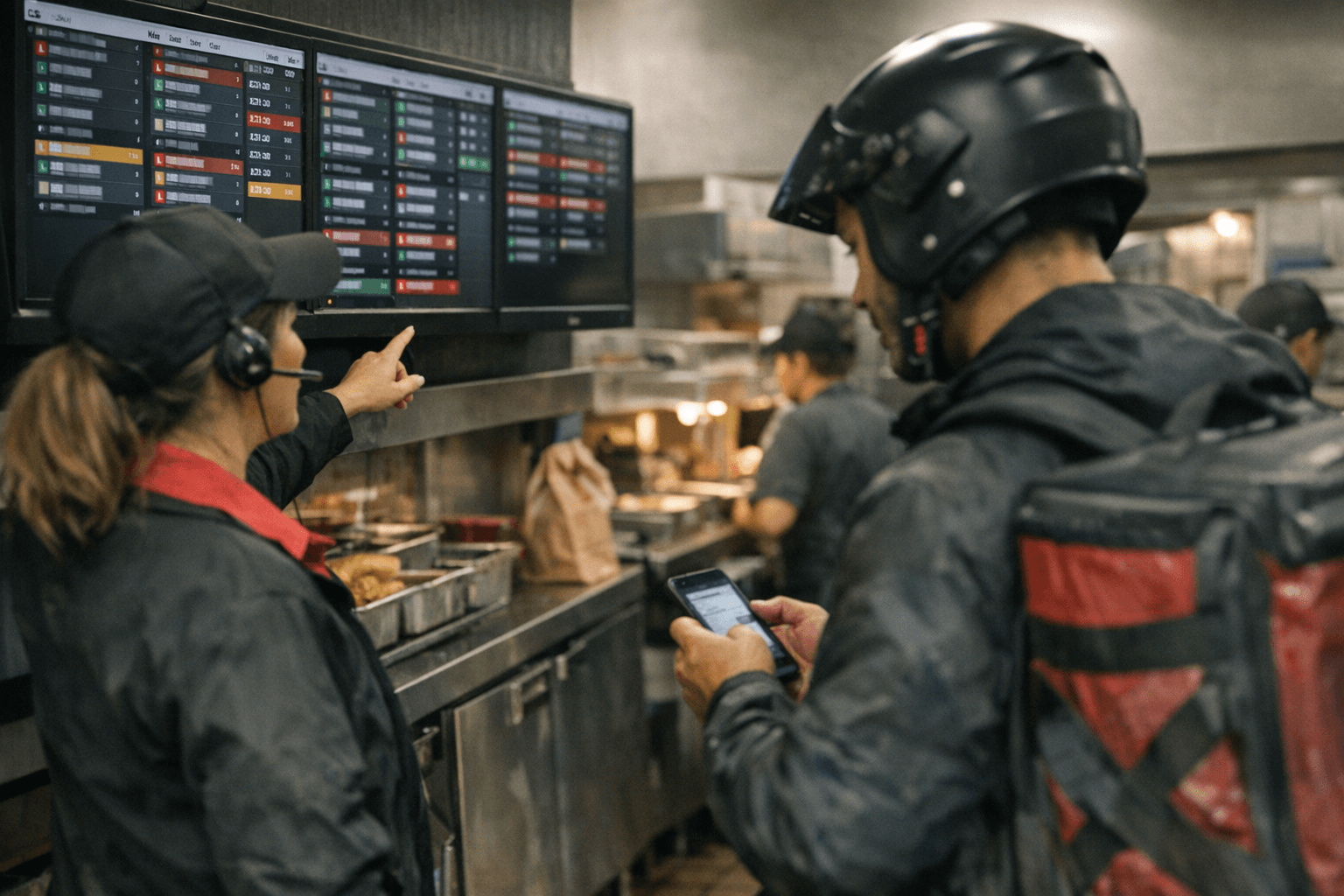
Kitchen crew will notice the change most immediately on the screen. Byte's integrated kitchen display system coordinates order timing across dine-in, carryout and delivery simultaneously, replacing the fragmented displays many stores used before. Staging windows, hot-hold rack timing and production pacing are set by the system rather than by crew habit. That tighter control reduces chaos during delivery surges but narrows the margin for exceptions. A large catering order or a late-night combo that once got routed informally now needs to move correctly through the system, which means crew should request a full KDS walkthrough and a reference checklist for edge cases before going live.
For drivers, the clearest gain comes through the 75% reduction in aggregator order failures reported in pilot locations. Fewer failed or duplicated third-party assignments means fewer wasted trips, more reliable dispatch queues and fewer cancellations that cut directly into tip income.
Adoption will not be uniform. Pizza Hut's U.S. operation is almost entirely franchised, and individual operators will move at different speeds. Yum!'s 2025 system results, roughly $40 billion in digital sales and more than 370 million digital transactions across its brands, put financial pressure on franchisees to move quickly. A platform that cuts stockouts by 85% and aggregator failures by 75% is difficult to delay in a margin-squeezed environment.
Byte is not a POS upgrade. It replaces the entire integration layer between how orders arrive, how the kitchen responds, and how inventory and labor are planned around both. The training period will create short-term friction. The question for store-level staff is not whether Byte is coming, but whether their franchisee is ready to run it correctly.
This article was produced by Prism’s automated news system from verified source data, official records, and press releases, then run through automated quality and moderation checks before publishing. The system is built and supervised by the people who set the standards it runs under. Read our full AI policy.
Did this article answer your question?