Pizza Hut Joins Industry Correction as Franchisee Bankruptcies Signal Broader Closures
Yum! Brands is closing 250 Pizza Hut locations in 2026, and a new Texas franchise bankruptcy shows what that correction looks like for workers on the ground.

When John and Amy Reno filed Chapter 11 petitions for their two Crust Pizza locations in Texas on March 27, they joined a growing list of pizza franchisees who have run out of runway. The Spring, Texas-based operators, whose restaurants trade as Crust Pizza Magnolia and Crust Pizza Heights in Houston's Heights neighborhood, filed in the U.S. Bankruptcy Court for the Southern District of Texas under Subchapter V, a streamlined reorganization path designed for small businesses. The filing covered two locations. The industry forces behind it are far larger.
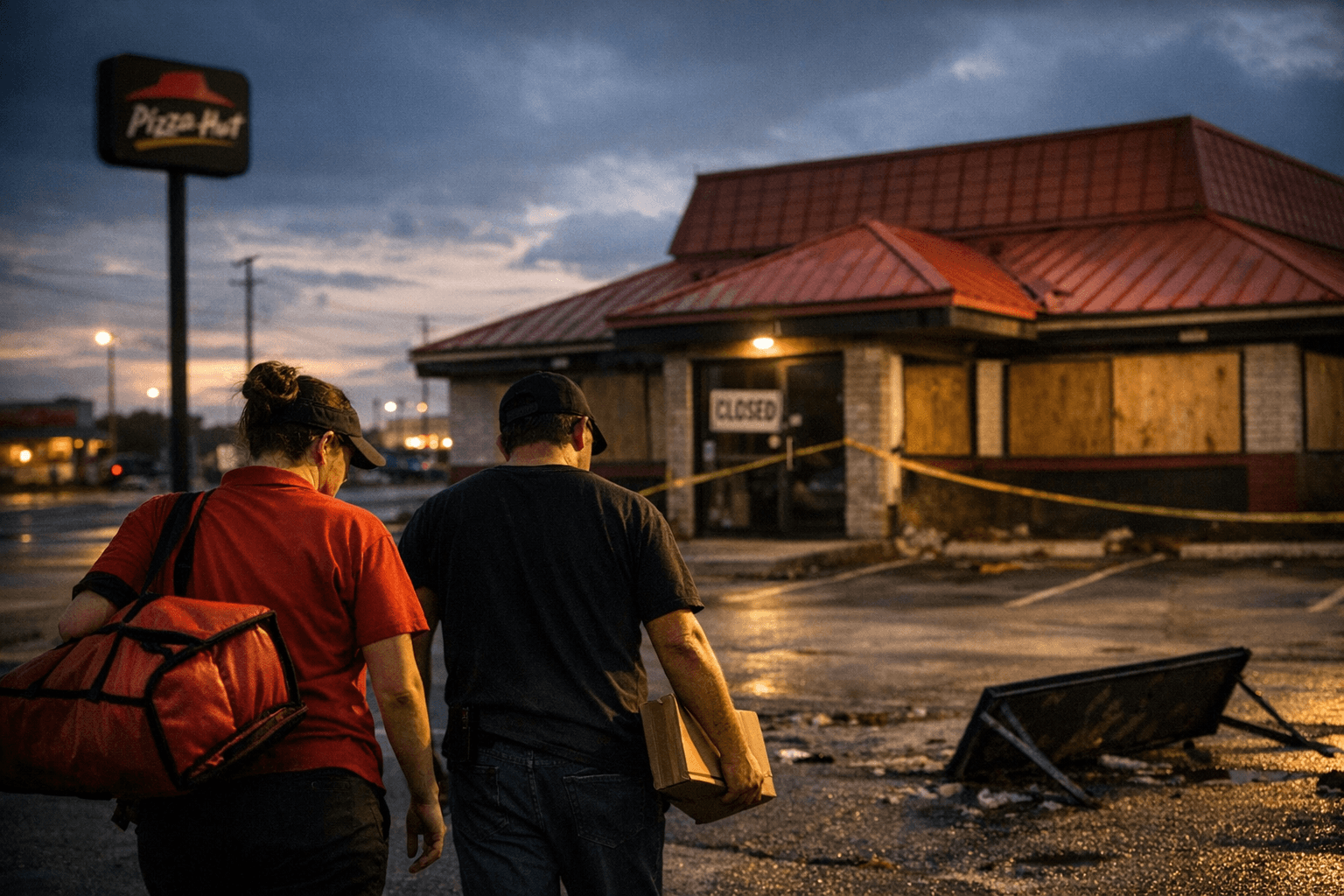
Yum! Brands CFO Ranjith Roy confirmed during the company's Q4 2025 earnings call that Pizza Hut would close around 250 U.S. stores in the first half of 2026 as part of a plan branded Hut Forward. Yum began evaluating Pizza Hut's system last year and is considering a sale of the brand, which has lagged behind other major pizza chains in sales growth. Pizza Hut suffered a decline in same-store sales for its U.S. locations, dropping 3 percent for the fourth quarter and 5 percent for the full year. The 250 closures represent about 3 percent of Pizza Hut's U.S. locations. Papa John's separately identified approximately 300 underperforming restaurants across North America, and a California-based Domino's franchisee, North County Pizza, filed Chapter 11 in March 2026.
The pattern inside the Pizza Hut system specifically tells the story most clearly. EYM Pizza, a 140-unit franchisee operating across Georgia, South Carolina, Illinois, Indiana, and Wisconsin, filed for Chapter 11 bankruptcy protection in July 2024. The operator listed Manufacturers Bank and Pizza Hut as its top unsecured creditors, with respective claims of over $21 million and $2.2 million. Pizza Hut had sued EYM for failing to pay royalties even through a forbearance period; EYM countersued. When the bankruptcy auction concluded, Pizza Hut bought 18 of EYM's stores, while other buyers took the rest. Workers clocking in at those locations one week were navigating closure notices or new-employer paperwork the next.
That is the practical shape of what "category correction" looks like on the ground. Franchisee financial stress rarely arrives as a single event. The signals typically emerge 30 to 60 days before a unit goes dark: landlords begin receiving partial rent payments, food and supply vendors place holds on deliveries, scheduled maintenance gets deferred, and managers start cutting crew hours without explanation. When those conditions converge, a closure, forced sale, or transfer to a new operator is usually close.
Bankruptcy does not erase wage obligations. Under federal law, unpaid employee wages carry priority status in reorganization proceedings up to a statutory cap, meaning workers rank ahead of most unsecured creditors in the repayment queue. But priority does not mean fast. If wages are being withheld or hours cut ahead of a closure, document immediately: preserve paystubs, printed or photographed shift schedules, written communications about pay changes, and W-2 forms. File a wage claim with your state labor department without delay; waiting until after a court-ordered closure can set back recovery by months.
When a franchisee sells locations during bankruptcy, buyers frequently prefer to retain existing staff because trained crews lower reopening costs. Request written confirmation of any transition plan from both the outgoing franchisee and the acquiring operator's HR team. If a store closes outright, apply for unemployment insurance immediately and obtain a written statement documenting your last day worked and all wages owed.
General managers and RGMs operating under a financially stressed franchisee face the same correction in a different form: reduced supply budgets, deferred equipment repairs, and direct pressure to cut variable costs starting with labor hours. The Hut Forward closures, the EYM precedent, and the wave of franchise bankruptcies rippling across competing chains are not isolated data points. Workers and managers who use the next 60 to 90 days to secure employment documentation and identify transfer or alternative positions will have real options. Those who wait for a notice taped to the door will not.
This article was produced by Prism’s automated news system from verified source data, official records, and press releases, then run through automated quality and moderation checks before publishing. The system is built and supervised by the people who set the standards it runs under. Read our full AI policy.
Did this article answer your question?