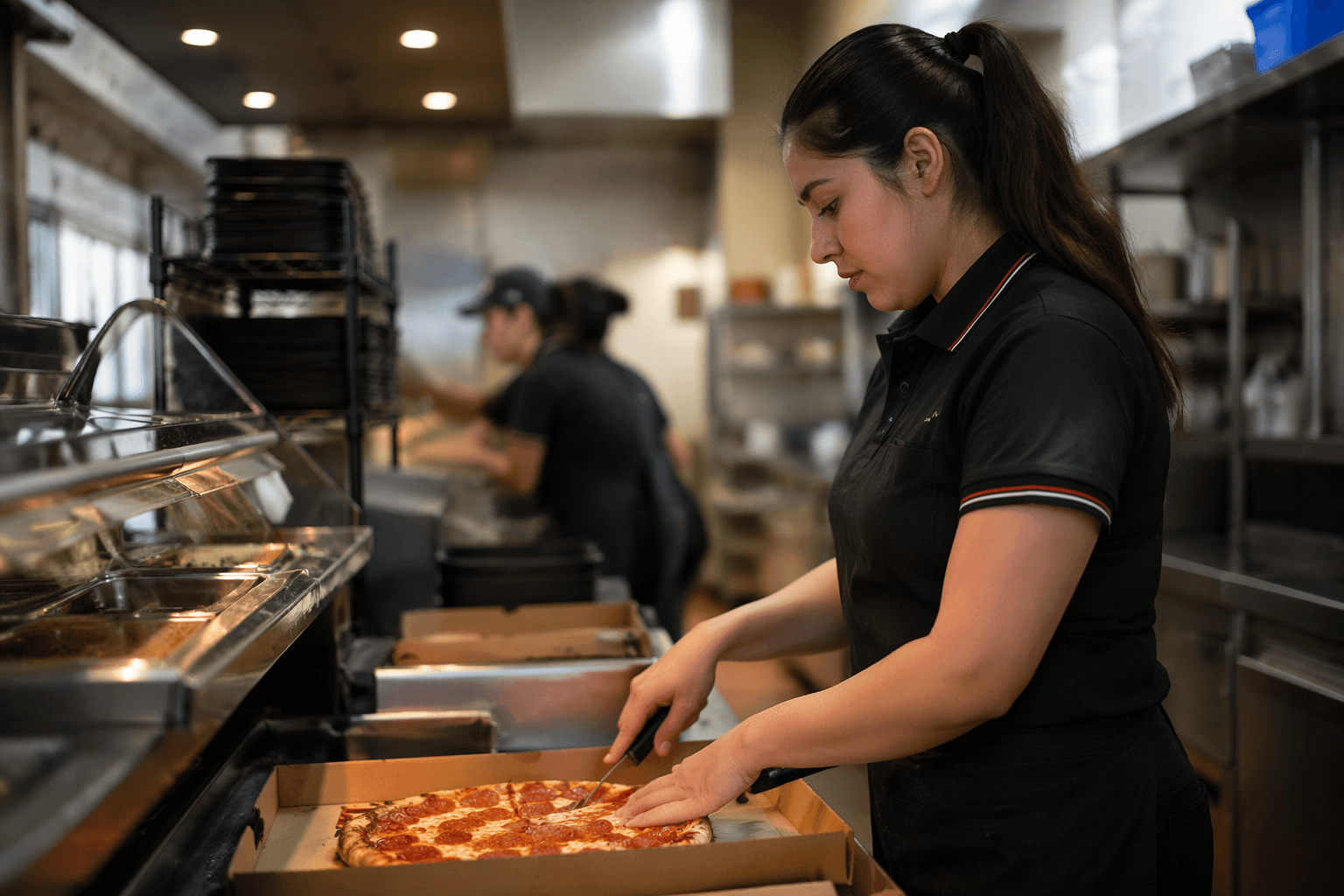
Pizza Hut at 29 Marcus Garvey Boulevard Scores A Despite Critical Violation
Pizza Hut at 29 Marcus Garvey Boulevard in Brooklyn scored 13 points (A) on a January health inspection, despite a listed critical violation code 06C; this can affect staff routines and corrective actions.

Pizza Hut at 29 Marcus Garvey Boulevard in Brooklyn received a 13-point, Grade A result on a cycle/initial health inspection in January 2026, but the inspection record also lists a critical violation coded 06C. The store’s overall A indicates the establishment met enough requirements to avoid a downgraded grade, yet the presence of a critical code flags a serious food-safety concern that management and staff will need to address.
Local inspection listings show the Pizza Hut entry tied to Jan. 28, 2026; a separate national data aggregation of inspections lists a 13-point cycle/initial inspection on Jan. 21, 2026 for the same score and inspection type, creating a date discrepancy that requires confirmation from the New York City Department of Health and Mental Hygiene inspection record. The supplied materials do not include a plain-language description of what 06C refers to in this case, so the specific hazard cited remains unclear from available excerpts.
Under city inspection rules, zero to 13 points on an initial inspection yields an A and typically schedules the next inspection 11 to 13 months out. Critical violations generally add at least five points to a score; examples cited in guidance include serious errors such as serving salads without properly washing lettuce. If a critical issue cannot be corrected before the inspection ends, the health department can close an establishment until fixes are made. Those rules frame why a single critical item can be consequential even when the total score still results in an A.
For workers, the practical fallout depends on whether the critical item was corrected during the inspection. Shift managers and line cooks often bear the immediate burden of correcting hazards on the floor: revising closing and prepping checklists, retraining staff on safe handling and cleaning procedures, and documenting corrective steps. If the critical issue was addressed on-site, disruption may have been limited to a rushed corrective action and added checklist work. If the issue remains unresolved, the store could face follow-up visits or temporary closure, which would directly affect schedules, tips, and hourly wages.

The inspection also sits within a broader slate of January inspections across the city, where many restaurants posted A grades with low scores and others faced more serious follow-ups. To resolve outstanding questions about the Pizza Hut entry, including the official inspection date and the specific language tied to code 06C, the restaurant’s DOHMH inspection report should be retrieved and management asked for any corrective-action documentation. For employees, the immediate takeaway is to treat a critical-code flag seriously: ensure corrective actions are logged, that shift checklists reflect any new controls, and that managers keep staff informed ahead of any re-inspection.
This article was produced by Prism’s automated news system from verified source data, official records, and press releases, then run through automated quality and moderation checks before publishing. The system is built and supervised by the people who set the standards it runs under. Read our full AI policy.
Did this article answer your question?