Pizza Hut Canada Pilots Two-Week Serve Robotics Sidewalk Delivery in Vancouver
Pizza Hut Canada ran a two-week pilot with Serve Robotics to test autonomous sidewalk delivery in downtown Vancouver, a move that could alter store workflows and delivery roles.

Pizza Hut Canada ran a two-week pilot with Serve Robotics to test autonomous sidewalk delivery at a downtown Vancouver location, positioning the trial as an operational test to complement existing delivery methods. The pilot, announced January 21, 2026, allowed selected customers to track robots through the Pizza Hut app and retrieve orders using a one-time PIN, while supervisors remained involved to monitor robot activity.
The rollout was framed as a technology and operations experiment rather than a replacement for human drivers. Robots completed last-mile sidewalk routes within a defined downtown area, and store supervisors were tasked with remote monitoring and oversight. Pizza Hut Canada described the test as a way to integrate new tools into franchise operations and to observe how robotic delivery performs alongside current driver and courier services.
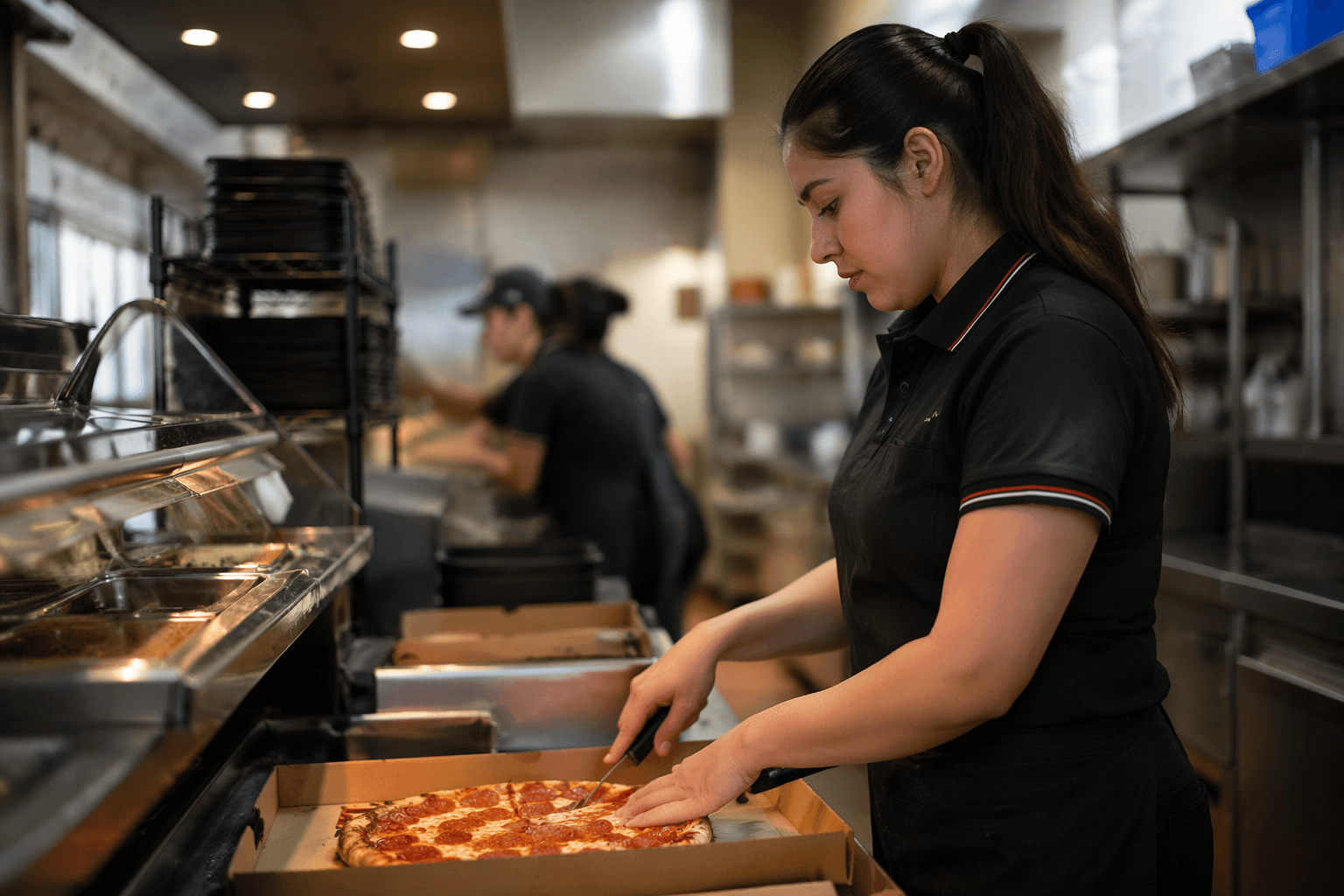
For frontline workers the trial introduced immediate, practical changes to store-level workflows. Crew members packing orders had to prepare deliveries compatible with the robot’s secure compartment and timing, which can alter bagging routines and staging areas during busy shifts. Shift schedules and dispatch patterns were adjusted for the pilot period so supervisors could supervise robot runs and handle exceptions when robots encountered access issues or delivery mismatches. Delivery drivers saw a temporary change in route mix; short-distance sidewalk drops in the pilot zone could be handled by robots, while drivers focused on longer-distance or non-sidewalk deliveries.
Supervisors took on new tasks tied to monitoring vehicle telemetry, customer PIN exchanges, and app-based tracking. That oversight required time and attention from managers already balancing staffing, food preparation, and customer service. Franchisees and store managers will likely evaluate whether the supervisory load, robot reliability, and customer acceptance justify any shift in delivery staffing or scheduling beyond the pilot.

The downtown Vancouver pilot also highlighted operational constraints typical for sidewalk robotics: pedestrian traffic patterns, curbside access, and the need for clear customer handoff procedures. Because the program used one-time PINs and app tracking, customer-facing crew needed to confirm customers were selected for robotic delivery and instruct them on the PIN retrieval process. Those steps added a small but concrete customer-service task to in-store duties during the trial.
What happens next will shape how Pizza Hut Canada and franchise operators approach automation in delivery. If the pilot shows reliable performance and minimal disruption to shift coverage, the chain could expand trials or integrate robots more broadly as a complement to human drivers. For employees, the immediate takeaway is practical: expect procedural changes, short-term adjustments to shift assignments, and new responsibilities for supervisors and in-store staff while companies test how robotics fit into fast-food delivery systems.
This article was produced by Prism’s automated news system from verified source data, official records, and press releases, then run through automated quality and moderation checks before publishing. The system is built and supervised by the people who set the standards it runs under. Read our full AI policy.
Did this article answer your question?