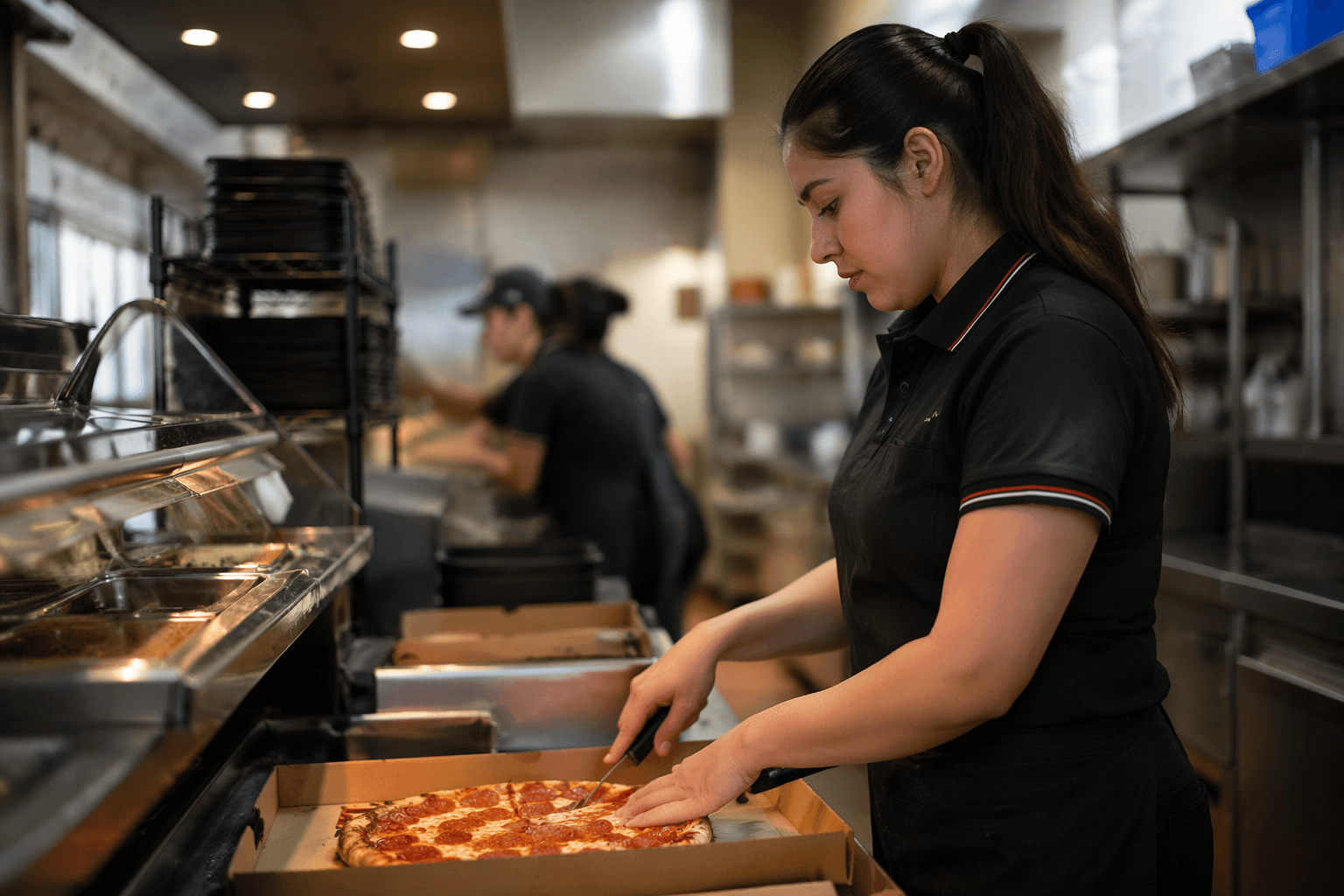
Pizza Hut Delivery Drivers Work More Hours But See No Pay Gains
Delivery couriers logged triple-digit quarterly hours by late 2025, yet hourly and per-order pay fell, according to Gridwise's third annual gig mobility report.
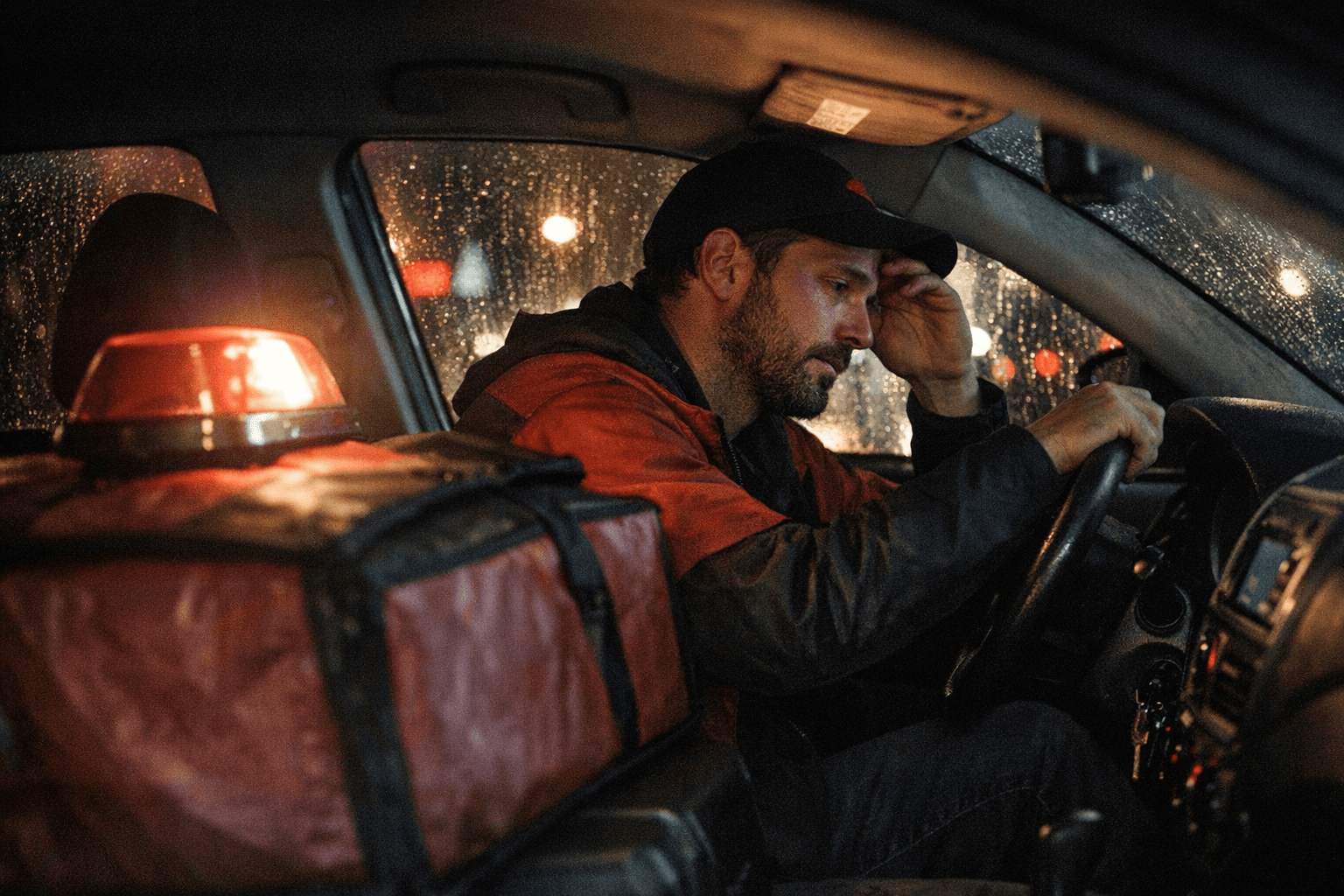
Delivery couriers across the U.S. worked more hours in 2025 than at any point since the early pandemic surge, but that extra time on the road didn't translate into better pay per hour or per order, according to Gridwise Analytics' third Annual Gig Mobility Report, released March 5.
The findings land squarely on the windshield of Pizza Hut drivers navigating the same pressures: more runs, thinner per-order returns, and a tip culture that has quietly eroded since its 2021-2022 peak.
By late 2025, average quarterly work hours among delivery couriers reached triple digits, a threshold the report says echoes the frantic pace of the pandemic's early years. Total sector earnings did rise, but only because drivers logged more time, not because platforms paid better for each hour or each drop. Hourly and per-order earnings decreased over the same stretch, the report found, while pay-per-trip and pay-per-order rates saw only a moderate uptick.
Tips are a core part of why the per-hour picture looks so bleak. Gridwise CEO Ryan Green identified the steady decline in tip pay, which has been falling since the post-pandemic generosity of 2021 and 2022, as one of the most significant factors dragging on hourly earnings. For a Pizza Hut driver counting on that two- or three-dollar tip to make a shift worthwhile, the direction of travel matters as much as the rate.
The macro context isn't encouraging either. "As inflation and affordability continue to shape consumer behavior, customer prices rose more quickly than driver earnings in 2025," Green said. "While platforms expanded premium offerings and improved financial performance, both riders and drivers faced growing economic pressure." The report's headline finding on the rideshare side put the gap in sharp relief: customer prices climbed nearly 10 percent even as driver pay lagged.
The central question for Pizza Hut drivers working alongside DoorDash and Uber Eats couriers is whether the third-party delivery platforms will restructure how they piece together driver compensation. Green framed it as an open question heading into 2026: "Are we going to see them change the mix of pay components, or pull different levers any differently, as we think about the fixed cost as it relates to incentives and the bonus pay that they provide, or the base rates?"
That uncertainty matters at the franchise level. Pizza Hut operators who staff their own drivers set base pay locally, but they can't control what tips customers choose to leave or how aggressively DoorDash and Uber Eats adjust incentive structures that pull drivers toward or away from branded restaurant work. If platforms keep absorbing a larger share of what customers spend while keeping base rates flat, drivers will keep doing what the data already shows: working longer to make the same.
The Gridwise report covers pricing, driver earnings, tips, bonuses, ride mix, and utilization trends across major U.S. rideshare and delivery platforms. The company did not specify in its public release whether its dataset includes Pizza Hut's in-house delivery drivers or focuses exclusively on platform-based couriers, a distinction that would sharpen how directly these numbers apply to branded restaurant workers.
This article was produced by Prism’s automated news system from verified source data, official records, and press releases, then run through automated quality and moderation checks before publishing. The system is built and supervised by the people who set the standards it runs under. Read our full AI policy.
Did this article answer your question?