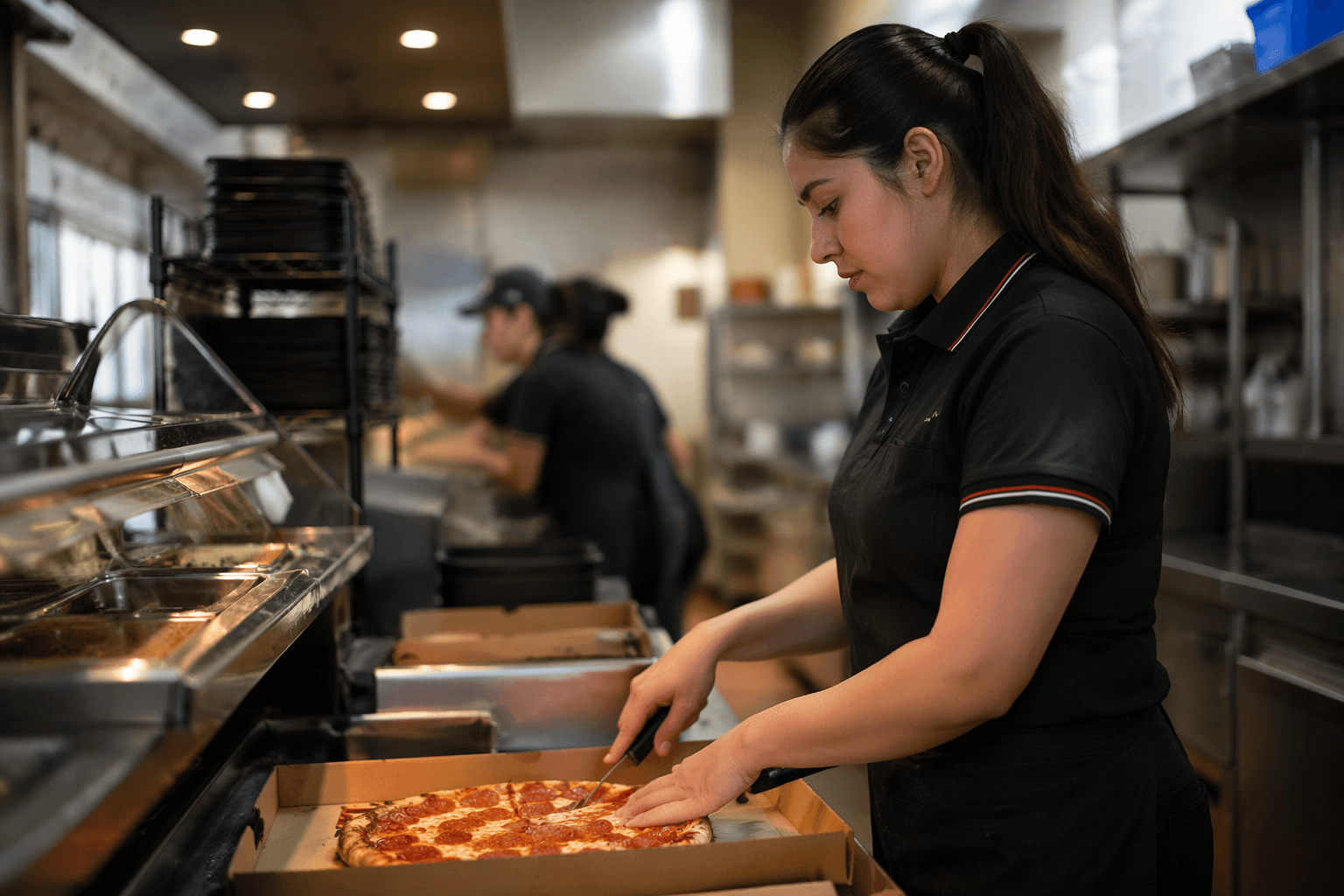
Pizza Hut faces delivery shift as transactions soften, costs rise
Pizza Hut is betting on first-party delivery as sales soften and costs rise, a shift that could determine who keeps the work, the tips and the customer data.
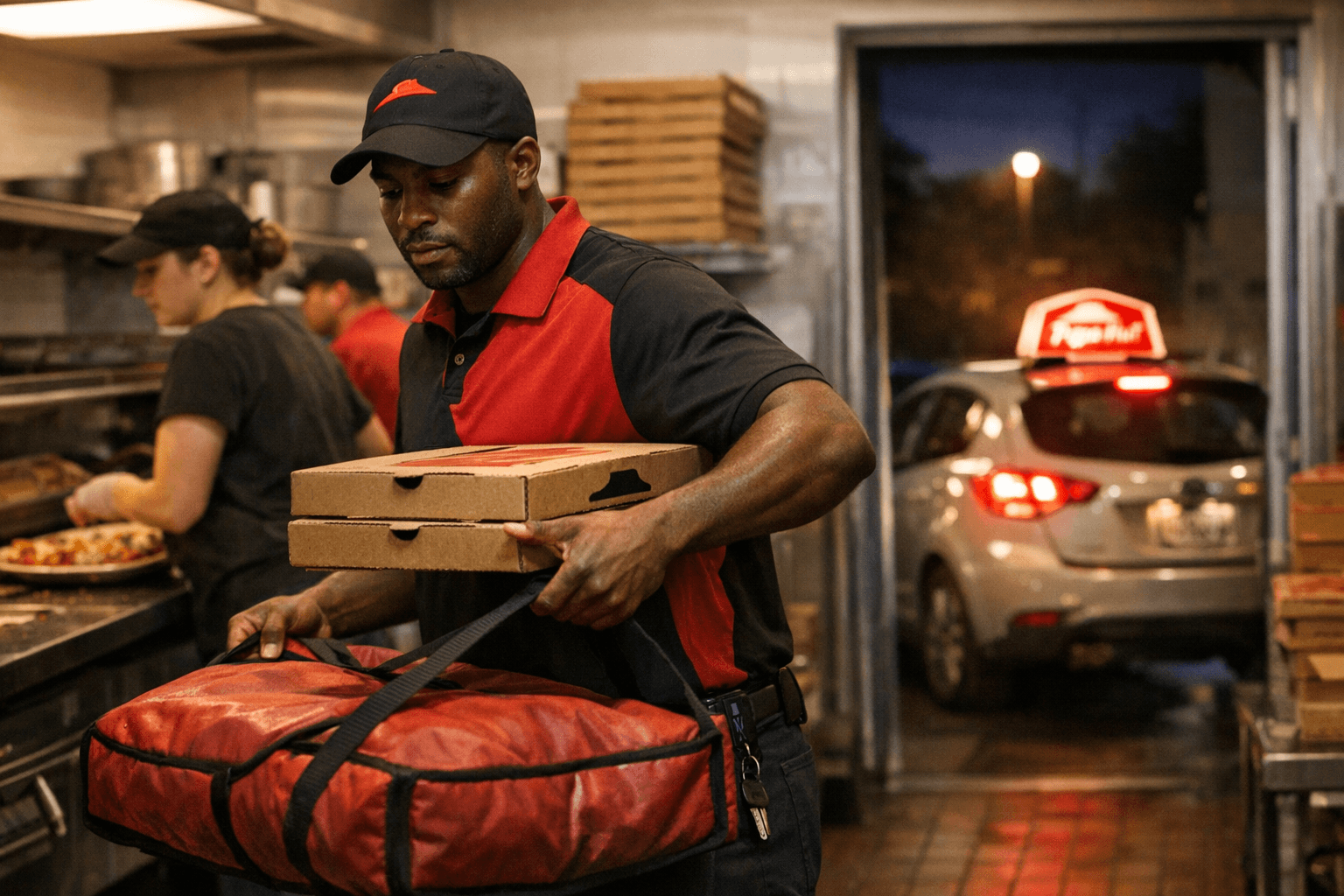
Pizza Hut’s delivery push is not just a tech upgrade. It is a fight over who controls the order, who handles the labor, and who gets paid when a pie leaves the store.
For drivers, kitchen crews and managers, that matters more than the usual software pitch. If the restaurant owns the delivery flow, it keeps the relationship with the guest, the dispatch logic, the service standard and, in many cases, the chance to turn one order into the next one. If the work is handed to a third-party marketplace, the store may still get volume, but it gives up control over the customer experience and takes on a new layer of cost and distance between the brand and the person eating the pizza.
The real stakes behind first-party delivery
PMQ Pizza’s argument is simple: pizza restaurants should stick to what they do best, and that means owning as much of the delivery process as possible. That is not a sentimental point, it is an operating one. The best operators still need some part of fulfillment under their own roof because delivery is where labor, timing, tips and customer trust all collide.
That collision is especially visible when transactions soften. Major pizza chains, including Pizza Hut and Domino’s, have seen orders decline even when revenue held up in some periods, because prices climbed faster than ticket counts fell. On paper, that can look like growth. On the make line, in the driver seat or at the manager’s station, it can mean fewer runs, thinner traffic and a store that is working harder just to stand still.
For workers, that distinction is critical. Higher revenue does not necessarily mean more shifts, more deliveries or better job security if the number of transactions is sliding. It can also mean guests are pushing back on value, which often shows up first as complaints, slower repeat business and more pressure on stores to do more with less.
What Pizza Hut is building instead
Yum! Brands says Pizza Hut U.S. has already moved to the Byte Kitchen & Delivery platform, a system the company says improved retention and consumer experience and cut delivery times by as much as five minutes. That kind of change sounds like backend plumbing, but it has frontline consequences. Faster routing, tighter order flow and more reliable handoffs can mean fewer bottlenecks for cooks and fewer dead minutes for drivers waiting on the next run.
Yum has also described Byte by Yum! as a broader operating stack that includes online and mobile ordering, point of sale, kitchen and delivery optimization, menu management, inventory and labor management, plus team-member tools. That is a full control system, not just an app. It gives the chain a way to see demand earlier, assign labor more tightly and keep the store’s own staff closer to the order instead of ceding that role to an outside platform.
Pizza Hut’s own app reflects the same strategy. It pushes direct ordering, tracking and rewards, and the loyalty program offers 10 points for every whole $1 spent on eligible menu items. That is the company telling customers that the direct relationship matters, because direct orders protect data, repeat visits and the store’s ability to steer the next transaction back through its own system.
Why third-party apps change the labor math
Third-party marketplaces can bring in customers, and for some drivers they can offer flexibility and the chance at competitive earnings. That is why gig work keeps pulling in people who want to set their own schedule. But the same model can leave restaurants paying more for access to the customer while giving up control over how the order is handled, how the brand is presented and how the guest remembers the experience.
That tradeoff goes straight to the people in the store. If orders move outside the house, the restaurant can lose delivery hours, tip opportunities and the ability to manage service standards from start to finish. If the store keeps delivery in-house and uses technology to dispatch orders, monitor driver flow and keep the pie hot, it preserves more of the work and more of the earnings inside the operation.
For managers, the practical question is not whether technology matters. It is whether the technology supports the restaurant’s own service model or replaces it. A store that uses software to tighten routes and improve speed can keep first-party delivery competitive. A store that leans too hard on outside apps may get reach, but it can also lose margin, visibility and a degree of control over quality that is hard to win back.
Soft sales and rising costs are squeezing the model
The pressure on that model shows up in the numbers. Pizza Hut’s U.S. same-store sales fell 5% in the first quarter of 2025, and worldwide same-store sales fell 2%. Yum said Pizza Hut’s operating profit growth was hurt by costs tied to franchise transitions and technology spending, which tells you the company is paying for both a changing ownership map and a changing operating system at the same time.
That matters on the ground because franchise transitions rarely feel abstract to staff. They can mean new managers, new expectations, shifting schedules and a different approach to labor. When the company is also spending more on technology, crews often feel the pressure in the form of tighter staffing, faster ticket expectations and less room for error when demand is uneven.
The ownership shakeup around EYM Group shows how quickly the ground can move. In early April 2025, Pizza Hut transferred ownership of 77 restaurants to new owners after the bankruptcy of EYM Group. For employees, that kind of turnover can bring uncertainty about hours, leadership and service standards, even when the brand name on the roof stays the same.
A legacy brand trying to stay in control
Pizza Hut was founded in 1958 in Wichita, Kansas, and it has long operated across delivery, carryout and casual-dining formats. That history matters because the current shift is less about inventing a new business and more about modernizing one of the oldest delivery models in fast food.
Yum’s scale helps explain why the company is pushing this so hard. The company said it surpassed 61,000 units globally in 2024 and operates more than 63,000 restaurants in 155-plus countries and territories across its brands. At that size, the lesson from Pizza Hut is bigger than one chain: delivery can still be a competitive advantage, but only if the restaurant keeps enough control to protect the work, the service and the margin behind each order.
For Pizza Hut crews, that is the whole story in plain terms. The future of delivery is not just about faster ordering or fancier software. It is about whether the restaurant keeps the customer relationship inside the house, or lets someone else take the wheel.
This article was produced by Prism’s automated news system from verified source data, official records, and press releases, then run through automated quality and moderation checks before publishing. The system is built and supervised by the people who set the standards it runs under. Read our full AI policy.
Did this article answer your question?