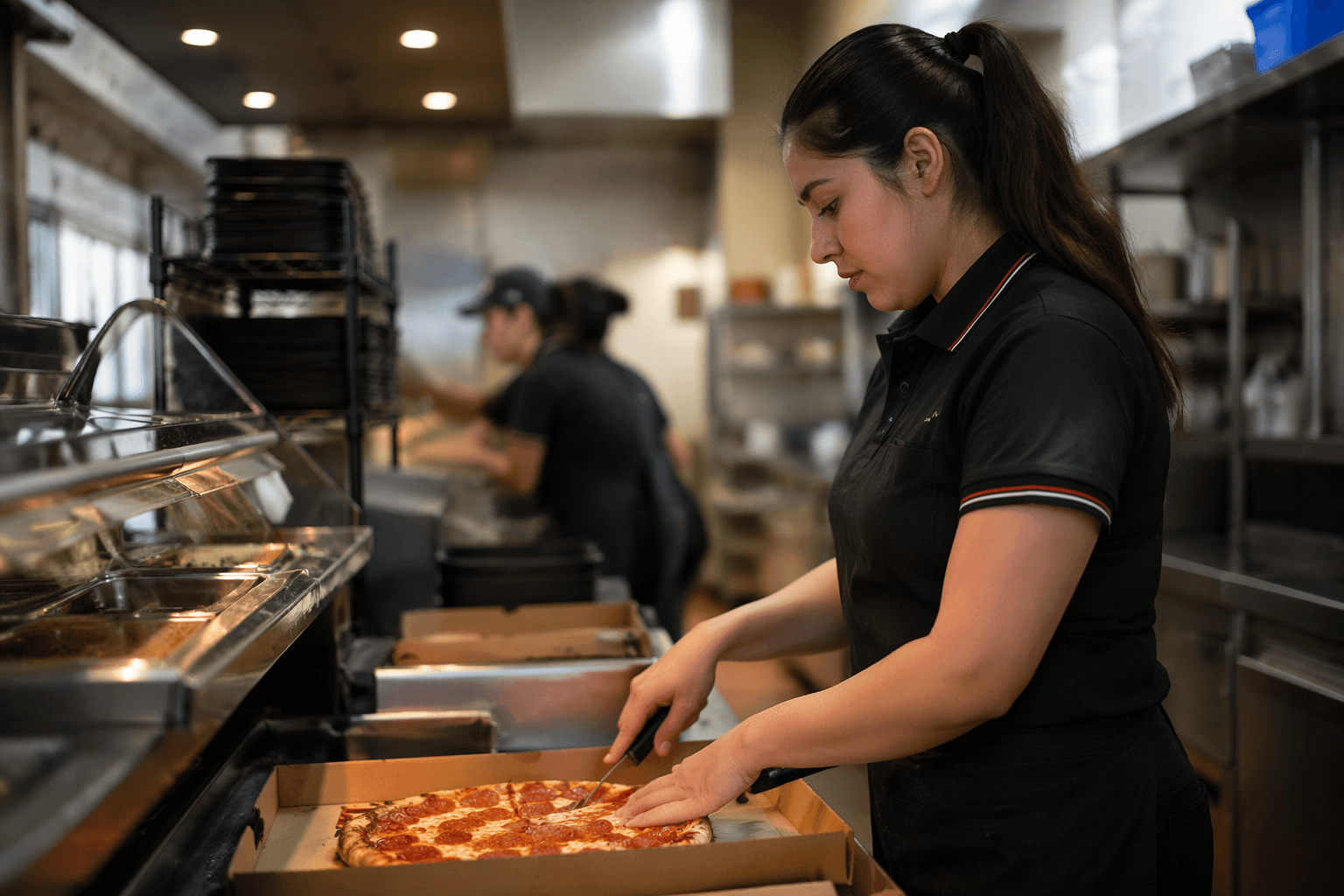
Pizza Hut promotes clear career paths from crew to management
Pizza Hut is advertising 4,655 shift leader jobs, and the chain says cooks and drivers have moved up to corporate offices and franchise ownership.
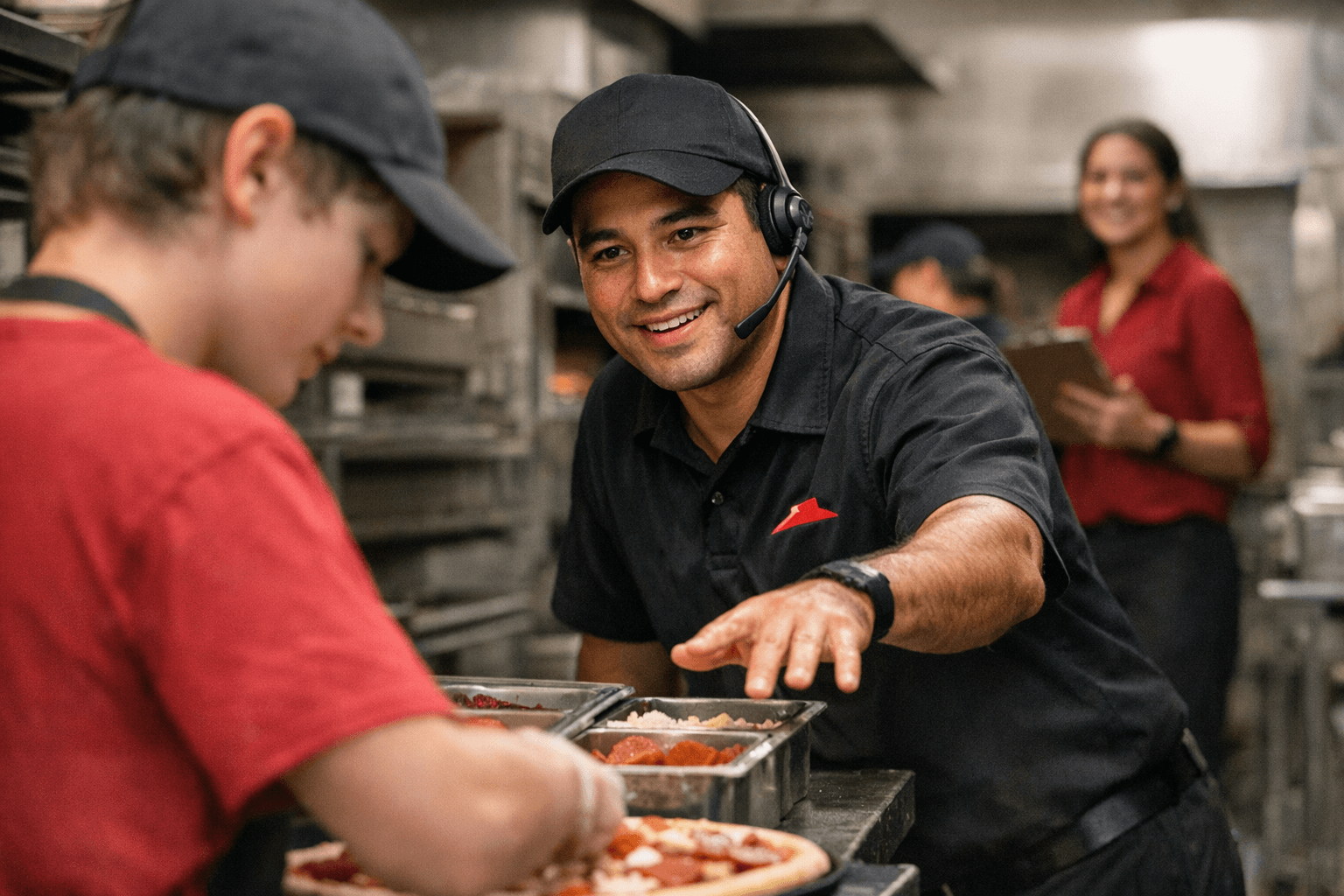
A ladder, not just a job
Pizza Hut is advertising 4,655 shift leader jobs, and that number tells its own story. The company is not just pitching a stopgap restaurant job; it is offering a visible rung that can lead from crew work into supervision, then into management, and, for a few, into ownership.
That promise matters because the question for kitchen crew and delivery drivers is simple: if you stay, learn the store, and prove yourself, do the extra hours and responsibility actually lead anywhere? Pizza Hut’s own careers language says yes, but only if the store gives you the chance to grow.
What a shift leader really has to prove
The clearest version of the path starts with the Virginia Beach shift leader posting, which says the training program is designed to develop management skills and offer future career success. In plain terms, Pizza Hut is signaling that the first step up is not about a title on a name tag. It is about learning how to run a rush without losing control of the floor.
That means the traits that get rewarded are the ones restaurant workers already know matter most: reliability, speed, communication, and calm under pressure. A shift leader has to keep line output moving, coordinate delivery dispatch, handle customer recovery, and keep the team aligned when the room suddenly goes from quiet to slammed. In pizza, the difference between a slow period and dinner rush can be brutal, which is why the store values people who can stay organized when the make line fills up and the phones will not stop ringing.
Pizza Hut’s own restaurants careers page puts it in cultural terms, saying the company has a history of people fulfilling career paths there, with cooks going to corporate offices and drivers becoming franchise owners. That is not the language of a dead-end job. It is the language of a chain that wants workers to see the next step before they ever take it.
How the path usually unfolds
The reality, though, is that nobody usually jumps from entry-level work straight into a general manager chair. The progression is more gradual: learn the station, become dependable, get cross-trained, and prove you can supervise part of a shift before anyone trusts you with the whole thing.
That is why store-level training matters so much. If a location invests in cross-training and lets a worker supervise, the move from team member to shift leader can become the first step into assistant manager, general manager, or even franchise ownership. If that training is thin, or if the store never opens up real responsibility, the ladder stays visible but hard to climb.
For workers, that distinction is everything. A strong operator can turn a first job into more hours, better scheduling, and more authority on the floor. A weak one can leave you doing the same station for months, with the title changes happening only on paper.
Why the local operator matters as much as the brand
Pizza Hut may be a national chain, but the experience of working there is still shaped heavily by the local store and the franchise behind it. The company says it has more than 6,000 U.S. locations, and Yum! Brands says it franchises or operates a system of more than 63,000 restaurants in 155 countries and territories. That scale creates opportunity, but it also means worker experience can vary widely from one market to the next.
A busy, well-run store may use turnover to open new slots and move strong workers up quickly. A poorly managed franchise may advertise the same career path but never invest enough in training to make it real. For a crew member or driver trying to decide whether to stay, the key question is not just what Pizza Hut says on a careers page. It is whether the manager on the ground actually hands over responsibility, teaches the next task, and recognizes who can handle a rush without falling apart.
That is where the company’s culture language, teamwork, fun, and willingness to grow with the brand, becomes more than branding. In the best stores, it translates into cross-training, a shot at shift leadership, and a steady path upward. In the weakest ones, it can sound aspirational while the schedule stays tight and advancement stalls.
The leap from store leader to owner is real, but it is not small
Pizza Hut also uses its own people stories to show that the ladder can go far beyond shift leadership. Luis Veras joined Pizza Hut in California after working at KPMG Consulting, moved to Dallas in 2006, became a franchisee in 2010, and now leads ITL Foods with nearly 60 restaurants in Dallas and Houston. That is a striking example of how a brand job can turn into an ownership portfolio, but it also shows how long the climb can be.
Sean Ammori of Ambros Foods tells a similar story on a smaller scale. His group became a Pizza Hut franchisee in September 2020 and has since bought 24 locations in Michigan and Massachusetts. He credits the brand’s openness and modernization for helping the business grow during the pandemic, which suggests that owner success depends not just on capital, but on whether the system keeps adapting.
That is where the franchise side becomes a reality check. Pizza Hut says prospective franchisees and key operators must attend and complete operations training before opening a restaurant. The company also says traditional restaurant opportunities can require an initial investment estimate ranging from $579,000 to $2,053,500. In other words, ownership is a genuine endpoint in the Pizza Hut career story, but it is a business acquisition, not a promotion.
What this means for the crew member deciding whether to stay
For a cook, driver, or shift runner, the most practical takeaway is that Pizza Hut does have a real advancement ladder, and it is not shy about saying so. The current hiring volume for shift leaders shows that this rung is active, not theoretical. The company’s own stories show that the path can reach corporate offices, franchise ownership, and large multi-unit operations.
But the ladder only works where the store makes it work. If a location trains well, cross-trains often, and lets strong people supervise, the move from crew to shift leader can mean more hours, more responsibility, and a better shot at management. If not, the path can flatten out fast.
Pizza Hut’s career promise is strongest when it is treated as a working system, not a slogan. The people who move up there are the ones who can keep a shift steady when the store gets loud, the phones pile up, and the whole room needs a leader before the rush breaks.
This article was produced by Prism’s automated news system from verified source data, official records, and press releases, then run through automated quality and moderation checks before publishing. The system is built and supervised by the people who set the standards it runs under. Read our full AI policy.
Did this article answer your question?