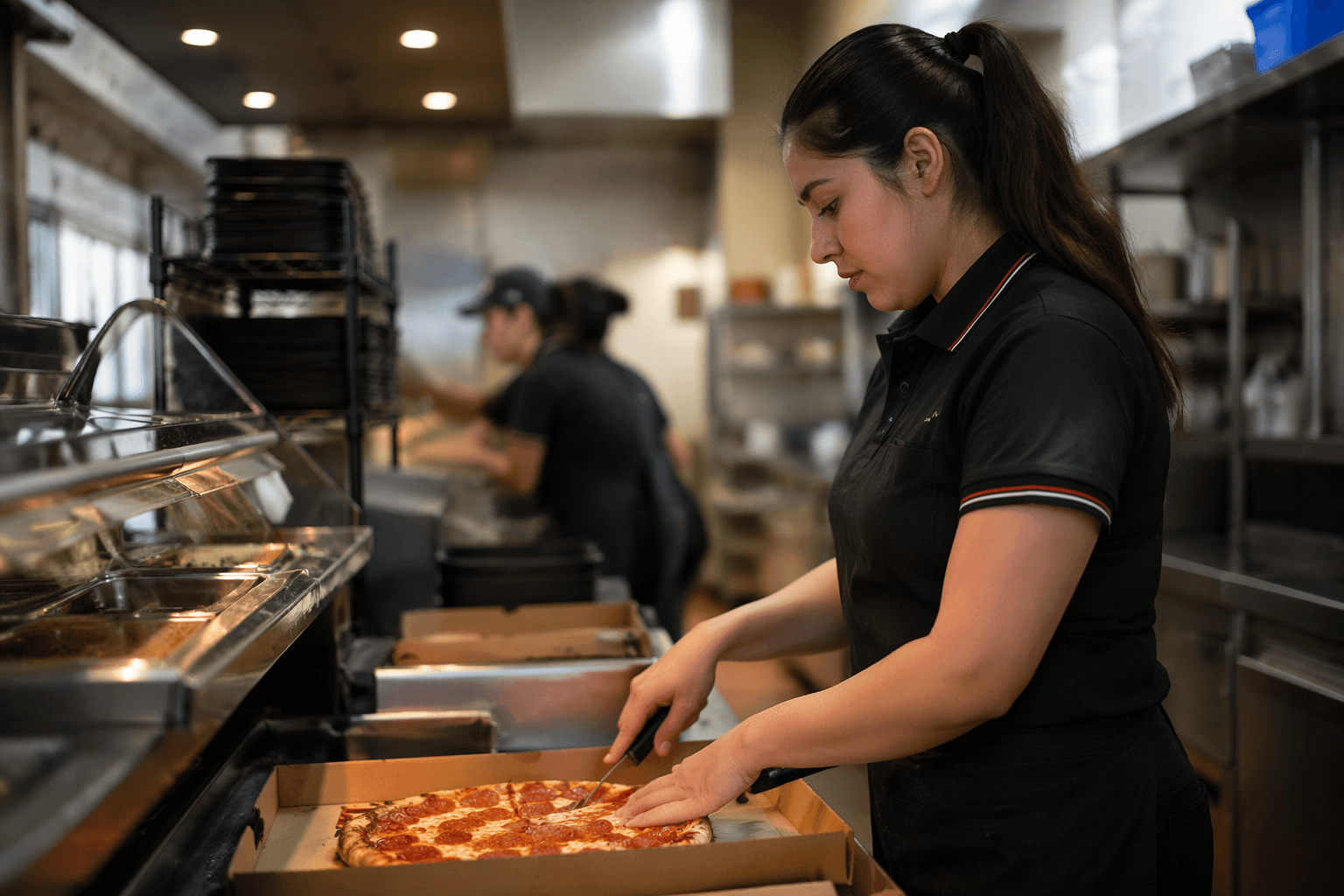
Pizza Hut Franchise Battles Show Turf, Control, and Worker Impacts
A franchise turf fight can start in corporate strategy and end in a Pizza Hut shift, with schedules, delivery zones, and pay rules caught in the middle.
Why the Applebee’s fight matters to Pizza Hut
A franchise fight over Applebee’s and IHOP is a warning shot for Pizza Hut crews: when brands and owners clash over territory, the fallout usually shows up on the floor first. What looks like a growth plan from a corporate office can feel like a sales grab, a staffing squeeze, or a customer-service headache once it reaches a local store.
That matters in a system like Pizza Hut, where most of the network runs through franchisees. Yum! Brands says it has more than 63,000 restaurants in 155-plus countries and territories, operated primarily by about 1,500 franchisees, and its latest SEC filing says 98% of those restaurants were owned and operated by franchisees as of Sept. 30, 2025. In other words, the people wearing the branded shirt are usually working inside a local power structure, not a fully company-run chain.
Pizza Hut has always been a franchise story
Pizza Hut was built that way from the start. Frank Carney and Dan Carney opened the first Pizza Hut in Wichita, Kansas, in 1958, and the first franchise unit followed in Topeka, Kansas, in 1959. That history matters because the brand is not just selling pizza, it is managing a long-running balance between national standards and local ownership.
For workers, that balance shapes the everyday basics: who sets labor budgets, how aggressively a manager chases delivery sales, how fast a new policy gets rolled out, and whether a field leader or the franchise owner gets the final word when a store is struggling. When the brand and the operator are aligned, the system can move quickly. When they are not, frontline teams are the ones left to translate two different versions of the job into one dinner rush.
What the Applebee’s dispute reveals
The Applebee’s case is useful because it shows how a territory fight becomes a worker issue. A Texas-based Applebee’s franchisee is suing after alleging that co-branded Applebee’s-IHOP openings threaten its exclusive turf and pull sales from existing restaurants. There are already 30 of those co-branded locations open, and another 50 are expected this year.
That kind of rollout can look efficient on a spreadsheet and disruptive in a market. If a franchisor wants to stack brands, move traffic, and squeeze more revenue out of a trade area, existing operators may see it as cannibalization. For the people running shifts, that often turns into tighter labor targets, more pressure to protect every ticket, and more conflicting demands on what the customer experience should look like.
The same logic applies in pizza. If a brand pushes a market harder, or changes the rules around delivery, promos, or store coverage, workers usually feel it before executives do. That can mean a thinner schedule, more cross-training, more pressure on speed, or a bigger gap between what corporate says the brand should look like and what a packed store can actually execute.
When franchise conflict turns into bankruptcy and closures
Pizza Hut has already shown how fast these disputes can become balance-sheet problems. EYM Pizza, a large Pizza Hut franchisee, filed for Chapter 11 after litigation with Pizza Hut over underperformance and royalty-payment issues. Reporting said EYM operated 140 locations across Indiana, Illinois, Georgia, Wisconsin and Texas, and that it had already closed 15 restaurants.
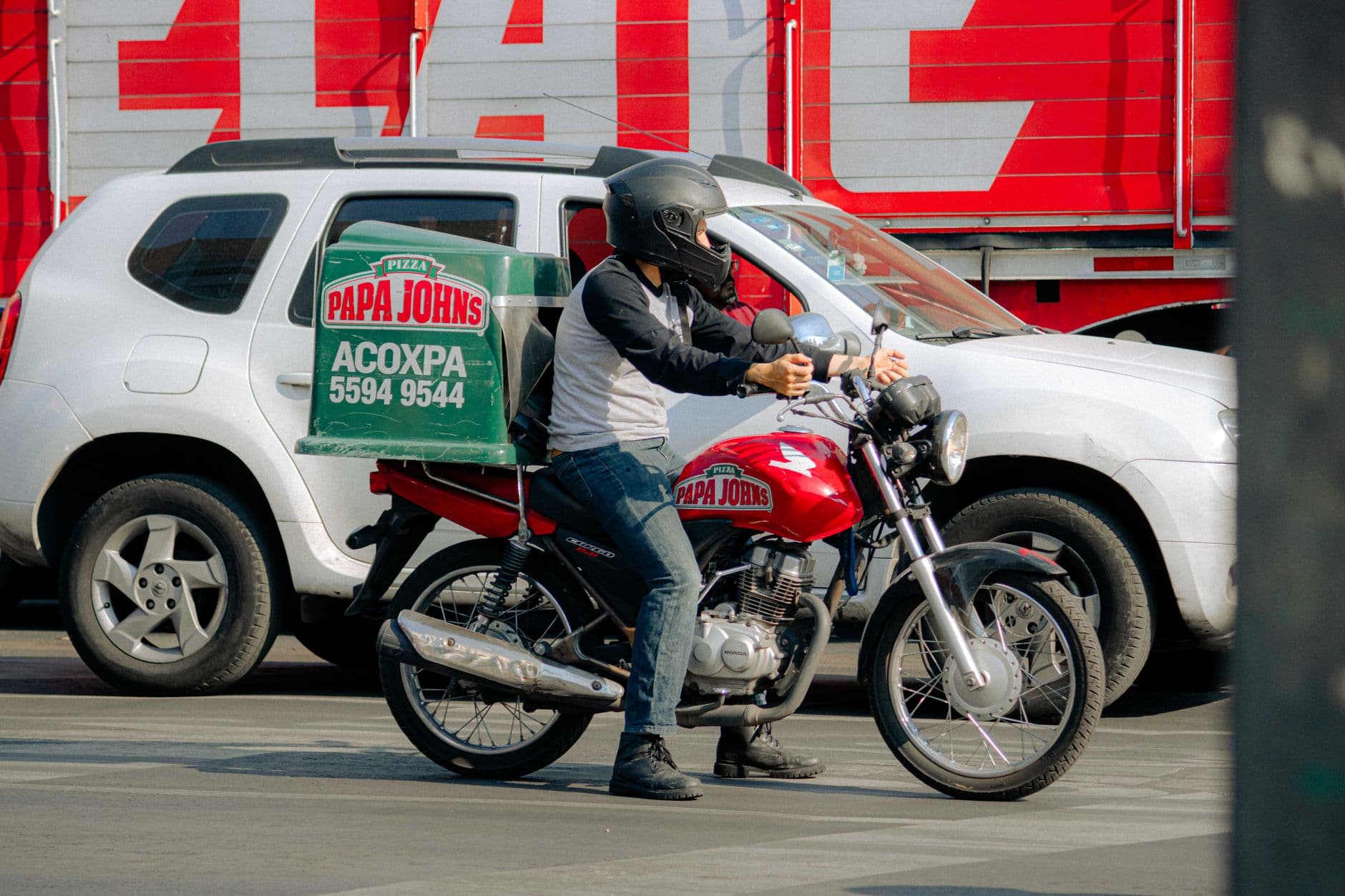
That is the part workers remember most: the argument may begin with royalties, contracts, or control, but it often ends with closed stores, shorter hours, and uncertain transfers. Delivery drivers are usually hit first when a unit starts tightening its belt. Fewer scheduled runs, more competition for tips, and a heavier reliance on third-party delivery can all show up fast when franchise margins get squeezed.
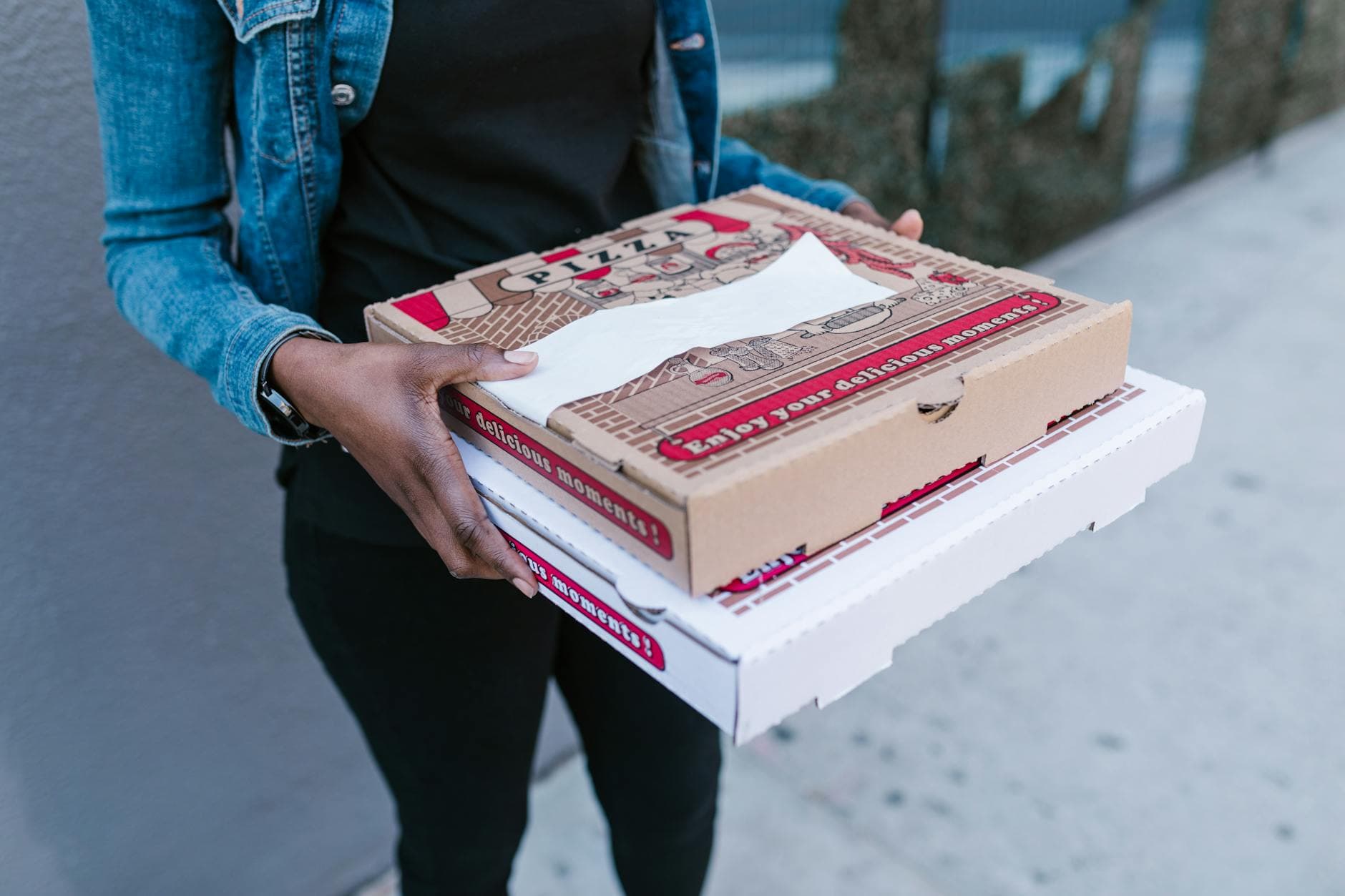
In markets where DoorDash and Uber Eats are already setting customer expectations for convenience, Pizza Hut operators are under constant pressure to defend their own delivery economics. If the store leans more heavily on apps, the commission math changes. If it keeps more delivery in-house, the franchisee has to carry the labor and vehicle costs. Either way, the driver is the one who feels the pressure in pay, mileage, tips, and route volume.
The joint-employer question is still live
The legal backdrop makes those pressures even more important. The U.S. Department of Labor announced a proposed joint-employer rule on April 22, 2026 that would revise analysis under the Fair Labor Standards Act, the Family and Medical Leave Act, and the Migrant and Seasonal Agricultural Worker Protection Act. The broader joint-employer debate has also remained unsettled at the National Labor Relations Board.
For Pizza Hut employees, the practical question is simple: who really controls the job? If the brand is pushing standards on scheduling, pay practices, hiring, benefits, or day-to-day operations, then the line between franchisor and employer starts to matter a lot more. The more control a brand tries to exercise, the more likely it is that workers will feel uniform rules moving faster across stores. The less clear the line is, the easier it becomes for both sides to pass responsibility when something goes wrong.
That uncertainty affects everything from labor planning to who is responsible when a store is short-staffed, a shift runs late, or a customer complaint escalates. In a Pizza Hut kitchen, a policy dispute is not an abstract legal theory. It can become the reason a shift runs with one fewer driver, one more cut-hour, or one more manager trying to answer to two bosses at once.
Why brands keep pushing growth anyway
The pressure to expand helps explain why these disputes keep happening. Technomic’s Top 500 data showed company-owned brands growing sales faster than chains with franchised units, while franchised systems leaned more heavily on new-unit growth to keep expanding. That can push brands toward aggressive openings, dual-brand tests, and tighter control over how stores are run.
Dine Brands Global has leaned into that model with Applebee’s-IHOP sites. It opened its first U.S. dual-branded location in Seguin, Texas, on Feb. 18, 2025. By early 2026, Dine Brands said it had 28 domestic dual-branded openings, and trade reporting put the total at roughly 30 open or under construction, with at least 50 more expected in 2026. The company has also said those units can generate 1.5 times to 2.5 times the revenue of single-brand locations.
That kind of math is exactly why franchisees get nervous. A brand may see growth potential; a local operator may see a shift in traffic, a stronger claim on the same customers, and a more crowded market for labor. For Pizza Hut, the lesson is not about Applebee’s menus. It is about the mechanics of control. When a franchisor chases growth, the worker on the shift often inherits the new rules before anyone else explains them.
What Pizza Hut workers should watch
- More pressure to absorb sales swings without extra labor hours
- Sudden changes in delivery zones, routing, or third-party delivery use
- More cross-training or role blending at the store level
- Tighter scheduling, especially for drivers and closing crews
- Conflicting instructions from field leaders and franchise owners on service standards
- Higher turnover when pay, tips, and workload stop matching the job
The clearest early warning sign is not a lawsuit filing. It is the moment a store starts changing its rules faster than it can explain them. At Pizza Hut, that usually means the brand and the franchisee are already fighting over who gets to define the business, and the crew is standing in the middle of it.
This article was produced by Prism’s automated news system from verified source data, official records, and press releases, then run through automated quality and moderation checks before publishing. The system is built and supervised by the people who set the standards it runs under. Read our full AI policy.
Did this article answer your question?