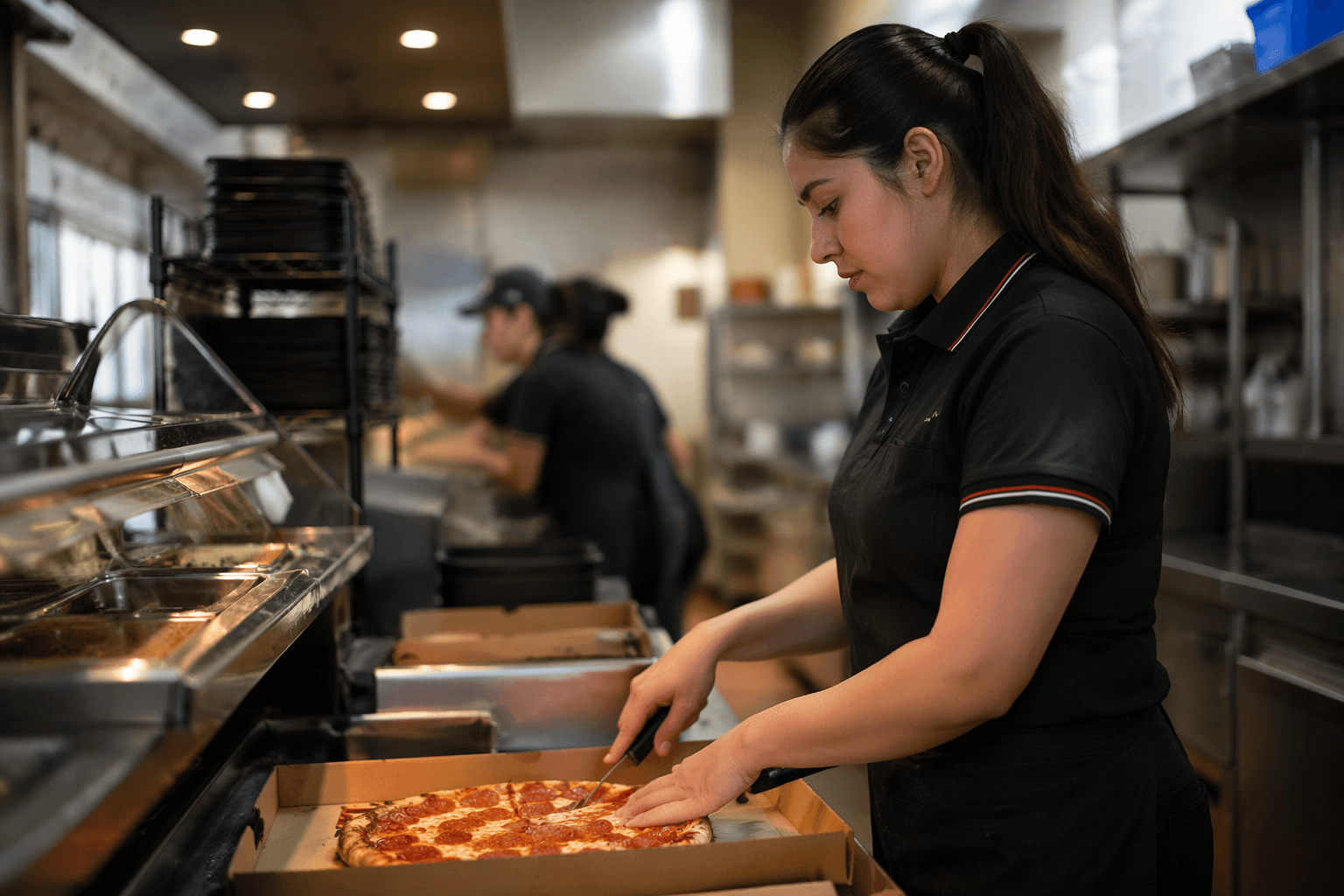
Pizza Hut job postings outline frontline duties, shoulder-to-shoulder training expectations
Pizza Hut job postings for Team Member and Crew detail front-line tasks and require shoulder-to-shoulder training, setting clear expectations for recruits, managers, and scheduling.

Pizza Hut job postings for front-line Team Member and Crew roles list specific duties and training expectations that shape day-to-day work at restaurants. The listings require following chain-operated training processes, including shoulder-to-shoulder training, delivering customer service and the guest experience, completing cleaning and sidework, and adhering to brand standards for food safety and driver and restaurant safety.
The postings describe the restaurant reporting structure, naming General Manager and Assistant Manager as the supervisory roles responsible for on-site training and operational oversight. The language used in the job descriptions matches corporate hiring copy that Pizza Hut deploys across markets, making the listings a standard reference for what entry-level staff should expect when they are hired.
For employees, the postings translate into concrete responsibilities from the first shift. New Team Member and Crew hires should expect hands-on coaching at the line and in the dining area, formalized expectations for completing assigned sidework and cleaning tasks, and explicit duties tied to food safety protocols and driver safety when delivery work is involved. For managers, the descriptions function as a measurable baseline for recruitment conversations, shift scheduling, and performance feedback. Local managers can point to the same corporate language when explaining required tasks or justifying staffing levels.
Operationally, the emphasis on shoulder-to-shoulder training signals a preference for in-person, peer-led onboarding rather than remote modules alone. That can accelerate skill transfer for busy roles like order taking, food preparation, and delivery coordination, but it can also place time demands on General Managers and Assistant Managers who must allocate hours for direct coaching. The brand standards named in the postings tie everyday tasks to compliance goals, making food safety and driver safety formal parts of entry-level job descriptions rather than optional responsibilities.
Because these postings are the primary public-facing description of required tasks, the wording matters for recruiters who write local ads and for hiring teams that build schedules. Candidates who read the postings get an early sense of the time commitment and the balance between customer service and operational work. Managers who rely on the listings gain a common script to set training objectives and assign sidework during shifts.
What this means going forward is practical: applicants should read the job descriptions closely to understand training and safety responsibilities, and managers should use the corporate language to align onboarding, scheduling, and shift supervision. As Pizza Hut continues to use consistent postings across markets, those descriptions will remain a key touchpoint for expectations at the restaurant level.
This article was produced by Prism’s automated news system from verified source data, official records, and press releases, then run through automated quality and moderation checks before publishing. The system is built and supervised by the people who set the standards it runs under. Read our full AI policy.
Did this article answer your question?