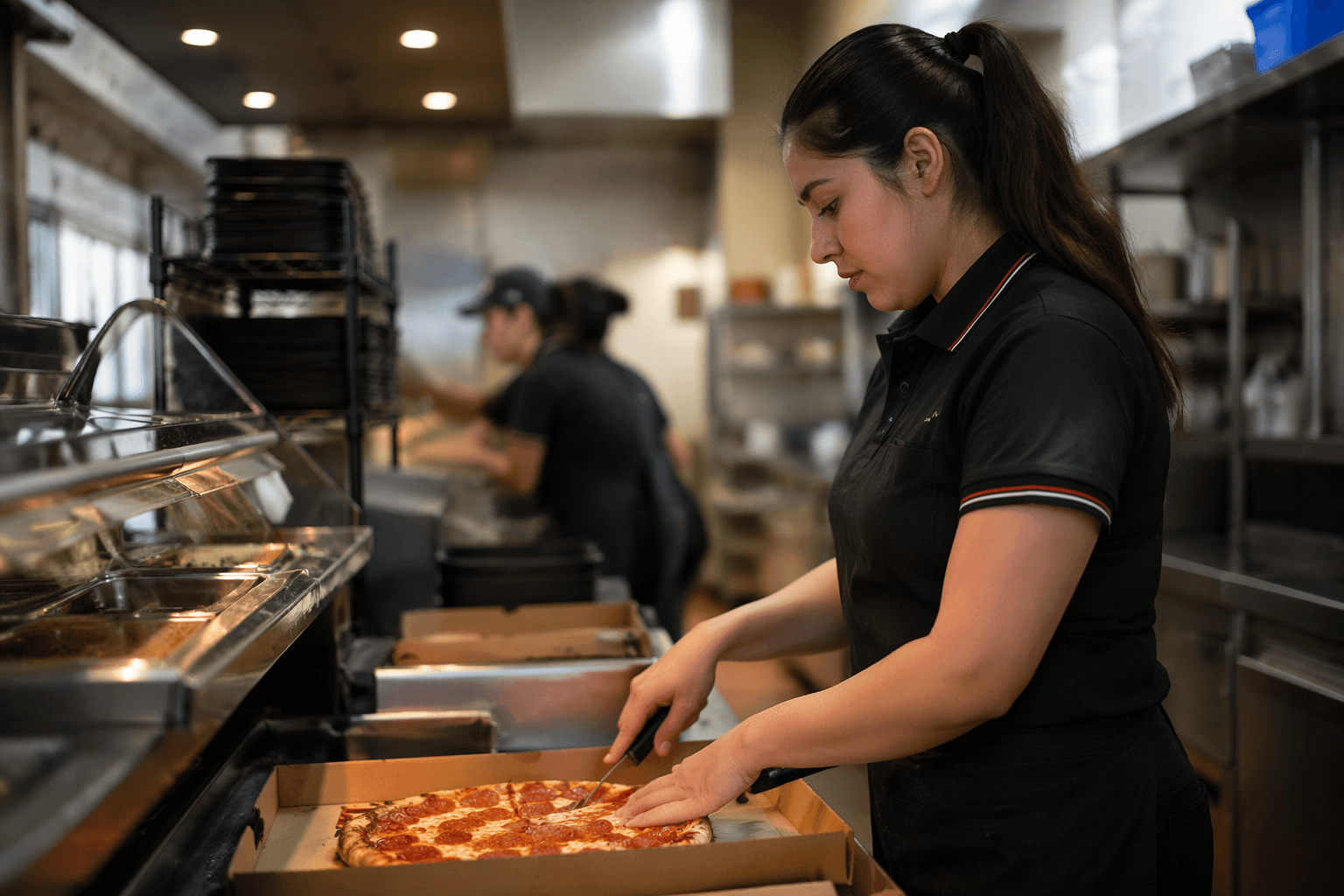
Pizza Hut jokes employees told it was AI after Luigi Primo clip
Pizza Hut’s official social post joked “we told our employees it’s AI” after a viral clip of pro wrestler Luigi Primo theatrically slinging pizza, drawing scrutiny for tone and follow-up.

Pizza Hut’s official social-media account drew attention after replying to a viral clip of pro wrestler Luigi Primo theatrically slinging pizza in a match with the line, “we told our employees it’s AI.” The exchange surfaced alongside wider online discussion of the clip and has raised questions among staff about how the brand handles sudden viral moments.
The clip and Pizza Hut’s response circulated in coverage and social feeds beginning March 5, 2026, when the video drew human-interest attention. Luigi Primo’s theatrical pizza-slinging sequence became the immediate focus for brand reactions, and the Pizza Hut post, posted on an official-branded channel according to initial reporting, used a jokey tone rather than a formal corporate statement.
A separate crisis case outlined in a post-crisis analysis shows how one national pizza chain handled a similar prank video and the downstream operational demands that followed. “The pizza company was alerted to the video on the night it was uploaded.” That chain initially chose to directly respond to bloggers who spread the clip rather than issuing a mainstream press announcement, reasoning that bloggers would help disseminate their response while mainstream outlets might amplify the prank.
That strategy quickly ran into trouble. The company later acknowledged it had underestimated online virality, using the phrase “perpetual mushroom effect of viral sensations” to describe how the clip continued to spread and gather attention. Two days after the original upload, the firm’s team — identified in the timeline only by the surname Hammonds — asked YouTube to take down the prank video, filing a copyright claim. “Two days later, Hammonds asked YouTube to take down the prank video claiming copyright,” and on that same night the chain posted a YouTube response featuring Patrick Doyle.

The later pivot included a mix of damage control and brand humanization: the company hired a documentary film crew to record focus group participants delivering negative commentary, replayed that footage for management and staff, asked employees on camera to read online complaints to capture their reactions, and had chefs visit focus groups. Instead of a celebrity narrator, the CEO was tasked to explain how the product had changed. The response also involved shifting channels: posting an official statement on YouTube and creating a Twitter account to engage the public, moves the analysis called effective. “Posting an effective official statement on YouTube and creating an account on Twitter to engage with public became successful.” The analysis added, “Press releases are crucial part of crisis management, and many believe that Domino’s did a great job with their official statement to the video prank scandal. Some of the good points of the video are:”
For Pizza Hut employees on the front lines, the contrast matters. A single sarcastic social post, even if intended as a light touch, leaves unanswered whether the company followed with takedown requests, executive statements, or staff-facing communications that mirror the deeper response described in the other chain’s timeline. Without evidence of similar follow-up steps — takedowns, executive video, or internal briefings — the jokey “we told our employees it’s AI” line risks becoming the primary corporate message employees must explain to customers and local managers.
This article was produced by Prism’s automated news system from verified source data, official records, and press releases, then run through automated quality and moderation checks before publishing. The system is built and supervised by the people who set the standards it runs under. Read our full AI policy.
Did this article answer your question?