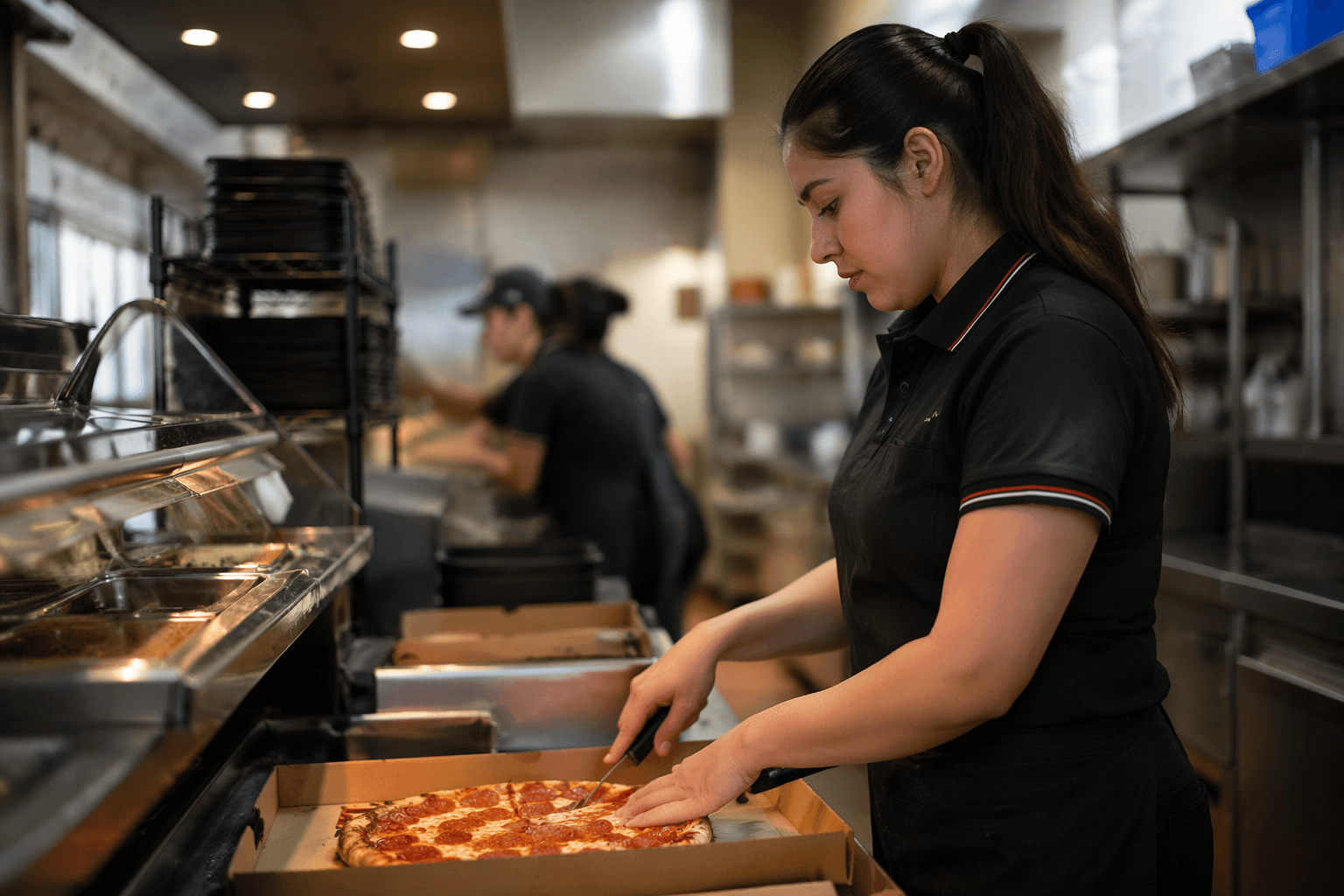
Pizza Hut Manager Tiffany May, Crew Stay at Hotel to Serve Neighbors
Pizza Hut manager Tiffany May and several crew members lodged at a nearby hotel so their West End Avenue restaurant could stay open, feeding and sheltering neighbors during a severe winter storm.

When a severe winter storm cut power for parts of downtown Nashville, Tiffany May, manager of the Pizza Hut on West End Avenue, organized a multi-night effort to keep the store open and serve the neighborhood. May and several employees spent nights at the nearby Hampton Inn & Suites so staff could sleep nearby and return quickly to the restaurant to deliver food, provide warmth and charge devices for residents, and serve hotel guests who had lost power.
The crew took walk-in orders late into the evening and delivered pizzas on foot to customers who could not leave their residences. The restaurant also functioned as an informal warming and charging center for neighbors. Staff efforts continued despite supply strains; the store ran out of dough on Jan. 25, illustrating how quickly frontline operations can be pushed to the limit during prolonged weather events.
The ad-hoc lodging arrangement highlights how local managers can expand responsibilities under emergency conditions. By lodging off-site at the Hampton Inn & Suites, May and her employees created a practical staffing solution that reduced commute time in hazardous conditions and kept a familiar community resource accessible. Those moves required schedule flexibility, extra labor, and on-the-ground decision making that went beyond typical shift duties.
For workers, the episode underscores both the practical and emotional dimensions of frontline service during crises. Staying overnight to keep a restaurant open adds fatigue and potential safety risk, yet it can also strengthen workplace bonds and local standing. The work mixed standard restaurant tasks with community-facing duties such as sheltering guests, providing charging power and making pedestrian deliveries. That mix can strain staffing plans and raises questions about compensation, rest periods and employer support when workers take on expanded roles to meet community needs.
The incident also offers a reminder to employers and franchisors about disaster readiness. Simple preparations - formal emergency pay policies, prearranged lodging, backup supplies and clear guidance on extra duties - can reduce the burden on individual managers and crews who must improvise under pressure. For employees, documenting hours and employer communications after such events will be important if adjustments to pay or schedules are needed.
May’s decision to keep the West End Avenue Pizza Hut open provided immediate relief to neighbors and displaced hotel guests while shining a light on how frontline workers fill vital community roles in emergencies. The next steps will be whether franchised operators and corporate leaders codify support for staff who are asked to do more than serve pizza.
This article was produced by Prism’s automated news system from verified source data, official records, and press releases, then run through automated quality and moderation checks before publishing. The system is built and supervised by the people who set the standards it runs under. Read our full AI policy.
Did this article answer your question?