Pizza Hut Managers Get a Wage and Hour Compliance Checklist
Franchise managers underpaying delivery drivers is one of Pizza Hut's biggest legal exposures. Here's the compliance checklist that closes the gap.
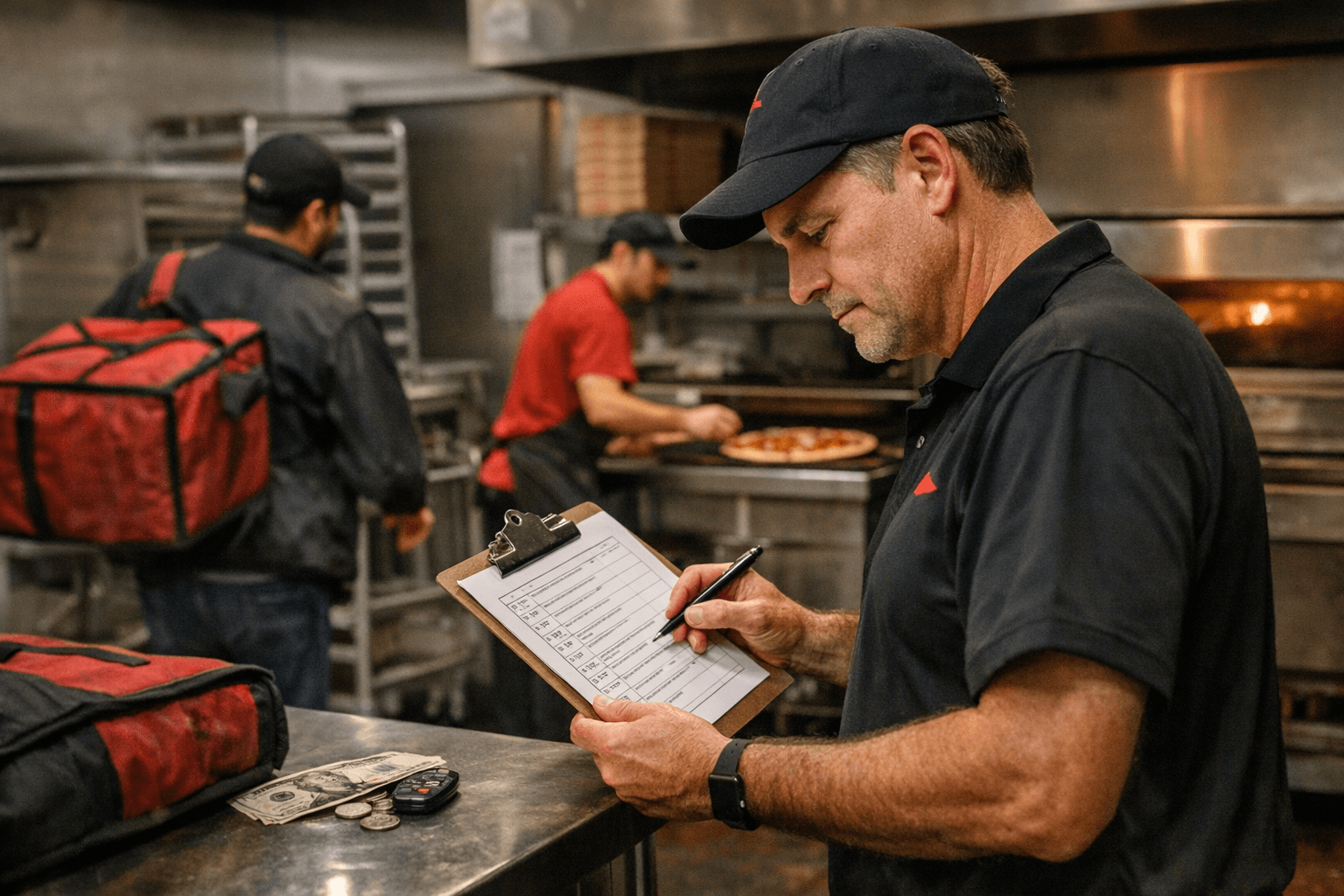
Every Pizza Hut franchise manager has signed on to a system built around speed: hot pizza, fast delivery, minimal friction at the door. But the legal obligations running underneath that operation move at a different pace, and when wage-and-hour rules get skipped or misunderstood, the consequences land hard, on workers first and on the franchise's bottom line shortly after.
This guide is built for the people running shifts, not corporate attorneys. If you're a franchise owner, a general manager, or a shift lead responsible for drivers clocking in and out, this is the compliance framework you need to keep your store on the right side of federal law and out of the kind of litigation that has cost pizza chains millions in back wages.
Why Delivery Driver Pay Is the Highest-Risk Area
Delivery drivers sit at the intersection of nearly every wage-and-hour pressure point in food service. They're tipped employees, which means the federal tip credit rules under the Fair Labor Standards Act apply. They drive their own vehicles in most Pizza Hut franchise setups, which triggers vehicle reimbursement obligations. They split time between in-store work and delivery runs, which creates dual-role complications around the tip credit. And they're competing for hours against gig platforms like DoorDash and Uber Eats, which means turnover is high and record-keeping gaps are common.
The Department of Labor has made multi-component delivery driver pay one of its active enforcement areas. Getting this wrong isn't a technicality: it's a category of violation that generates collective and class action lawsuits, and the pizza delivery industry has been a recurring target.
The Tip Credit: What You Can and Can't Do
Federal law allows employers to pay tipped employees a direct cash wage of $2.13 per hour, with the difference between that amount and the federal minimum wage of $7.25 made up by customer tips. This is the tip credit. But it comes with strict conditions that franchise managers frequently misapply.
First, the employee must be informed of the tip credit arrangement before it is applied. That's not optional language buried in an onboarding packet: it needs to be communicated clearly, in writing, before the employee's first tipped shift. Second, tips must actually bring the employee's total hourly earnings up to at least $7.25. If a driver has a slow shift and tips fall short, you must make up the difference with direct wages. Tip credit math has to happen every workweek, not as an average across a pay period.
Third, and this is where Pizza Hut managers most often run into trouble: the tip credit cannot be applied to time spent on non-tipped duties. Folding boxes, answering phones, washing dishes, sweeping the parking lot, any task that a non-tipped employee would also perform, falls outside the tip credit if it exceeds a threshold. The Department of Labor's guidance uses an 80/20 rule as a benchmark: if a tipped employee spends more than 20 percent of their shift on non-tipped work, the tip credit cannot apply to that time.
Vehicle Reimbursement: The Rule Most Managers Get Wrong
This is the compliance failure that generates the largest back-wage liability in pizza delivery operations. When a driver uses their personal vehicle for deliveries, the employer must reimburse them at a rate that doesn't effectively reduce their take-home pay below minimum wage when vehicle costs are factored in.
The IRS standard mileage rate is the safest benchmark. For 2025, that rate sits at 70 cents per mile. If your store is reimbursing drivers at a lower flat rate per delivery or a nominal per-mile amount that doesn't reflect actual vehicle operating costs, including fuel, oil, tires, and depreciation, you may be creating an effective wage violation even if the driver's pre-expense pay looks fine on paper.
The math your drivers are running: subtract what it costs them to operate their car from what they take home per hour. If that number falls below minimum wage, the franchise is liable for the difference. Point-of-sale systems that track delivery mileage can help document this accurately, but the tracking is only useful if someone is actually reviewing it against reimbursement rates.
Overtime and Scheduling Compliance
Overtime rules are straightforward on paper but frequently mismanaged in high-turnover environments. Any non-exempt employee who works more than 40 hours in a workweek is entitled to overtime pay at 1.5 times their regular rate. For tipped employees, that regular rate calculation has to account for the full minimum wage, not the $2.13 tip credit base, when computing overtime owed.
Shared staff between franchise locations can create hidden overtime liability. If a driver works 25 hours at one Pizza Hut location and 20 hours at a separately owned but affiliated franchise in the same week, overtime obligations may exist depending on how the DOL treats the employment relationship. If you manage staff across multiple units, or if drivers are sometimes loaned to neighboring franchises, consult with an employment attorney about joint employer exposure.
Record-Keeping: The Foundation Everything Else Depends On
You cannot defend a wage claim you can't document, and you cannot identify a compliance gap you aren't measuring. Federal law requires employers to maintain accurate records of hours worked, wages paid, tip credit notices, and reimbursements for at least two years, with payroll records kept for three.
For delivery drivers specifically, your records should capture:
- Clock-in and clock-out times for every shift, broken into in-store versus on-road time where possible
- Miles driven per delivery run, either through POS integration or driver logs
- Tips reported by the employee each shift
- Reimbursements paid, with the per-mile rate clearly documented
- Written acknowledgment that the tip credit was explained before the first tipped shift
If your current POS system doesn't make this data easy to pull, that's an operational problem worth solving before an investigator asks you to produce two years of driver pay records.
State Law: Where Federal Floors Aren't Enough
Federal rules set the floor. Many states and some cities have eliminated the tip credit entirely, raised minimum wages well above $7.25, or passed specific mileage reimbursement statutes that are stricter than federal guidance. California, for example, prohibits the tip credit outright: every employee including delivery drivers must receive the full state minimum wage before tips. New York, Illinois, and a growing list of jurisdictions have similar or overlapping protections.
Franchise managers who moved from a state where tip credit is standard to a market where it isn't, or who operate across state lines, need location-specific legal review. What's compliant in Texas may be a wage theft violation in California.
Making Compliance Part of the Shift, Not an Afterthought
The practical reality of running a Pizza Hut franchise is that compliance gets squeezed during dinner rushes and understaffed Saturdays. The managers most likely to face a wage claim aren't the ones who ignored the rules on purpose; they're the ones who didn't build the rules into their standard operating procedures.
A checklist approach helps. At the start of each pay period, verify that every driver's tip total plus direct wages cleared minimum wage in the previous week. Audit one week of mileage logs against reimbursement records quarterly. Confirm that any new driver hired in the last 90 days signed a written tip credit disclosure before their first delivery shift. When your POS updates, verify that mileage tracking still functions correctly.
The drivers working your routes are navigating the same gig economy math that DoorDash and Uber Eats use to recruit them away. When your wage practices are solid, it shows, and it's one fewer reason for experienced drivers to walk.
This article was produced by Prism’s automated news system from verified source data, official records, and press releases, then run through automated quality and moderation checks before publishing. The system is built and supervised by the people who set the standards it runs under. Read our full AI policy.
Did this article answer your question?

