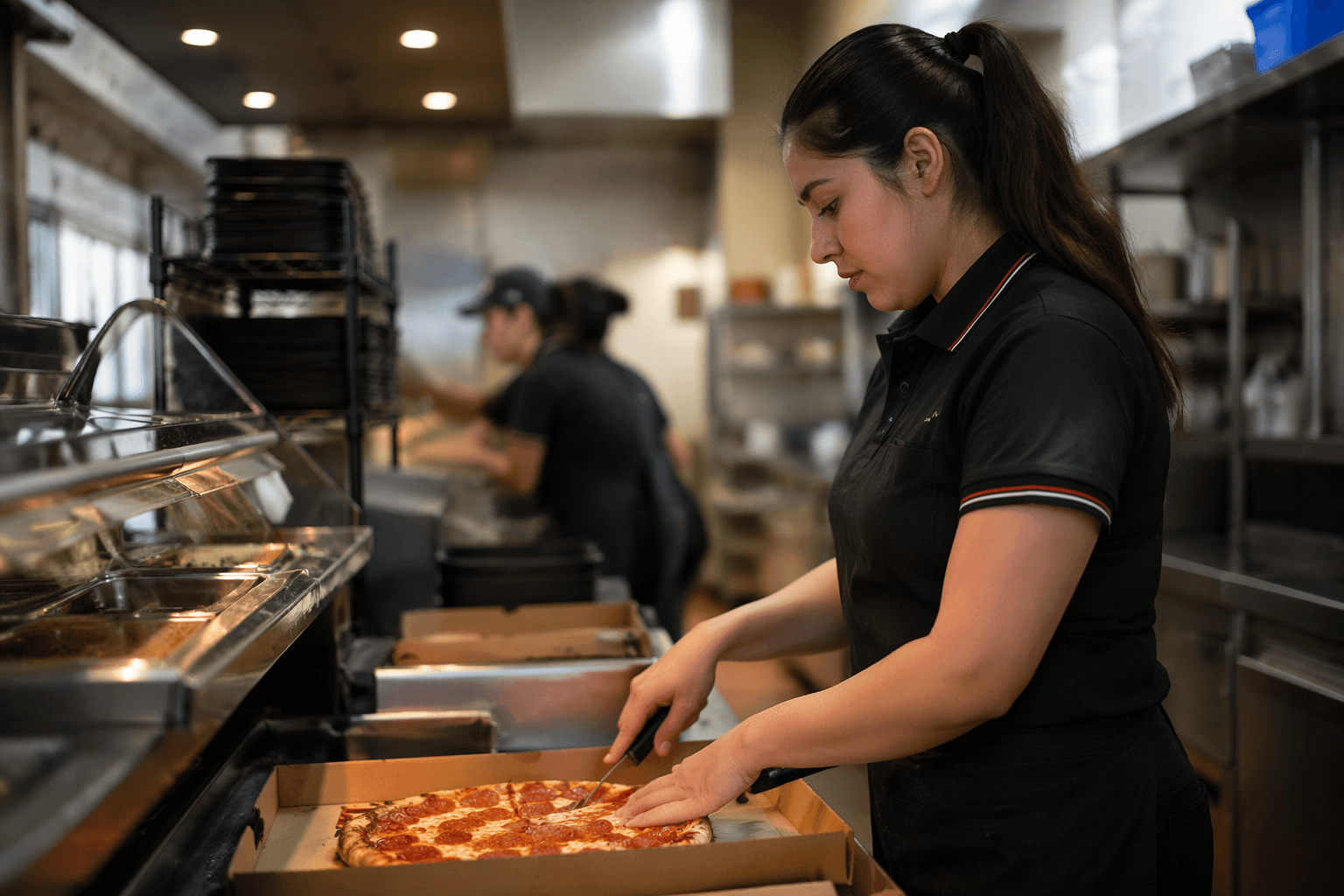
Pizza Hut Staff Guide: How Third-Party Delivery Platforms Reshape Store Operations
Pizza Hut's shift to DoorDash and Uber Eats has already displaced over 1,200 in-house drivers and is rewriting daily routines for kitchen crews and store managers nationwide.
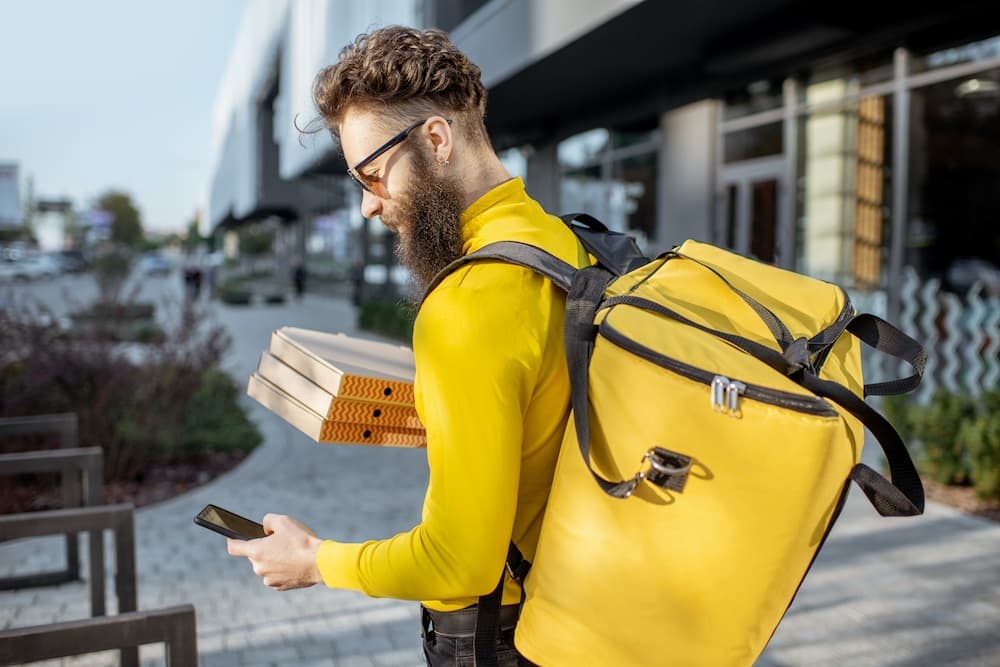
Pizza Hut's delivery model is changing fast, and not everyone on the floor has been given a clear picture of what that means for their shift, their paycheck, or their job title. Use of companies like DoorDash and Uber Eats has become a major operational focus, with 90% of Pizza Hut's U.S. system now working with at least one third-party delivery company. For drivers, kitchen crew, and managers who built their routines around in-house delivery, that number signals a structural shift worth understanding from the inside out.
What triggered the move to third-party platforms
The pivot did not happen overnight. With the rising costs of hiring and retaining delivery drivers, major pizza chains have turned to third-party delivery services like DoorDash and Uber Eats to get pizzas to customers' doors. California became the most visible flashpoint. Revised state minimum wage laws stipulated that fast food businesses with more than 60 locations must pay at least $20 per hour, and as a means of combating increased labor costs, locations ditched delivery drivers. Two major franchise operators in California went this route, and as these operators oversee hundreds of stores, more than 1,200 jobs were reportedly affected.
The cost math is stark. Instead of hiring drivers at $25 to $35 per hour, franchisees can outsource deliveries and simply pay DoorDash a commission. That equation is driving decisions from Oklahoma to California: one Pizza Hut employee posting to the r/pizzahutemployees subreddit stated the same shift is happening in Oklahoma, with deliveries taken over by DoorDash as of January 2025.
What this means if you're a delivery driver
This is the most direct workforce impact. In one widely shared account, a part-time Pizza Hut delivery driver reported being notified on February 28, 2025 that delivery drivers would no longer be part of Pizza Hut, as the location was going full-time with DoorDash and Uber Eats.
The transition does not automatically mean termination. Drivers at some locations were offered the option to keep their jobs in the kitchen, but the message was direct: delivery driver positions are being eliminated. The difference in compensation is significant. As a Pizza Hut in-house driver, your earnings combined an hourly wage, mileage reimbursement, and direct customer tips on orders you personally delivered. Moving to the kitchen means a flat hourly rate with no tip income, while the DoorDash or Uber Eats contractor who picks up your former route keeps the delivery fee on each order.
The online food delivery market is dominated by DoorDash with 66% market share and Uber Eats with 23% market share in the U.S. These platforms have a massive pool of independent contractors, which is precisely why franchisees find them attractive as a replacement for a dedicated in-house fleet. For anyone weighing whether to transition to gig delivery on these apps, the contractor model means no guaranteed hours, no employer-side payroll taxes, and no mileage reimbursement structure tied to a single employer.
How the kitchen crew's workload shifts
When a store removes in-house drivers and routes all deliveries through DoorDash or Uber Eats, the kitchen does not get quieter. It typically gets busier and more complicated.
The influx of delivery orders can increase the workload for kitchen staff, leading to potential burnout and decreased efficiency, as staff may need to juggle between dine-in and delivery orders, which is often challenging. With third-party platforms active, orders can arrive from the app's own marketplace simultaneously with direct Pizza Hut online orders, phone orders, and walk-ins. Each channel has its own tablet or screen on the make line, and keeping those queues synchronized without dropping tickets is a real operational pressure.
Packaging also becomes a greater responsibility for kitchen crew. When a third party is handling multiple orders at once, there is no guarantee food gets delivered first, and some restaurants have to change their packaging just to ensure food arrives in decent condition. A DoorDash driver may pick up an order and make two other stops before yours reaches the door, so how tightly a box is sealed and how an order is bagged matters more than it did with a dedicated Pizza Hut driver making a direct run.
Implementing a separate prep line or designated kitchen staff to handle delivery orders is one approach that minimizes disruptions to dine-in service. At high-volume stores during Friday dinner rushes, separating the delivery prep flow from the counter and dine-in flow is the difference between controlled output and a backed-up make line.
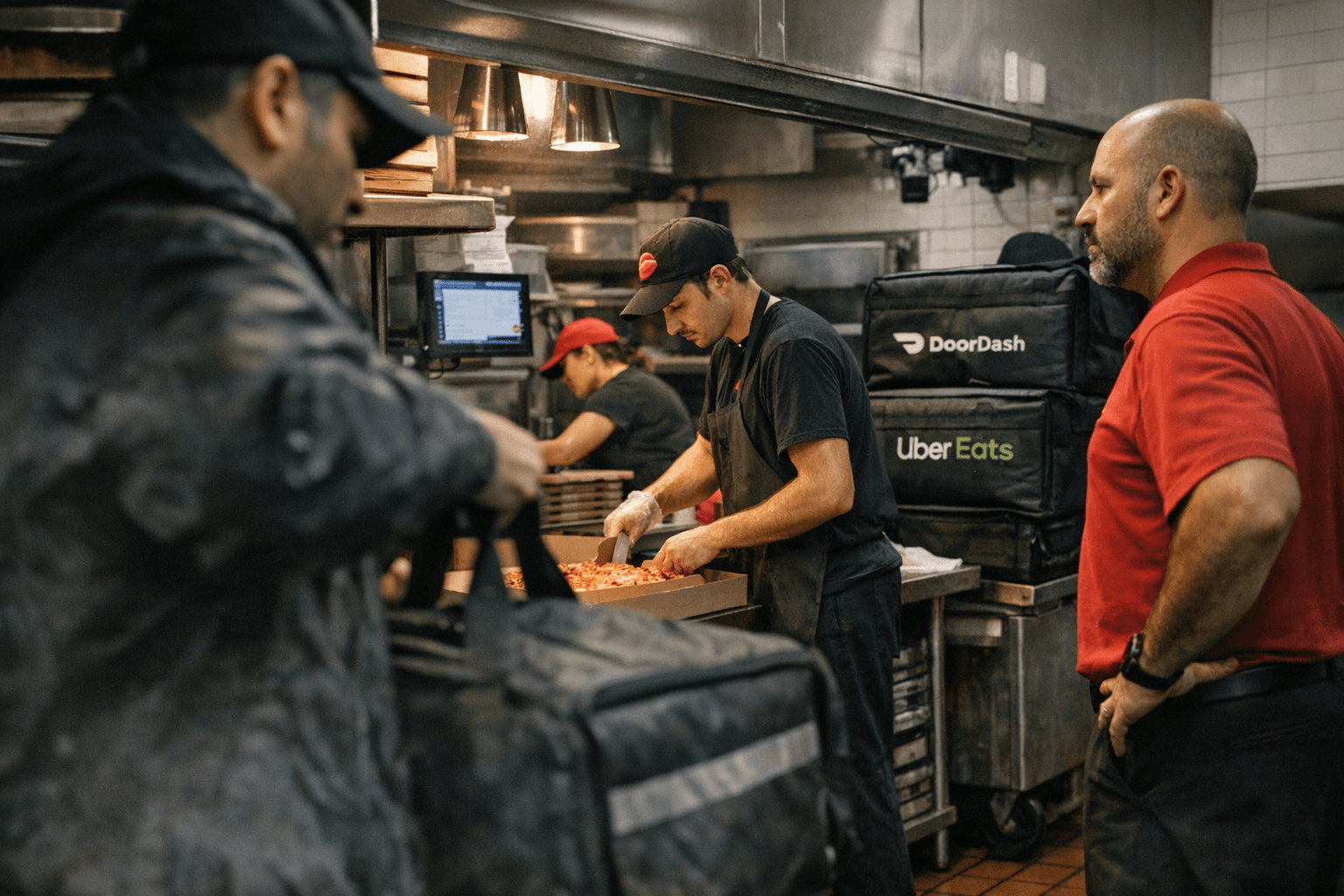
What store managers need to manage differently
Managers lose direct control over the delivery experience the moment the bag leaves the store. Almost all delivery problems are blamed on the restaurant, even when they are caused by the delivery driver or app malfunction. A cold pizza that sat in a DoorDash driver's car for 40 minutes will generate a one-star review that lands on your store's page.
Order volume data changes hands, too. Delivery apps provide valuable data on customer preferences, ordering habits, and feedback, and restaurants can use this information to customize menus, marketing strategies, and customer service. But that data lives inside the platform's dashboard, not automatically in your POS. Managers who previously tracked delivery patterns through their own driver dispatch logs now need to pull reports from DoorDash or Uber Eats portals separately.
The commission structure also demands close attention. Uber Eats and DoorDash charge up to 30% in fees per delivery. With 30% commission rates on delivery orders being common and average profit margins of roughly 15% among pizza restaurants, the math on every third-party order requires active management. At the franchise level, that means menu pricing on third-party marketplaces often runs higher than in-store pricing to offset commission costs, which is something managers need to communicate clearly to staff who field customer complaints about price discrepancies.
The regulatory landscape is also shifting in ways that affect costs. When platforms like Uber Eats or DoorDash face increased labor costs or fines, they frequently pass those costs along, either through higher commission fees for restaurants or service fees that frustrate customers. New York City has capped delivery commissions at 15%, plus up to 5% for promotions, though platforms are pushing to expand "enhanced services" fees that could raise the total to 43% per order.
Hybrid delivery: the middle ground some stores use
Not every Pizza Hut location has gone all-in with third-party-only delivery. Some stores use platforms as an overflow valve rather than a full replacement. A Pizza Hut employee explained that DoorDash is used to deliver whenever it gets extremely busy or when there are not enough drivers on hand, ensuring customers still get their pizza on time.
This hybrid approach has its own operational logic. The ability to toggle delivery services on and off as needed can be a lifesaver during peak hours when the restaurant is already bustling with dine-in customers, allowing managers to prevent the kitchen from becoming overwhelmed while ensuring in-house guests receive the attention and quality they deserve.
For stores maintaining both in-house drivers and third-party partnerships, the coordination challenge is keeping drivers and the dispatch screen synchronized so orders are not double-assigned. A driver who heads out on a run while a DoorDash pickup for the same order window is also queued creates confusion that burns time and goodwill with customers.
The broader industry context
Pizza Hut's move is part of a chain-wide realignment happening across the pizza industry. Pizza Hut and Little Caesars have inked deals with DoorDash, with the rationale that offloading deliveries cuts costs and provides access to more drivers to meet demand. Papa John's is rolling out DoorDash delivery to 1,400 of its restaurants. Even Domino's, long the loudest holdout against third-party platforms, announced a partnership with Uber Eats to facilitate deliveries in the U.S. and 27 other countries.
For Pizza Hut employees, the lesson is that no role in the building sits entirely outside the reach of this shift. Drivers face the most immediate displacement risk. Kitchen crew absorbs more order volume and packaging pressure. Managers take on new responsibilities around platform data, commission tracking, and customer service recovery. Understanding the mechanics of how DoorDash, Uber Eats, and Grubhub actually move through your store, from the tablet ping to the bag pickup, is now as fundamental a part of the job as knowing your dough prep schedule.
This article was produced by Prism’s automated news system from verified source data, official records, and press releases, then run through automated quality and moderation checks before publishing. The system is built and supervised by the people who set the standards it runs under. Read our full AI policy.
Did this article answer your question?