Pizza Hut workers face tougher competition as pizza demand shifts
Pizza Hut’s rivals are leaning into lower prices, digital ordering and delivery speed, and those moves are already reshaping staffing, upselling and rushes.
Papa Johns’ lower-priced Shaq-a-Roni is one of the clearest pressures on Pizza Hut stores right now. Rival chains are fighting the pizza market on value, digital speed and delivery convenience, and those choices land on the floor as more volatile tickets, tighter labor calls and sharper guest expectations. PMQ’s 2024 Pizza Power Report: Quick-Service Edition framed the category as a live battlefield, and independents still win attention with creativity and technology.
Value is the quickest pressure point
The clearest move competitors are making is simple: price pressure. National chains keep leaning on deals to keep traffic moving.
For Pizza Hut crews, value promotions change the rhythm of the shift. A busier store can still feel tighter if the mix tilts toward discounted pizzas, since managers may be trying to protect labor while ticket counts rise. Guests who come in on a deal also tend to test the upsell line harder, so toppings, sides and beverages have to be pitched cleanly and quickly or the check average slips.
Domino’s, Papa Johns, local independents, ghost kitchens and app-based aggregators are all competing for the same pizza occasion. PMQ’s 2025 Pizza Power coverage also showed independents still using creativity and technology to hold their ground. In practice, that means Pizza Hut does not just need the deal to land, it needs the store to execute it without slowing the make line or turning the front counter into a bottleneck.
Delivery and carryout are no longer side channels
Pizza Hut now frames the brand around “Delivery & Carryout” and uses the line “No One OutPizzas The Hut.” The category is shaped by delivery, carryout and digital ordering rather than dine-in traffic alone.
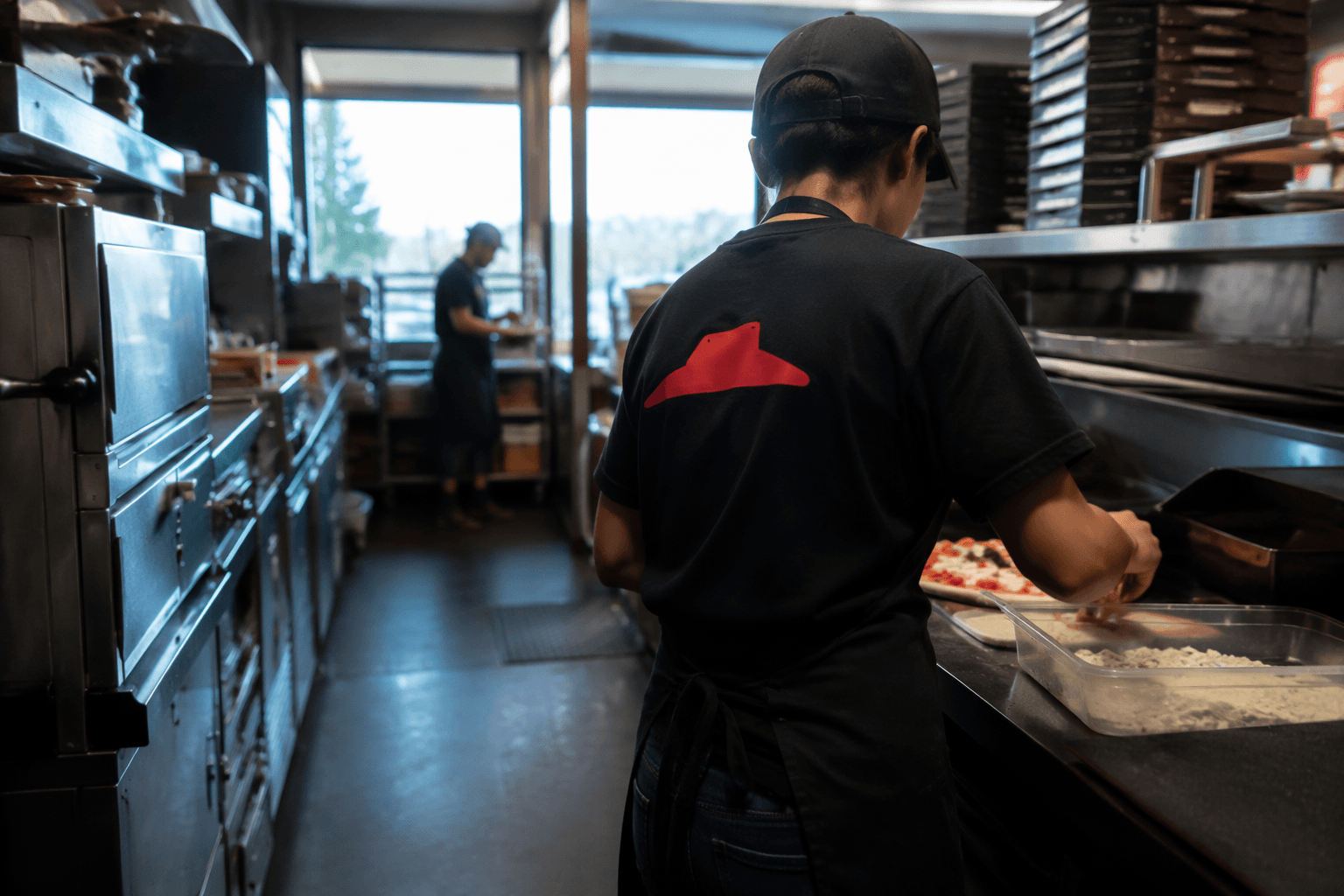
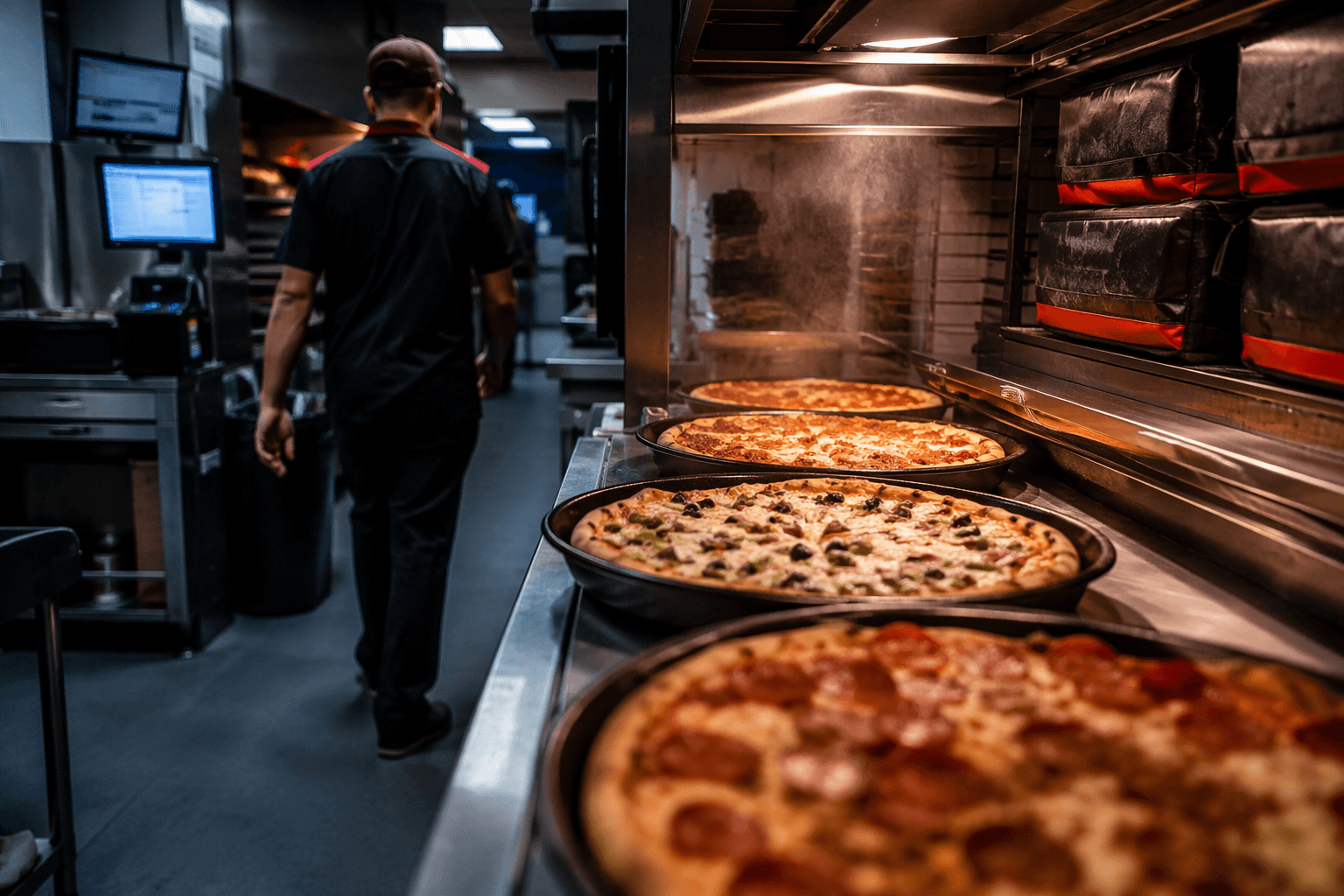
That shift shows up immediately in staffing. When more orders arrive through phones and apps, the make line gets less predictable, drivers get pulled into tighter dispatch windows, and managers have to decide whether the next half-hour needs more oven capacity, more cut table help or more delivery coverage. For kitchen crew, the pressure is less about one giant rush and more about keeping a steady pace when delivery, carryout and walk-in demand overlap.
Yum! Brands’ 2024 annual report puts the scale of that system in context: more than 61,000 restaurants in over 155 countries and territories, with approximately 1,500 franchisees. As of May 1, 2024, Yum’s digital sales mix topped 50% systemwide. At store level, that usually translates into more screen-driven demand, more order timing pressure and less room for error when the guest expects the pizza to be ready, packed and on time.
Pizza Hut has been in this channel fight for decades
The push toward convenience is not new for Pizza Hut. Pizza Hut Philippines traces the brand there to 1984, with dine-in restaurants, delivery units and express counters. Pizza Hut tested online ordering in Santa Cruz, California, in 1994, an early sign that the brand had already started experimenting with digital ordering when the internet was still a novelty for most restaurants.
Pizza Hut has repeatedly had to balance nostalgia from its dine-in roots with the reality that customers now expect speed, flexibility and easy ordering. For managers, that usually means labor planning cannot rely on the old assumption that the dining room drives the whole shift; the real workload may be coming from delivery bags, app orders and carryout shelves.
What the competition changes on the floor
A strong promo from a rival can affect how many orders hit the screen, how many drivers need to be on the clock and how much patience guests have for a remake or a late pie. It can also change what managers need to coach most, whether that is upselling without dragging out the order, checking accuracy before the box is sealed or adjusting the schedule when demand shifts from dinner rush to late-night delivery.
For drivers, the biggest pressure is often the one that does not show up in sales reports: how long a shift feels when traffic and dispatch timing tighten. For kitchen crew, the issue is throughput, since a digital-heavy business rewards speed and consistency more than improvisation. For restaurant managers, the job is to keep the labor plan aligned with a market where a lower-priced competitor offer, a new digital habit or a stronger delivery mix can change the whole night.
This article was produced by Prism’s automated news system from verified source data, official records, and press releases, then run through automated quality and moderation checks before publishing. The system is built and supervised by the people who set the standards it runs under. Read our full AI policy.
Did this article answer your question?