Pizza Hut workers get plain-English guide to tipped wage rights
Pizza Hut pay can go wrong fast when delivery shifts mix driving, prep and cleanup. If tips plus cash wages miss $7.25, the employer must make up the gap.

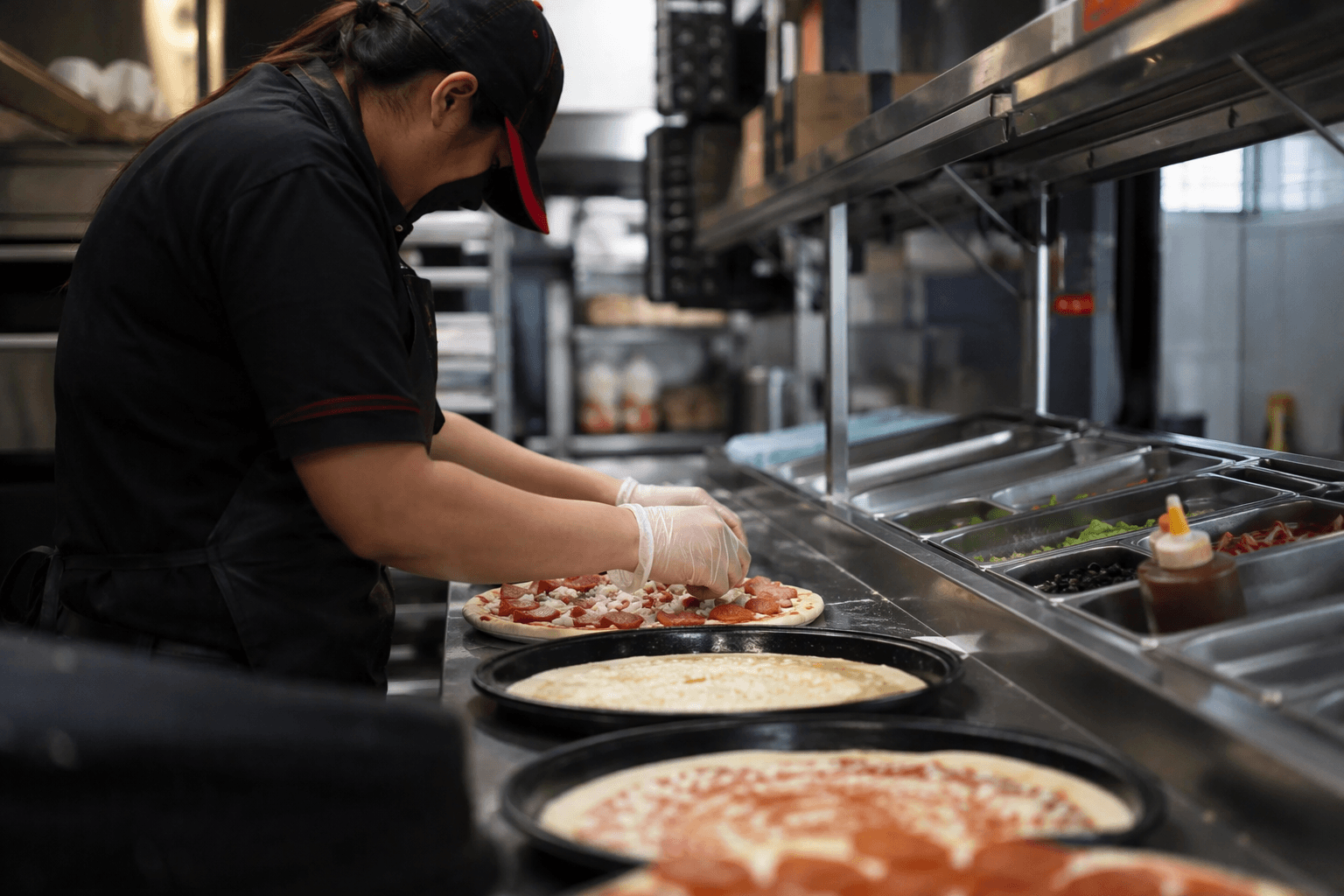
One Pizza Hut shift can include driving, box folding, phone duty, prep, register work, and cleanup. The federal rules are simple on paper, but the pay math can get messy fast when a worker is tipped for part of the night and doing non-tipped labor for the rest. Payroll mistakes, tip-pool disputes, and overtime questions usually start there.
What counts as a tipped employee
Under the Fair Labor Standards Act, a tipped employee is someone who customarily and regularly receives more than $30 a month in tips. That definition matters because it is the gateway to the tip-credit system, which lets an employer count part of a worker’s tips toward the federal minimum wage.
For Pizza Hut drivers and other front-of-house staff, the label on the schedule is not the whole story. A delivery driver who spends part of the shift on the road and part folding boxes or answering phones still needs pay that matches the actual duties and hours worked. The same is true for crew members who move from food prep to register work to closing cleanup.
How the tip credit works
If an employer claims a tip credit, federal law requires at least $2.13 an hour in direct cash wages. Tips plus that cash wage must bring the worker up to the federal minimum wage of $7.25 an hour. If the tips and cash wages do not reach that floor, the employer has to make up the shortfall.
A wage that is legal for a tipped role still has to work out to at least $7.25 an hour once tips are counted. If your direct cash wage is $2.13, the tips have to do the rest of the job.
Mixed duties are where pay problems begin
Pizza Hut jobs often shift midstream. A driver may take deliveries, then come back to fold boxes, handle the phone, or help close the dining room. Crew members may prep food, ring up customers, and clean without much break in between.
That mix matters because substantial non-tipped work can change the wage analysis. If you are doing a lot of side work or work that is not customarily tipped, it is worth checking whether the employer is using the tip credit correctly. The job title alone does not override wage rules.
Tip pooling rules have changed, and the history still matters
Tip pooling is another place where confusion builds. In April 2018, the Department of Labor revised Fact Sheet #15 after Congress vacated the department’s 2011 regulations that barred tip pooling when employers do not claim a tip credit. In plain English: the rules around who can share tips depend on how the employer handles the tip credit, and the framework has changed enough that managers cannot assume old habits still fit current law.
The Department of Labor also published a new rule in the Federal Register on December 17, 2024, titled “Tip Regulations Under the Fair Labor Standards Act (FLSA); Restoration of Regulatory Language.” Store practices need to match the current legal setup, not a version someone learned years ago in training.
For workers, the practical move is to ask how the pool is set up, who is in it, and whether the restaurant is taking the tip credit. If the answers do not line up, that is a payroll question worth pressing before the problem grows into a pattern.
Pizza Hut has already seen wage fights over delivery work
A proposed class action, Bordeau et al. v. V & J Employment Services, Inc. et al., was filed on February 17, 2017 in federal court in New York. The case named Pizza Hut franchisee V & J Employment Services, Inc. and Pizza Hut of America, LLC as defendants and alleged drivers’ FLSA claims.
A Pizza Hut franchisee agreed to settle a delivery-driver FLSA dispute for $4.75 million. A Pizza Hut class action overtime suit in Tennessee was brought by current and former employees alleging unpaid overtime under the FLSA.
What to document if your pay seems off
If your paycheck does not make sense, move quickly and keep your records organized. Tip disputes often turn on basic paperwork, not memory. The most useful documents are the ones that show what you were scheduled to do, what you actually did, and what you were paid.
- Save every pay stub.
- Keep your schedules and time records.
- Hold on to tip records, including any notes you make about cash tips.
- Write down shifts where you spent substantial time on prep, cleaning, phones, box folding, or register work.
- Compare the hours worked, the cash wage paid, and the tips received against the $7.25 federal minimum wage floor.
If the numbers still do not add up, raise the issue with payroll or management in writing and keep a copy. The U.S. Department of Labor’s Wage and Hour Division is the federal agency that handles FLSA wage enforcement, and a clear paper trail makes any complaint easier to explain.
This article was produced by Prism’s automated news system from verified source data, official records, and press releases, then run through automated quality and moderation checks before publishing. The system is built and supervised by the people who set the standards it runs under. Read our full AI policy.
Did this article answer your question?