Pizza Hut workers in New Jersey can check tipped wage rights
New Jersey Pizza Hut workers should check whether tipped wages, tip pools and pay stubs still clear the state minimum as rates rise in 2025 and 2026.
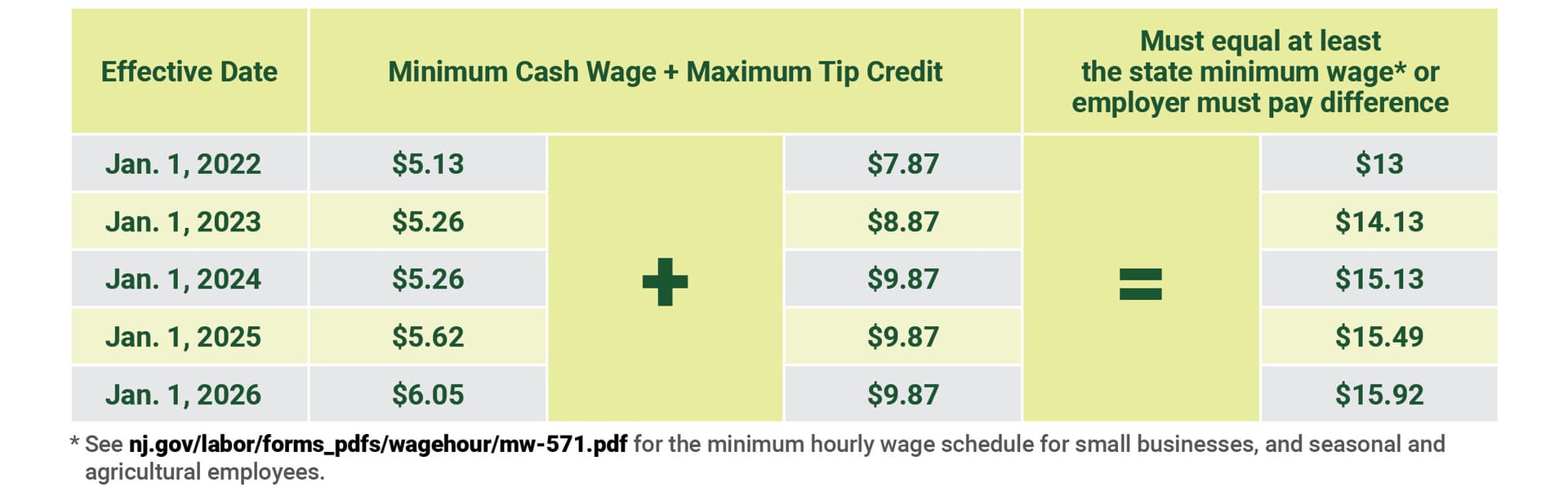
If your Pizza Hut paycheck in New Jersey depends on tips, the numbers changed again for 2025 and will change again in 2026. The state’s tipped cash wage rises to $5.62 an hour on Jan. 1, 2025, while the statewide minimum for most employees goes to $15.49, with another increase to $15.92 set for Jan. 1, 2026.
What New Jersey says a tipped job is
New Jersey’s minimum wage law took effect on July 1, 2019. Under New Jersey rules, a tipped employee is someone who regularly and customarily receives more than $30 a month in tips. That matters for delivery drivers, counter staff and anyone whose base pay is tied to customer gratuities rather than a straight hourly rate.
The state setup is not the same as the federal one, which is where a lot of payroll confusion starts. Under the Fair Labor Standards Act, tipped workers are covered by federal tip-credit rules, and the federal tipped minimum wage remains $2.13 an hour when an employer uses the tip credit. But the employer still has to make sure wages plus tips reach at least the applicable minimum wage, which is why New Jersey payroll has to be checked against New Jersey law, not just the federal floor.
For a Pizza Hut store, that can affect how management handles delivery shifts, front-counter time and any mix of tipped and non-tipped duties. If your schedule changes from driving deliveries to working the make line or helping close, the pay structure still has to be clear enough that you can tell whether the store is using the tipped-wage model correctly.
Where tip problems usually show up
Pizza delivery is one of the easiest places for pay mistakes to get buried. Drivers may take home cash tips, card tips or app-based gratuities, while delivery charges and service fees can make it hard to tell what was a true tip and what was not. If a manager starts describing all of that as one lump sum, that is a moment to compare your own records against the pay stub.
Managers and supervisors cannot keep employees’ tips, including tips that are collected through a tip pool. That rule matters in a Pizza Hut kitchen or delivery hub where a shift lead, assistant manager or supervisor tries to skim from pooled tips, redirect delivery gratuities or treat customer tips like store money.
The same goes for pay that looks right on paper but falls short in practice. New Jersey employers that use a tip credit still have to make sure the worker receives at least the state minimum wage after tips are counted. If you are splitting time between delivery runs, order assembly, oven work and cleaning, the math should still hold up when the shift is over and the paycheck is issued.
How to check your pay before it becomes a bigger problem
The safest time to raise a concern is the first time the numbers do not line up. Do not wait several pay periods if your hourly rate, tip-out, or cash and card tips look off. Save your schedule, clock-in and clock-out times, tip records and pay stubs so you can compare what you were supposed to earn with what actually landed in your account.
1. Check the hourly rate on the pay stub against New Jersey’s tipped cash wage and the statewide minimum wage for most workers.
2. Separate true tips from delivery charges or service fees, especially when customers pay in the app.
3. Flag any shift where a manager or supervisor handled tips, joined a tip pool or cut into gratuities.
4. Ask payroll or store management to explain any deduction or missing tip line before the next paycheck closes.
If the answer does not make sense, use the state’s My Work Rights page as the next stop. In a delivery-heavy shop, where tips can come in cash, on a card or through a platform, that kind of documentation is often the difference between a quick correction and a wage claim.
Why the rules keep changing
New Jersey’s annual wage updates show that tipped-worker pay is not static. That ongoing rise means Pizza Hut managers cannot rely on last year’s payroll settings, especially in stores where a local franchise team is responsible for keeping pay practices aligned with state law.
The policy fight is still active in Trenton. In 2024, New Jersey lawmakers introduced A5433 to increase the minimum wage for tipped workers, while the New Jersey Restaurant & Hospitality Association called the tip credit a cornerstone of the state’s restaurant and hospitality industry.
This article was produced by Prism’s automated news system from verified source data, official records, and press releases, then run through automated quality and moderation checks before publishing. The system is built and supervised by the people who set the standards it runs under. Read our full AI policy.
Did this article answer your question?