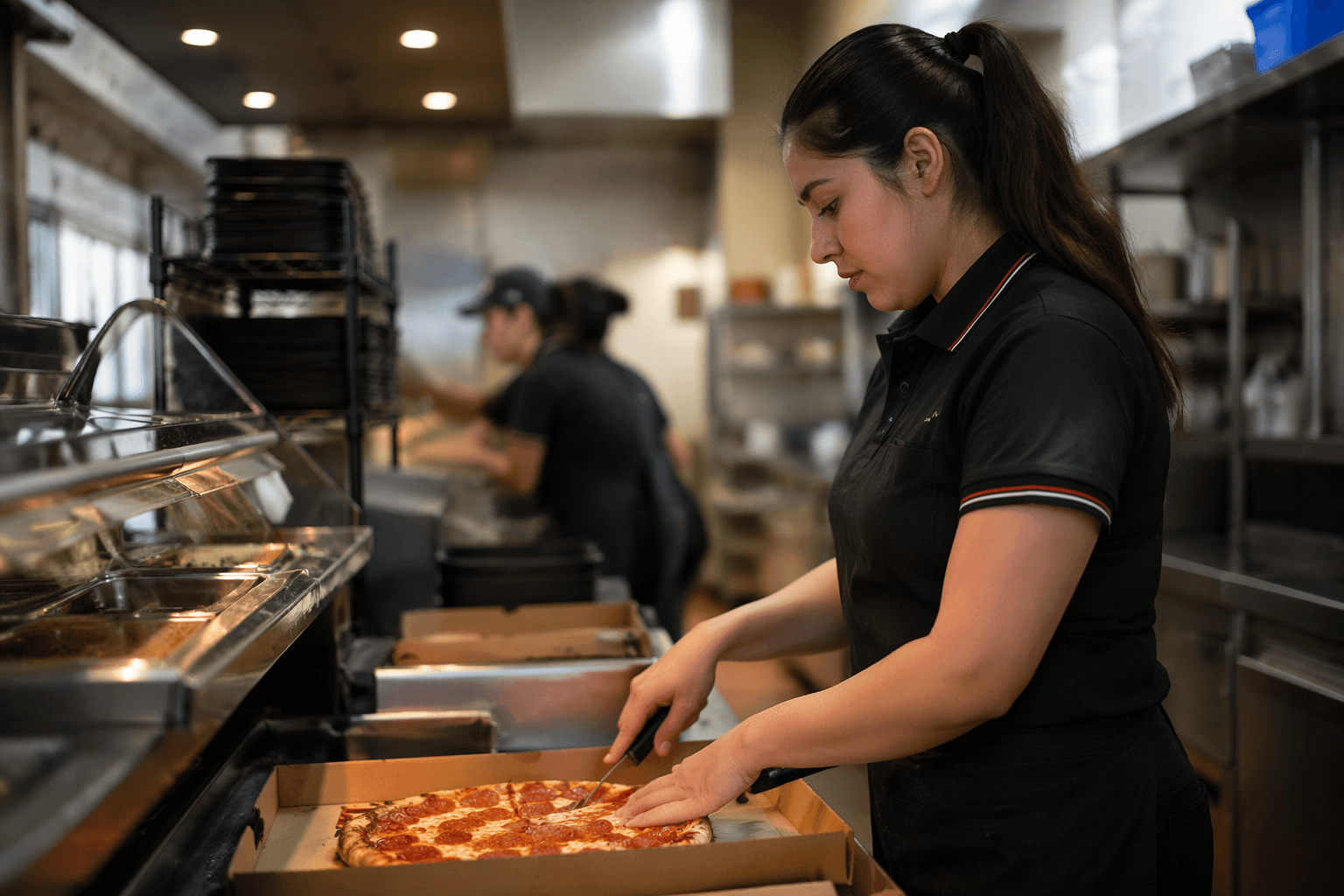
Pizza Hut Workers May See New Value Platforms as Yum Shares Ideas
Yum’s value playbook is spreading across brands, and Pizza Hut crews could feel it in tighter menus, faster ticketing and more bundle work.

Value is becoming Yum’s shared operating model
Pizza Hut workers should read Yum’s latest value push as an operating change, not a slogan. When one brand inside the company needs help selling a better bargain, Yum is increasingly treating that problem as something the whole portfolio can solve together, which means the pressure to make low-price offers work can ripple straight into the store.
That matters because value does not stay on the marketing calendar for long. It changes how crew members explain deals, how managers build shifts, how much room there is for error at the make line, and how quickly a store has to move when multiple bundles are live at once. For Pizza Hut teams already working inside a franchise-heavy system, that kind of cross-brand playbook can mean a cleaner guest pitch, but also more disciplined execution and less slack in daily operations.
What happened at Habit shows the model Yum likes
The clearest sign of how Yum is thinking came from a recent restaurant-industry report describing how executives from Taco Bell, KFC and Habit Burger & Grill compare notes and borrow ideas when value needs to land better with customers. In that account, Habit Burger & Grill first tried to build value on its own and did not get the result it wanted. It then turned to Taco Bell for help.
That collaboration produced bundle-style pricing at $6, $8 and $10, a structure that mirrored Taco Bell’s own Luxe Boxes at $5, $7 and $9. The lesson is bigger than one menu test: Yum appears to be moving toward value platforms, where a guest can understand the deal ladder instantly instead of decoding a random series of short-term discounts.
For workers, that shift changes the job. A platform approach can reduce guest confusion and create a more repeatable order flow, but it can also increase the number of bundle combinations crews have to know cold. If the pricing ladder is simple on the menu board, the back-of-house work still has to be exact.
Why Pizza Hut is the brand where this hits hardest
Pizza Hut is not operating in a vacuum. It sits inside a company that says it franchises or operates more than 63,000 restaurants in 155 countries and territories, and its investor materials say 98% of nearly 61,000 locations are owned and operated by franchisees. That means a value strategy is not just a corporate memo. It becomes a local labor issue, a franchise cash-flow issue, and a manager-training issue all at once.
For Pizza Hut teams, the operational effects are easy to picture. A tighter value platform can change menu board resets, order-entry speed, upsell prompts, and the way managers schedule labor during promo windows. If the company expects more guests to walk in for a clearly packaged deal, stores may need faster ring-in times, cleaner expo flow, and tighter coordination between drivers, make-line staff and shift leads.
The hard part is that value usually invites volume. A lower ticket can bring more transactions, and more transactions can mean more boxes, more remake risk, more handoffs, and more pressure on the people who have to keep the order moving. In a delivery-driven business, that can also affect driver pace, tip patterns, and how often a store has to compete with DoorDash and Uber Eats customers who are comparing Pizza Hut’s offers against every other pizza and fast-casual option on their phone.
The numbers explain why Yum is leaning harder into value
Yum’s first-quarter 2026 results make the strategic picture hard to ignore. The company said worldwide system sales rose 6%, Taco Bell system sales rose 10%, and Pizza Hut system sales were flat. Pizza Hut’s global same-store sales were flat, U.S. same-store sales fell 4%, and operating profit declined 14%.
Those numbers help explain why value is getting so much attention inside the company. Taco Bell has been the strongest performer in the group, and its growth is tied closely to a value-and-innovation machine that Yum has clearly been willing to study and spread. KFC’s same-store sales were up 2%, but the standout remains the brand that has leaned hardest into obvious pricing architecture and frequent consumer-friendly offers.
For Pizza Hut workers, those figures are not abstract. Flat sales with lower operating profit can put more pressure on franchisees to squeeze labor, tighten waste, and push every promo harder. When the menu gets more value-heavy but the profit line gets thinner, stores often feel the squeeze first.
The strategic review adds another layer of pressure
Yum announced a formal review of strategic options for Pizza Hut in November 2025, saying the goal was to help the brand reach its full potential for franchisees, consumers and employees while maximizing shareholder value. That kind of review changes the tone around every move the brand makes, especially value.
Once a brand is under strategic scrutiny, a value platform is no longer just about a better deal for guests. It becomes evidence that the brand can execute a clearer message, drive traffic, and support a more stable operating model. If the company believes Pizza Hut can sharpen its value ladder, the expectation will be that franchisees and store teams absorb the execution work needed to prove it.
That can be positive if it leads to fewer confusing discounts and a more predictable guest flow. But it also means front-line crews may be asked to do more with less, especially when the offer mix gets more complex and the pressure to keep food cost under control rises with every cheap bundle sold.
What Pizza Hut workers should watch on the ground
The practical test of this strategy will show up in the store, not the boardroom. If Yum keeps borrowing value ideas across its brands, Pizza Hut crews should expect more emphasis on simple price points, faster promo recognition, and tighter bundle discipline. Managers may also see more attention on whether the store can explain the deal in one sentence and build it without slowing the line.
The most important question is who absorbs the extra work when low-price offers succeed. If value platforms bring more orders, the burden falls on the same people who already carry the rush: the counter staff who explain the deal, the kitchen crew who build it fast, and the drivers who keep delivery promises from slipping. For Pizza Hut, Yum’s value strategy is not just marketing. It is a systemwide decision that can change how hard every shift runs.
This article was produced by Prism’s automated news system from verified source data, official records, and press releases, then run through automated quality and moderation checks before publishing. The system is built and supervised by the people who set the standards it runs under. Read our full AI policy.
Did this article answer your question?