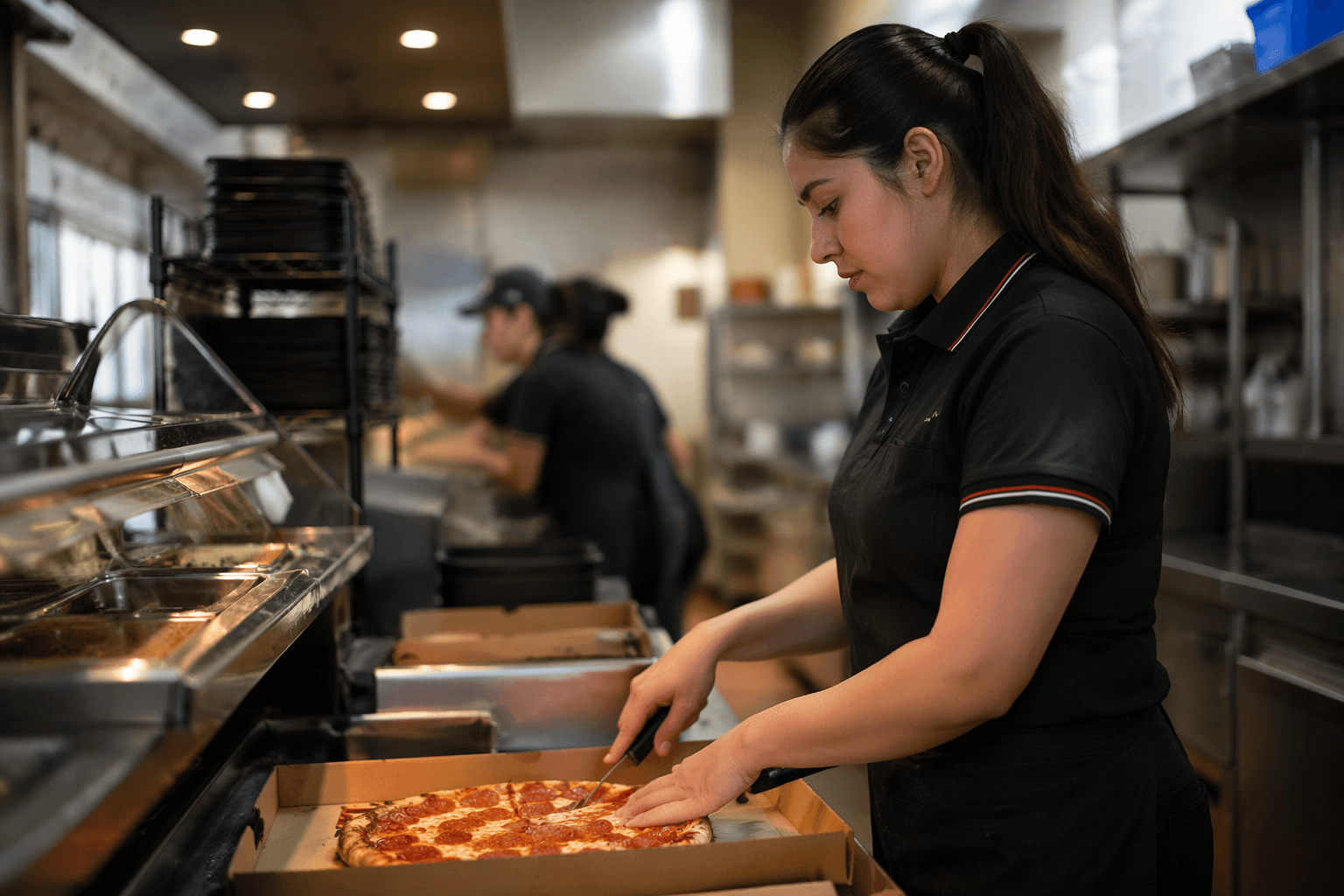
Pizza Hut workers need paid breaks when not fully off duty
If you are still answering phones or cutting pizzas, your “lunch” may be paid time. Pizza Hut crews should use the clock-in/clock-out test before a rushed shift turns break time into wage theft.
The myth that gets restaurant crews in trouble
A break is only unpaid when you are truly off duty. At Pizza Hut, that distinction matters the moment a manager tells you to “go eat in the back” but still expects you to answer phones, jump on the line, or help with a rush.
Federal law does not require adult workers to get lunch or coffee breaks at all. But when a restaurant offers short breaks, usually about 5 to 20 minutes, the U.S. Department of Labor treats that time as compensable work hours. A bona fide meal period is usually at least 30 minutes, and it is generally unpaid only if you are completely relieved from duty.
The clock-in/clock-out test for a Pizza Hut shift
The fastest way to sort a break out is to ask a simple question: were you actually free to leave work behind for the whole break?
1. If the break is short, assume it is paid. A water break, smoke break, or snack break that lasts only a few minutes should generally stay on the clock.
2. If the break is a real meal period, you must be fully relieved. You should not be answering phones, making pizzas, cutting boxes, handling customers, or getting pulled back to the line.
3. If the meal break is interrupted, it may no longer count as an unpaid meal break. If a customer rush, oven issue, or delivery pileup pulls you back in, the time may need to be paid.
That test is especially important in a store running on thin staffing. Pizza Hut drivers, kitchen crew, and shift leads know how quickly a “take 30” turns into half a meal and half a shift. If you are expected to stay ready for work, the break is not really off time.
Where managers most often get it wrong
The most common mistake is treating a break as unpaid just because the schedule says so. Automatic deductions can make a clean-looking payroll record, but they do not fix a break that got cut short by the dinner rush or by a manager who needed help on the line.
Another mistake is assuming a worker can be “technically off the clock” while still tied to the store. If you are told to remain available, stay at the work site, or keep helping whenever needed, that is not the same as a real meal period. For a Pizza Hut team juggling phones, carryout, delivery dispatch, and kitchen orders, that distinction is where wage disputes are born.
The federal overtime rule raises the stakes even more. Covered nonexempt workers are due time-and-a-half after 40 hours in a workweek. If unpaid break time or off-the-clock work pushes a shift over the line, the error can snowball into overtime underpayment.
Why this matters in Pizza Hut’s day-to-day reality
Pizza Hut work has never been just about pizza. It is about a store culture where the same person may answer a customer call, help on the make line, run food, and keep an eye on drivers leaving with orders. Add pressure from DoorDash and Uber Eats, plus delivery customers who expect speed on top of low ticket times, and managers often treat breaks as something to squeeze in whenever the room quiets down.
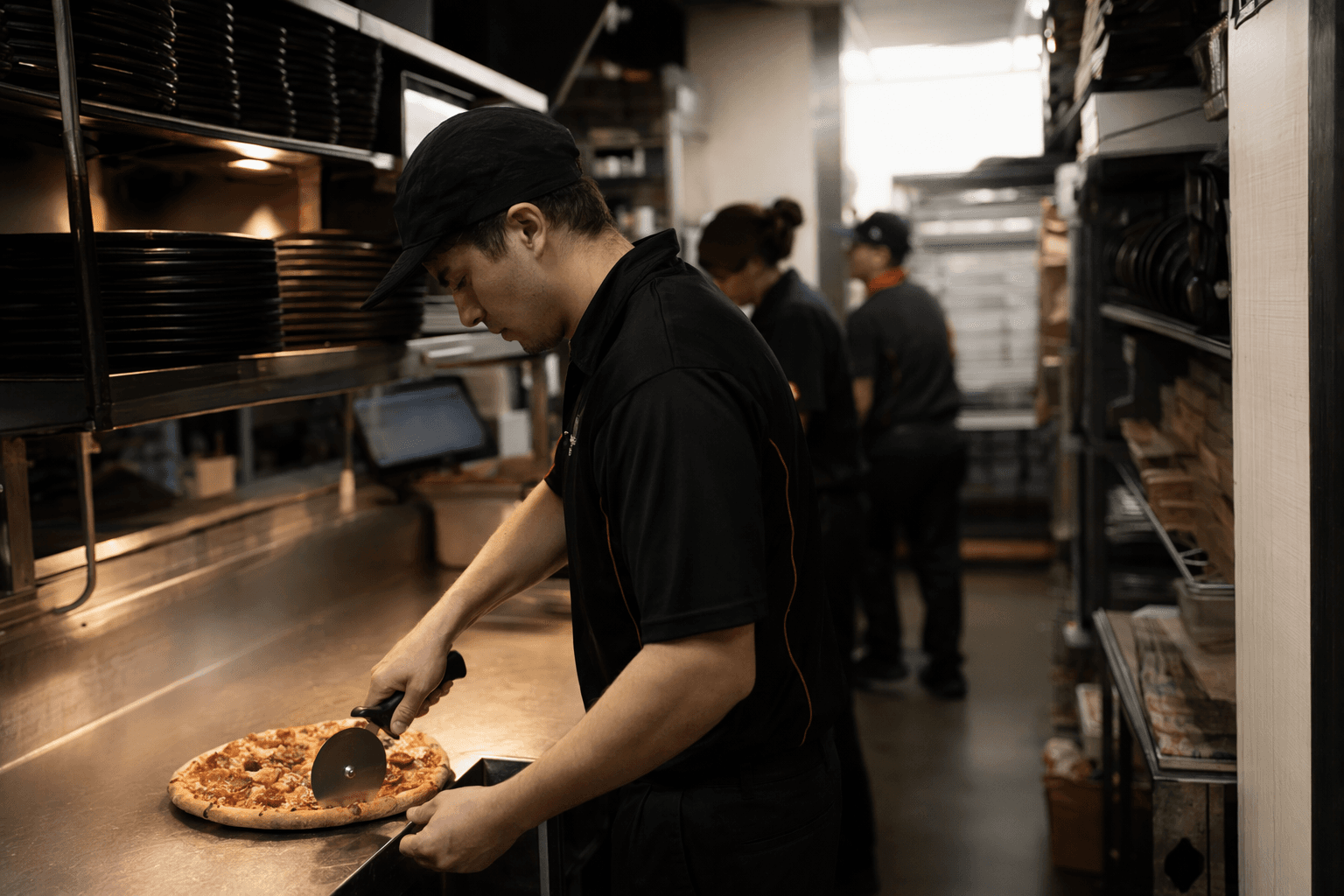
That is exactly when problems start. A driver may be told to take a break but still watch the phone for last-minute orders. A cook may be told to eat while staying near the cut table. A shift lead may be expected to eat and supervise at the same time. In each case, the question is not whether the schedule says “meal break”; the question is whether you were actually free from duty.
The federal rules also apply broadly to restaurant operators. The Labor Department says restaurants and fast-food businesses with annual gross sales of at least $500,000 are generally covered by the Fair Labor Standards Act. For Pizza Hut workers at franchised stores, that means local management still has to follow wage and hour law, even when the franchise culture talks like break policy is just a house rule.
What California adds, and why it matters beyond California
State law can give workers more protection than federal law, and California is a strong example. The state labor agency says that if an employer requires a worker to remain at the work site or facility during a meal period, that meal period must be compensated. It also says that when a legally required meal period is not provided, the employer owes one additional hour of pay at the worker’s regular rate for each day the violation occurs.
That matters because many restaurant workers assume a bad break is just an annoyance. Under California law, it can become a pay issue very quickly. Even outside California, the lesson is the same: federal law is the floor, not the ceiling, and local rules may be stricter than the federal baseline.
The knowledge gap is part of the problem
A California fast-food worker report found that 88% of surveyed workers could not correctly answer a majority of questions about basic workplace rights. The same report found that 73% did not know how much extra pay they are entitled to if they are forced to work through a meal break or rest breaks.
That is not a small education problem. It means a lot of people may be losing money without realizing it. In a fast-moving Pizza Hut store, where everyone is trying to keep the dinner rush from collapsing, workers often do not stop to ask whether a “break” should have stayed on the clock. Managers know that silence helps payroll. Workers need to know the rules well enough to spot the mismatch.
Pizza Hut has already seen these fights spill into the open
The break issue is part of a bigger wage-and-hour pattern around pizza work. In March 2024, six current and former workers at a Pizza Hut in Los Angeles’s Historic Filipinotown staged a three-day strike and filed a wage complaint alleging about $81,443 in back pay and penalties. The complaint also alleged skimming hours, unpaid training and overtime work, unpaid sick leave, abusive scheduling, and workers being sent home at the beginning of shifts without notice or pay.
That same year, Pizza Hut delivery drivers in Texas reached a $4.75 million settlement in an FLSA dispute involving compensation and vehicle-expense claims. Together, those cases show how quickly the fight over a “lunch break” can widen into a larger question about time worked, miles driven, and whether a franchise is paying for all the labor it uses.
The bottom line for crews and managers
For workers, the rule is simple: if you are not completely off duty, keep track of the time and do not assume it should be unpaid. Write down when a meal break starts, when it ends, and whether anyone pulled you back into work. For managers, the better practice is just as clear: do not call it a meal period unless the worker can actually step away and stay away.
At Pizza Hut, where the rush can turn on a single phone call or a late driver run, the difference between paid and unpaid time is not a paperwork detail. It is the line between a lawful break and another hidden hour of labor.
This article was produced by Prism’s automated news system from verified source data, official records, and press releases, then run through automated quality and moderation checks before publishing. The system is built and supervised by the people who set the standards it runs under. Read our full AI policy.
Did this article answer your question?