Queens Village Pizza Hut scores A but cited for critical hygiene violation
A routine inspection gave the Queens Village Pizza Hut an A with a score of 10, but inspectors flagged a critical personal hygiene violation that could affect staff practices and customer safety.

A Pizza Hut at 22003 Hillside Ave. in Queens Village passed its routine cycle inspection on Feb. 3, 2026, earning a score of 10 and a grade A, but the published report included a critical personal hygiene violation that singled out employee apparel and hair control. The discrepancy between the high overall grade and a critical violation puts operational practices and front-line staff behavior under renewed scrutiny.
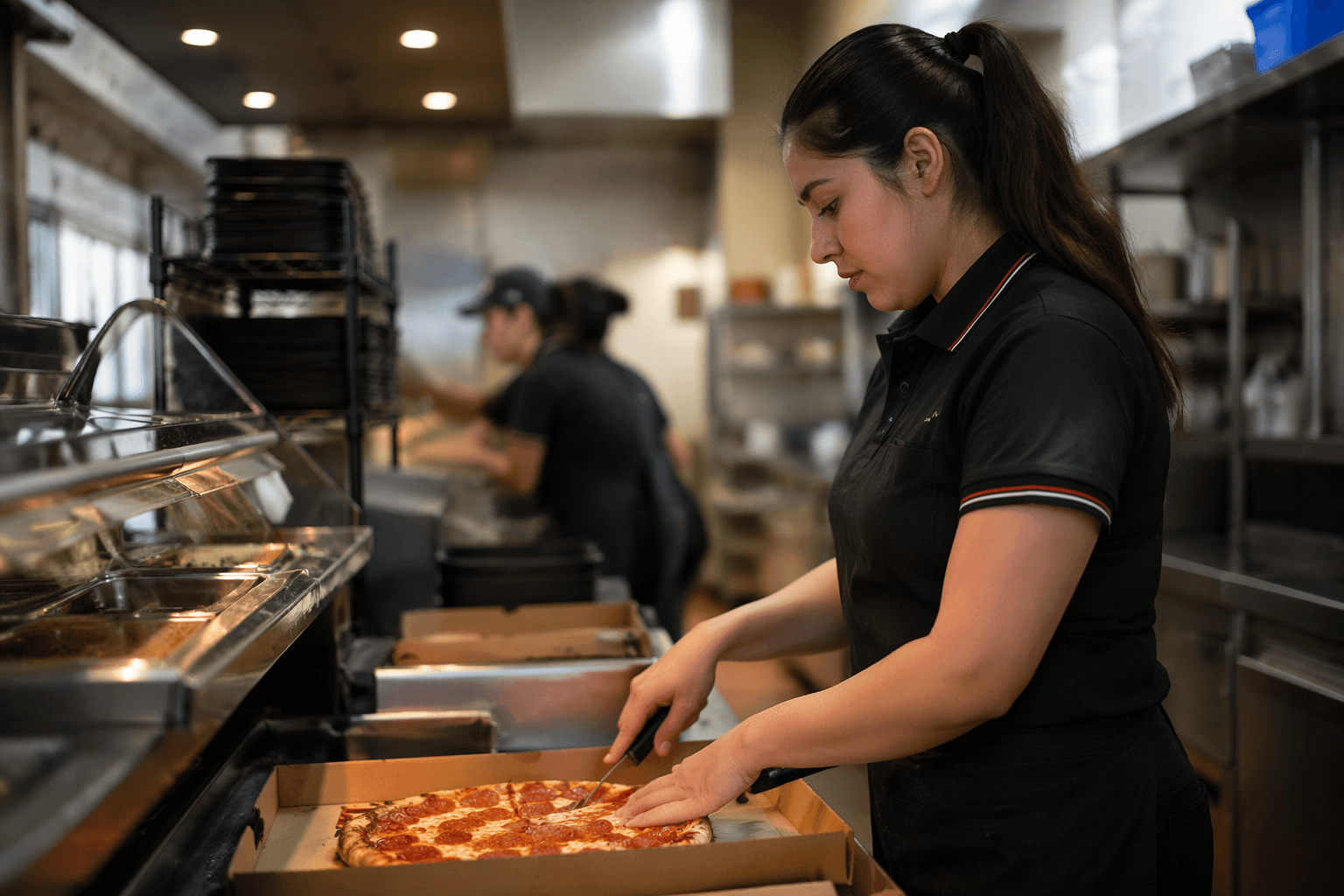
Inspectors noted employees with soiled outer garments and missing effective hair restraints, a finding that health officials categorize as a personal hygiene violation of critical concern for food safety. For crew members who handle dough, toppings, and finished pizzas, apparel and hair coverings are basic controls to prevent contamination. A top-line grade of A signals a generally sanitary facility, but a critical hygiene lapse can prompt corrective action focused squarely on staff routines and supervision.
For workers at the Queens Village location, the inspection outcome carries practical implications. Shift leaders and the general manager are likely to be asked to tighten uniform standards, increase on-the-job coaching, and reinforce handwashing and personal-protective measures during service periods. That attention can mean more frequent checks at shift change, retraining sessions for new and veteran employees, and closer monitoring of closing and opening duties that affect visible cleanliness. Those measures may create short-term changes in schedules and responsibilities for crew members, though they aim to reduce food-safety risk and customer complaints.
The inspection result also matters for workplace dynamics. Crew morale can be affected when a critical violation is called out publicly despite an overall A grade. Managers face the dual task of reassuring staff and addressing the deficiency without assigning blame in a way that undermines team cohesion. Clear communication about corrective steps and simple, enforceable standards for uniforms and hair control tend to work best in busy quick-service kitchens where pace can degrade compliance.
From a business perspective, the mix of a strong overall score and a singled-out critical violation is a reminder that inspection checklists treat individual behaviors as high priority. For workers, that means training and supervision remain central to protecting customers and maintaining the store’s standing. The next steps to watch are whether the location implements documented corrective actions and whether follow-up inspections confirm better adherence to personal-hygiene rules.
This article was produced by Prism’s automated news system from verified source data, official records, and press releases, then run through automated quality and moderation checks before publishing. The system is built and supervised by the people who set the standards it runs under. Read our full AI policy.
Did this article answer your question?