State and City Pay Rules Create Uneven Wage Landscape for Pizza Hut Workers in 2026
NYC delivery app pay climbed to $22.13/hour on April 1; across 19 states, Pizza Hut workers now operate under a wage map with no uniform floor in sight.
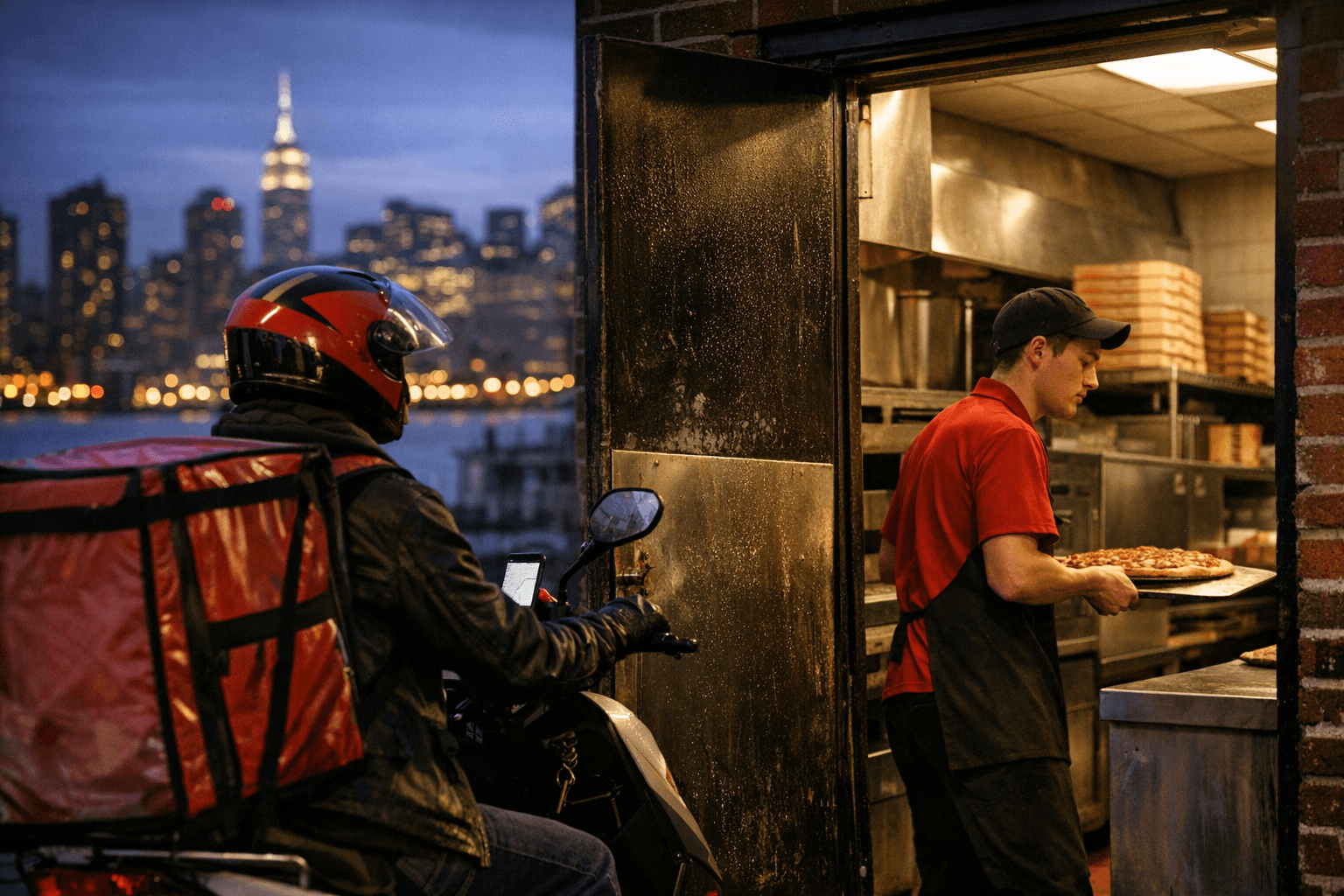
The wage gap between a Pizza Hut kitchen worker in rural Virginia and a delivery courier in New York City just got measurably wider. With 19 states lifting their minimum wages on January 1 and New York City's app-based delivery pay floor rising to $22.13 an hour on April 1, the pay landscape across Pizza Hut's U.S. locations now varies by market in ways that directly determine who shows up for shifts and who answers the dispatch queue.
For an in-store crew member working a standard hourly shift, the math starts with geography. Washington state's minimum rose to $17.13, the highest floor in the country. Arizona moved to $15.15, Ohio to $11.00, Virginia to $12.77. The full list of states that raised wages on January 1 includes Arizona, California, Colorado, Connecticut, Hawaii, Maine, Michigan, Minnesota, Missouri, Montana, Nebraska, New Jersey, New York, Ohio, Rhode Island, South Dakota, Vermont, Virginia and Washington. The 20 states that didn't raise wages, concentrated largely in the South, remain tethered to the federal minimum of $7.25, a number that has not moved since 2009. For a crew member clocking in at a store in one of those states, the baseline has not changed in nearly 17 years.
For delivery drivers, the picture splits further. A Pizza Hut driver on the store payroll earns whatever local minimum or negotiated rate their franchise location offers. In New York City, couriers working through platforms like DoorDash, Uber Eats and Grubhub now earn at least $22.13 per hour, not counting tips, for time spent preparing and making deliveries. That figure rose 3.2 percent from the previous floor of $21.44, with the increase tied to the city's annual April 1 adjustment. For any Pizza Hut franchise in the five boroughs that routes overflow orders through third-party apps, that floor reshapes the economics of every delivery dispatched off-platform. The city expanded its delivery worker protections in January, and on January 23, federal judges denied platform apps' requests for a preliminary injunction blocking those rules, leaving enforcement intact.
For store managers, the challenge is operational compression. A manager in Phoenix is posting jobs against a $15.15 state floor and competing with app-gig earnings in the same market. A manager in a federal-floor state is working with $7.25 as a baseline, but potentially facing higher turnover as workers weigh their options. One-size-fits-all wage and reimbursement policies stop working in a year where neighboring states can be $10 apart on the hourly floor.
The gig classification question adds a layer of legal uncertainty on top of the wage patchwork. The U.S. Department of Labor moved in 2025 to stop enforcing its 2024 independent contractor rule, which used a multi-factor "totality-of-the-circumstances" test under the Fair Labor Standards Act. A formal proposed rulemaking to rescind that rule followed, but as of early April 2026, the rollback had not been finalized. For a Pizza Hut franchise weighing whether to staff its own drivers or lean on third-party platforms, that unresolved status carries direct scheduling and liability implications that no internal policy memo can fully resolve.
The timeline for resolution runs through the rest of 2026: watch for the DOL's final contractor classification rule, any additional city-level pay floor expansions in major metros and how franchise operators in affected states absorb the cost differential between markets that raised wages and those still anchored at $7.25. The gap is already visible in paychecks. What remains open is how wide it gets before federal policy catches up.
This article was produced by Prism’s automated news system from verified source data, official records, and press releases, then run through automated quality and moderation checks before publishing. The system is built and supervised by the people who set the standards it runs under. Read our full AI policy.
Did this article answer your question?