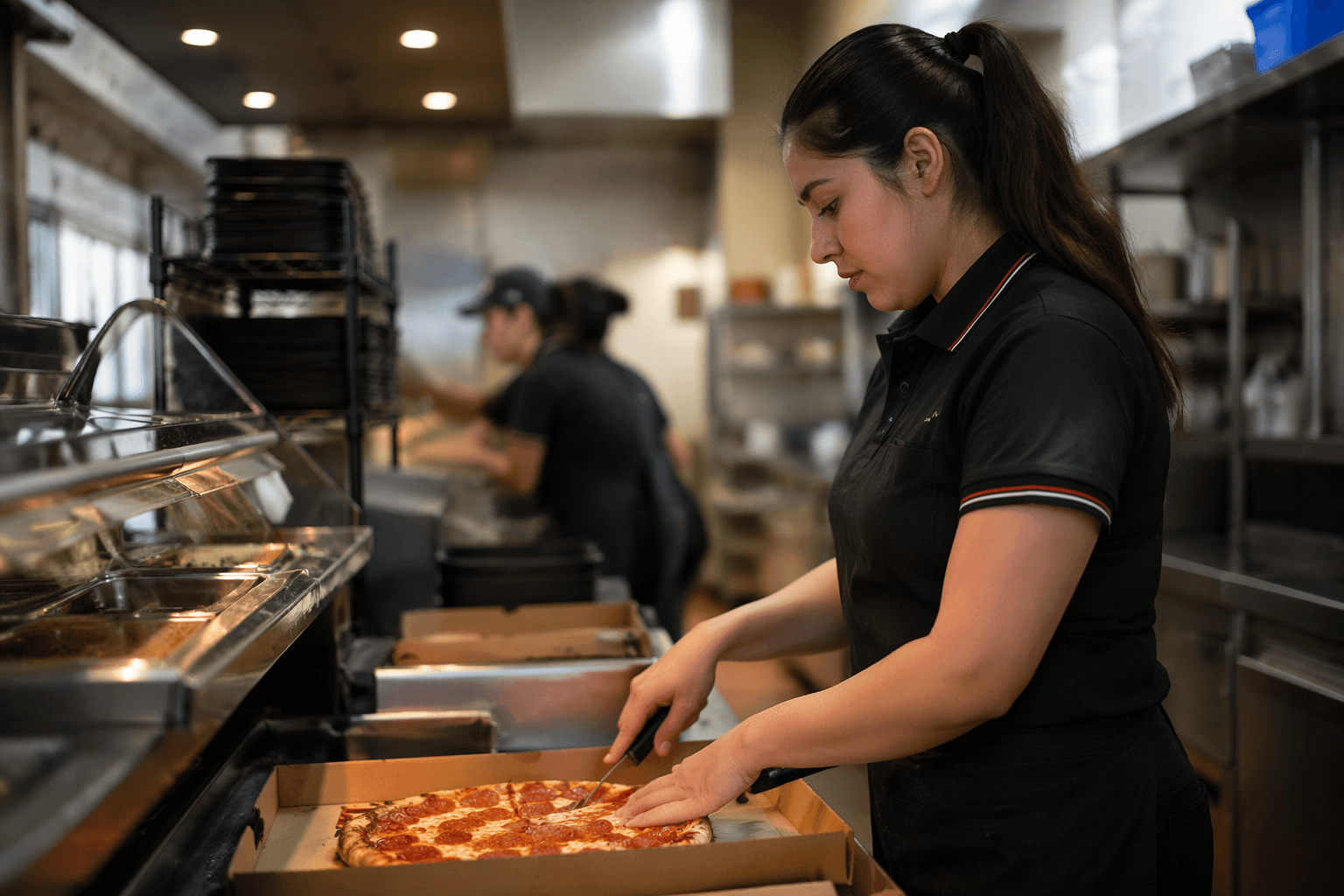
Worker reports show wide variation in Pizza Hut staff perks
Breakroom updated its Pizza Hut employer page with worker-submitted notes on staff discounts and meal credits. This helps frontline workers compare local perks and policy variations.
Breakroom updated its Pizza Hut employer page on January 12, 2026, aggregating worker-submitted details about on-shift perks, staff discounts and typical employee benefits across franchise locations. The page collects examples of how discounts are applied, note entries about pay and shifts, and user-reported eligibility rules, making it a practical comparison tool for frontline workers.
Among the most commonly reported benefits is an employee discount of roughly 20% on purchases, though mechanics vary. Some entries describe periodic employee meal credits: a Personal Pan pizza and a drink for a nominal amount or a meal credit granted every four hours worked. Breakroom’s aggregation highlights that what one location offers can differ markedly from another because Pizza Hut is largely franchised and discount policies are set by individual franchisees.
The site also includes user-reported pay and shift notes that give workers context on scheduling practices, break timing and how meal credits are triggered and documented. That level of granularity matters for hourly employees who rely on predictable break meals or discounts to offset on-the-job expenses. For new hires and employees transferring between stores, the page provides a quick way to set expectations before a shift and to compare what managers at different franchisees commonly allow.
Variability in practice can affect workplace morale and retention. When discounts and eligibility rules are inconsistent, employees can feel treated unequally across locations even within the same brand. For managers and district leaders, the compiled entries create visibility on common practices and on gaps that may invite questions from staff about fairness and policy clarity.

For workers, the page functions like a neighborhood scoreboard for perks: it shows common offerings, how often credits are provided, and typical caveats tied to eligibility. Employees can use the information to confirm what their own franchise permits, to prepare questions for managers during onboarding, or to weigh job offers that include different in-store benefits.
As franchise-level policies continue to vary, workers will likely keep relying on peer-sourced resources to compare per-shift perks. For employees, the immediate takeaway is practical: check the local entries, verify the store’s written policy, and use that knowledge to set expectations when accepting shifts or discussing benefits with managers.
This article was produced by Prism’s automated news system from verified source data, official records, and press releases, then run through automated quality and moderation checks before publishing. The system is built and supervised by the people who set the standards it runs under. Read our full AI policy.
Did this article answer your question?