7shifts survey: understaffing and bad managers drive restaurant turnover
Understaffing is setting off a turnover loop: bad schedules strain managers, and workers are quitting for better pay, predictability, and leadership.
Understaffing is not just a labor problem, it is a turnover machine. When restaurants run short, schedules get patchier, managers get squeezed, and the stress lands on the people on the floor, in the kitchen, and behind the bar. A new 7shifts survey of more than 1,000 frontline restaurant workers says the answer is less about slogans than about the way shifts are actually run.
The turnover loop starts on the schedule
Restaurant workers have been saying for years that understaffing shows up first in daily operations. The newest 7shifts survey reinforces that pattern by tying retention to the basics: predictable scheduling, better floor leadership, and team culture that can hold up when the rush hits. That matters in an industry that employs about 15.7 million people, or roughly 10% of the U.S. workforce, and still has to absorb the pressure of being short staffed on a regular basis.
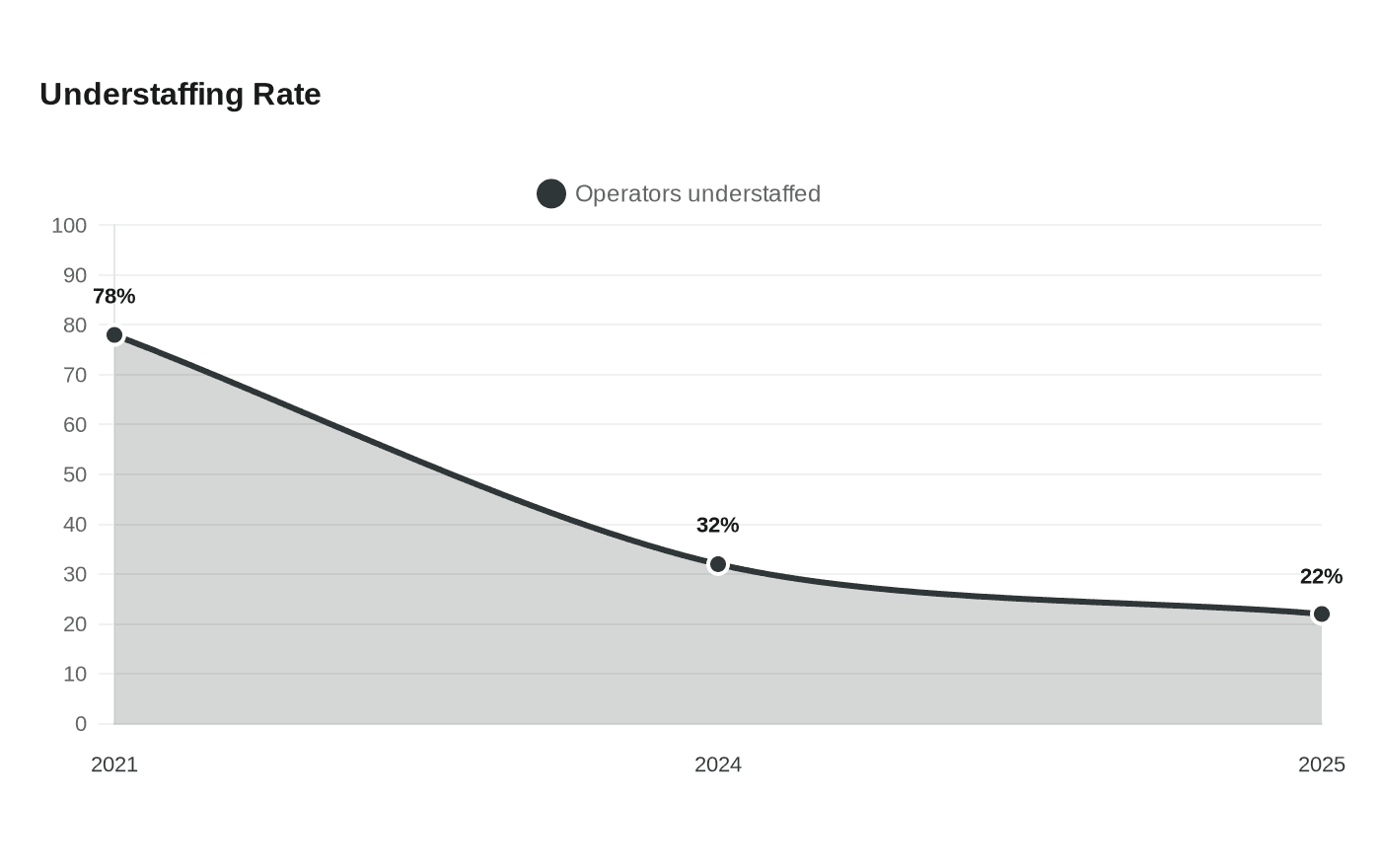
The National Restaurant Association says understaffing remains a material drag on growth, service quality, and sales, and that being down one employee can cost hundreds of dollars in a shift. Even though conditions have improved from the worst of the pandemic, the problem has not gone away. The association said 22% of operators were understaffed in 2025, down from 32% in 2024 and 78% in 2021, but 62% still described recruiting and retaining staff as a very or fairly significant challenge.
That is the real chain reaction workers feel. If a restaurant cannot fully staff a lunch or dinner rush, managers stretch the team, schedules become more erratic, and the people left on the line or the floor take the heat. Over time, that is what pushes people out.
Managers matter as much as pay
The strongest message in the survey is that supervision is not a soft issue. 7shifts found that difficult managers are tied with low pay as the main reason employees quit, and 73% of workers link job satisfaction to their relationship with a manager. That is a blunt reminder for restaurant leaders: the person running the shift can matter as much as the paycheck when workers decide whether to stay.
The data also shows how much coworkers can steady a tough job. Among happy workers, 84% say they feel connected to their coworkers, and team relationships have become the strongest daily motivator, overtaking financial incentives that were tied with camaraderie in 7shifts’ 2024 research. In a business built on handoffs, cross-training, and constant pressure, that connection is more than morale. It is what keeps a service from falling apart when one station is slammed and another call-out leaves the team scrambling.
For line cooks, servers, bartenders, hosts, and support staff, that means floor leadership is not just about assigning stations. It is about consistency, coaching, and keeping the back-of-house and front-of-house from feeling like separate worlds. A manager who gives clear feedback and keeps the team aligned can reduce friction before it turns into resignations.
Predictable schedules are the clearest fix workers want
If there is one operational change the survey points to again and again, it is schedule stability. Seventy-five percent of respondents prefer one to two weeks’ notice on their schedules, but 28% say they only get schedules a few days in advance. That gap is more than an inconvenience. It makes childcare, second jobs, school, doctor appointments, and even a day off feel like a moving target.
This is where turnover gets expensive. A chaotic schedule does not only frustrate workers in the moment. It tells them the restaurant is asking for flexibility without offering much in return. For tipped workers, that uncertainty is especially hard because a weak shift, a shortened section, or a bad mix of lunch versus dinner can change take-home pay fast. For cooks and other hourly staff, the problem is different but just as sharp: if hours keep changing, it is hard to plan the week or count on steady income.
The clearest operational takeaway is straightforward:
- Post schedules earlier, ideally one to two weeks out.
- Build backup coverage so one call-out does not wreck the whole shift.
- Give managers enough labor to staff rushes without burning out the people already on the floor.
- Treat consistent feedback as part of the schedule, not an afterthought.
That is the kind of structure workers notice quickly, and it is usually cheaper than constant re-hiring.
The benefits workers want are not always the ones restaurants offer
The survey also shows a mismatch between what employers provide and what employees value. Seventy-two percent of restaurants offer free meals, but only 24% of workers rank them among their top three benefits. That does not mean meals are meaningless, but it does mean operators can overestimate how far they go in keeping people.
Workers said paid time off and paid sick days are the benefits they want most, yet fewer than 40% of employers offer them. That is a familiar gap in a business where many people cannot afford to miss a shift, even when they are sick. It also connects directly to the front-of-house and back-of-house pay divide, where tipped staff may depend on volatile tip income while cooks and other hourly workers often have less upside and less flexibility when hours get cut.
Daily pay is also gaining ground. Demand rose from 24% in 2024 to 32% in 2026, a sign that cash flow still matters in a paycheck-to-paycheck industry. For a bartender waiting on tip-outs, a server covering rent, or a cook trying to bridge a slow week, faster access to earned wages can be more useful than another perk that sounds nice on paper but does not solve a real bill.
The labor market is still sending the same warning
The churn is showing up in broader labor data too. The U.S. Bureau of Labor Statistics reported 576,000 quits in accommodation and food services in April 2026, with a 4.0% quits rate. That level of movement helps explain why restaurants keep cycling through openings even when hiring improves. It is hard to stabilize service when so many workers are still walking away.
Industry conditions have changed since before the pandemic, and operators know it. Restaurant Business reported that labor costs per hour are about 25% higher than before COVID-19, based on comments from an operator, and that employees now expect different schedules and more work-life balance. That is the new baseline restaurants are managing against.
7shifts has been tracking those shifts for years. Its 2024 survey covered more than 1,500 active restaurant employees, and the latest study points to the same conclusion with sharper edges: workers stay when the job feels manageable, the manager is steady, and the schedule does not blow up their life. Free meals and nice-to-have perks can help, but they will not solve a staffing model that leaves every rush short handed.
This article was produced by Prism’s automated news system from verified source data, official records, and press releases, then run through automated quality and moderation checks before publishing. The system is built and supervised by the people who set the standards it runs under. Read our full AI policy.
Did this article answer your question?