Agentic commerce could reshape restaurant ordering and service flow
AI ordering agents could shift tips, upselling, and conflict handling before a guest ever reaches the counter, with the biggest strain on front-of-house crews.
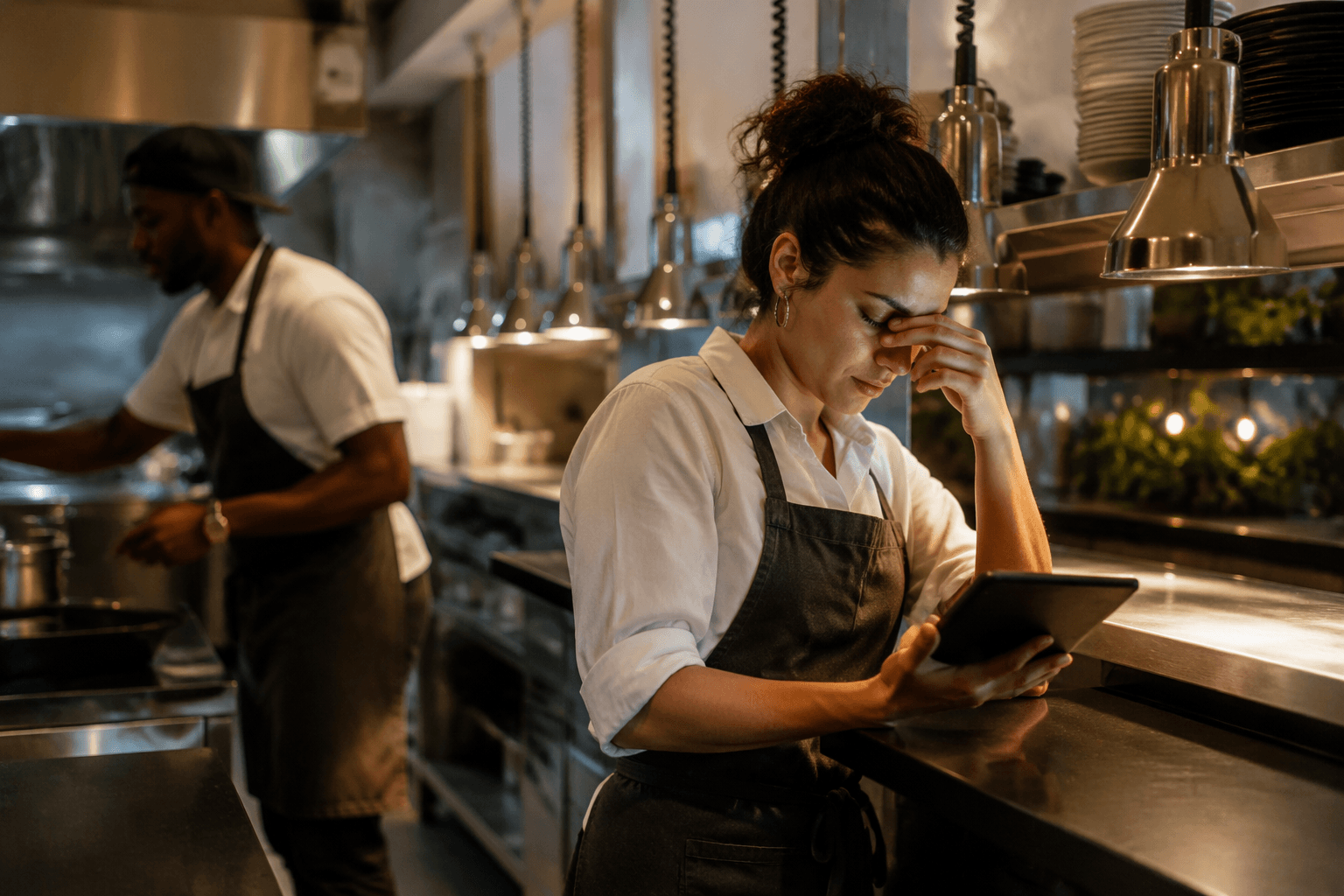
Mastercard on Sept. 4, 2025 described agentic commerce as AI shopping agents that can find, compare, and complete purchases for consumers. In restaurants, that could move ordering out of the human conversation and into software that compares menus, applies budgets, and completes the purchase before a guest reaches the host stand. For line cooks, servers, bartenders, and managers, that changes the first minutes of a shift: fewer order fixes if the system works, but more conflict when an AI agent changes the wrong item, books the wrong time, or steers a ticket to the wrong kitchen.
What agentic commerce means at the restaurant level
Merriam-Webster defines agentic as able to accomplish results with autonomy, especially for AI that can execute complex tasks with little human involvement.
For a diner, that can mean an agent compares restaurants by price, dietary rules, pickup timing, or past orders, then finishes the transaction without the customer scrolling through a menu. For the restaurant, it means demand may arrive as a machine-selected decision, not a human browsing choice, which changes how the order is introduced to the staff and how much control the house has over the sale.
Where the pressure lands first
The first workplace change will show up on the floor, not in the boardroom. Hosts may spend less time answering simple menu questions and more time handling timing problems, wrong arrivals, and guests who assume the app and the restaurant should already be in sync. Servers and bartenders may lose some of the natural upsell moments that come from conversation, but they may gain more recovery work when an AI-generated order does not match what the guest expected.
In a tip-driven dining room, changes in ticket size, check timing, and the amount of human interaction can alter tip opportunities without changing anyone’s hourly rate. Restaurants that use tip pooling or split labor between front and back of house will feel the ripple even faster, because a machine-driven order can affect who does the work, when the work lands, and how much gratuity follows the ticket.
If the software steers traffic toward restaurants with the biggest discount, the strongest ranking, or the cleanest machine-readable menu data, the staff on site still absorbs the fallout. That can mean a rush that arrives all at once, a slower room with thinner tips, or a kitchen that sees an order mix it did not help create.
The systems restaurants are trying to keep inside their own walls
Restaurant operators are already building around this shift. Olo includes online ordering, direct delivery, Google order management, digitized phone orders, reservations and waitlist management, guest rewards, and local listing management. Salesforce has also published restaurant-focused material on AI agents and their use cases as restaurants try to keep the customer relationship tied to the operator’s systems even as more of the ordering flow becomes automated.
When the guest finds the restaurant through one platform, places the order through another, and expects the kitchen to absorb the result instantly, managers need clearer handoffs between the app, the POS, the expo line, and the person greeting the guest. The less those systems match, the more front-of-house staff become the human fix for problems created upstream.
Why privacy and cyber risk sit in the service line
Kirkland & Ellis warned on July 1, 2025 that as restaurants roll out AI, cyber risks are on the menu, especially around data privacy in ordering and service systems. That concern grows as agentic tools handle more than a simple transaction. The more the system knows about dietary restrictions, budgets, payment details, loyalty behavior, and repeat-visit patterns, the more data moves through the restaurant’s tech stack.
For managers, that raises the stakes on vendor selection and access controls. A smoother ordering path can still become a costly failure if the wrong party can see customer information, if integrations break during a rush, or if a machine-generated order goes live with inaccurate modifiers. In a business already defined by thin margins, staffing shortages, burnout, and high turnover, one bad system can add both operational noise and employee frustration.
What workers and managers need to prepare for
The preparation is practical. AI is most likely to help when menu data, substitutions, out-of-stocks, and prep times are accurate enough for software to read them correctly. It causes the most trouble when the digital front door promises what the kitchen cannot deliver.
- Build a recovery process for wrong AI orders, so hosts, servers, and managers know who explains the mistake, who compes it, and who remakes it.
- Audit menu descriptions, modifiers, and item availability so the machine version matches the kitchen version.
- Train staff on digital dispute handling, because the guest will often blame the restaurant even when the agent placed the wrong order.
- Review tip pooling, split checks, and service-charge policies before automation changes who touches the sale.
- Keep retention in view. The Food Institute’s Oct. 14, 2025 survey put AI and employee retention in the same conversation, and Toast’s 2025 AI in Restaurants Survey Results did the same.
This article was produced by Prism’s automated news system from verified source data, official records, and press releases, then run through automated quality and moderation checks before publishing. The system is built and supervised by the people who set the standards it runs under. Read our full AI policy.
Did this article answer your question?