Restaurant cooks fill specialized roles, from prep to station lead
Restaurant kitchens run on a real ladder, from prep support to station lead. Making that path visible can help keep cooks from walking to the next shop.
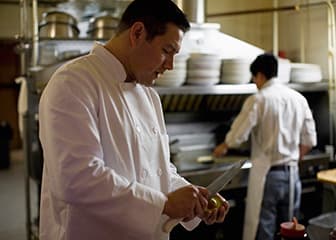
O*NET’s restaurant-cook profile, under occupation code 35-2014.00, lists a wide spread of titles: back line cook, banquet cook, breakfast cook, cook, fry cook, grill cook, line cook, prep cook, prep person, and saucier. The Bureau of Labor Statistics and O*NET break the work into prep cooks, line cooks, grill cooks, fry cooks, breakfast cooks, banquet cooks, and sauciers, and that distinction matters when you are trying to keep people from stalling out and quitting. In a labor market that still includes 14.5 million restaurant jobs across front-of-house and kitchen work, the clearest retention tool is often a ladder that shows cooks exactly how to move from support work to responsibility and better pay.
What the cook job really includes
That range reflects how different kitchens actually run. A breakfast line in a hotel, a banquet operation, a steakhouse grill, and a scratch kitchen with a tight sauté station all need cooks, but they need different mixes of speed, technique, and judgment.
The BLS Occupational Outlook Handbook groups cooks within food-preparation and serving occupations. The job sits inside a larger service system, not apart from it. Cooks are there to get consistent food out on time, at the right quality and portion cost, while keeping the kitchen synchronized with servers, expos, and the rest of the line.
Where cooks usually start
The first rung is usually prep work and station support. That means washing, chopping, portioning, measuring, assembling ingredients, and keeping mise en place ready for service so the line is not scrambling when tickets hit. This is the work that teaches pace and precision before a cook is trusted to run a station on a busy night.
The BLS distinguishes this from food preparation workers, who do food-prep tasks other than cooking, such as preparing cold foods and shellfish, slicing meat, and brewing coffee or tea. In practical terms, that line separates entry-level kitchen support from the point where a worker starts handling actual cooking responsibilities.
The skills that unlock the next rung
A cook does not move up just by staying busy. The step from prep support to station lead usually depends on whether someone can handle timing, organization, sanitation, equipment care, and communication under pressure. Those are the skills that keep a kitchen moving when a ticket board fills up and one delayed plate starts throwing off every other fire.
That is why cross-training matters so much. A prep cook who learns grill timing, sauté pacing, fryer recovery, or breakfast production can fill a real gap on the schedule and become more valuable than someone who only knows one task. The best kitchens make that progression obvious: first learn the station setup, then the ticket rhythm, then the way to coordinate with the expo line, and finally how to run the station without constant supervision.
There is also a managerial layer that often gets overlooked. In many restaurants, cooks may eventually order supplies, keep records and accounts, price items on the menu, or help plan the menu. Those responsibilities turn the job from execution into partial operational ownership.
Why station lead is the real pivot point
Station leads sit in the most important middle ground in the kitchen. They are still cooks, but they are also the people keeping the section steady, making sure product is pulled correctly, communicating with the rest of the line, and helping the kitchen absorb rushes without breaking down. It offers the first clear jump in responsibility without forcing someone out of the craft and into pure management.
In a strong system, station lead is not an informal favor. It is a visible step with defined expectations, like owning a station, managing ticket flow, checking consistency, and helping newer cooks get through service. If those expectations are written down and tied to wage growth, a cook can see what the role requires and what it pays.
The physical reality behind the ladder
This work is demanding in ways that are easy to romanticize from the dining room and hard to ignore on the line. BLS data show that each of the five cook occupations requires most workers to reach overhead, and nearly all cook jobs also require workers to reach at or below the shoulder. That fits the day-to-day reality of pulling pans, lifting boxes, working over hot equipment, and repeating the same motions through a rush.
The job also asks for stamina. Cooks spend long periods standing, work around heat and sharp tools, and have to stay accurate when the pace gets ugly. A restaurant can have a good recipe book and still lose people if the schedule, station design, or cross-training load makes every shift feel like a body test.
Why this matters for turnover
Restaurant labor has been tight since the pandemic, and five years after COVID, owners and chefs are still struggling to staff restaurants. If cooks cannot see how prep work turns into more money, more control, and more respect, they move to the next kitchen that offers a clearer path.
When a restaurant defines prep, station ownership, cross-training, and lead responsibilities instead of treating them as vague “growth opportunities,” cooks can see the path from support work to lead responsibility.
What managers can make visible
The most useful promotion system is usually the least mysterious one. Managers can reduce turnover by spelling out exactly what a cook needs to do to move up, then letting the schedule reflect it.
- Name the station skills that count, like grill timing, sauté coordination, fryer recovery, and expo communication.
- Tie cross-training to a specific pay step, not just praise.
- Put station lead duties in writing so cooks know when they are truly operating at the next level.
- Use prep shifts as training time, not only production time, so newer cooks learn how service works before they are thrown into the fire.
- Show how menu knowledge, sanitation, and equipment care affect advancement, because those basics are what make a cook reliable enough to lead others.
This article was produced by Prism’s automated news system from verified source data, official records, and press releases, then run through automated quality and moderation checks before publishing. The system is built and supervised by the people who set the standards it runs under. Read our full AI policy.
Did this article answer your question?