Applebee’s says higher gas prices are slowing customer traffic
Higher gas prices are already thinning Applebee’s traffic, and that means fewer covers, smaller tips, and tighter schedules for restaurant workers.
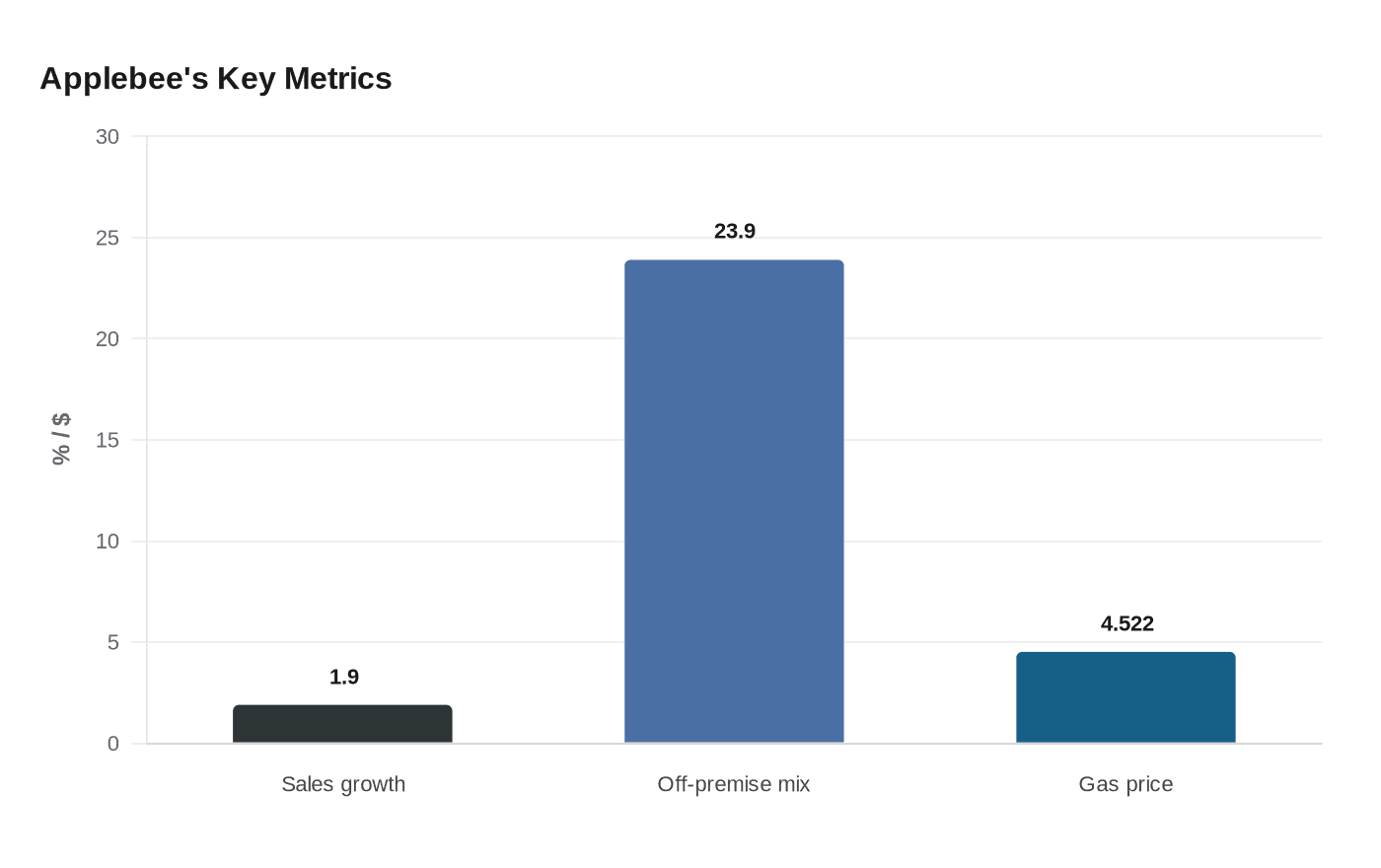
Higher gas prices are reaching into Applebee’s dining rooms before they show up in any staffing memo. Dine Brands Global said Applebee’s domestic comparable same-restaurant sales rose 1.9% in the first quarter of 2026, but it also said April softened as lower-income, price-sensitive guests pulled back and gas costs climbed.
That matters because casual dining runs on frequency. When fuel prices rise, guests make fewer trips, skip the spur-of-the-moment meal and choose cheaper occasions at home instead. For servers and bartenders, that can mean fewer tables, weaker check averages and thinner tip jars. For cooks and dish staff, it can mean fewer hours on the schedule, or the same workload spread across a leaner crew.
Dine Brands said Applebee’s off-premise sales made up 23.9% of the sales mix in the quarter, a cushion that can help when walk-in traffic cools. Even so, executives said April sales were softer than the tough comparisons from a year earlier, and they tied part of that slowdown to declining consumer sentiment and higher gas prices. The company is leaning on a barbell strategy that pairs value platforms like Applebee’s 2 for $25 with premium menu innovation, a sign that management is trying to protect both traffic and check averages at once.
The pressure is visible outside the restaurant too. AAA put the U.S. national average for regular gasoline at $4.522 on May 10, 2026, and recent coverage said prices had climbed above $4.50 a gallon, the highest since July 2022. The Associated Press reported that lower-income Americans sharply reduced gas consumption in the month following the Iran war, but still spent more at the pump. CNBC reported that Federal Reserve Bank of New York research found lower-income consumers were buying less to cope with higher fuel costs, while higher-income households changed behavior far less.
For restaurant workers, that is the chain reaction worth watching. A gas-price spike does not stay on the highway. It can cut into the host stand, the server section and the closing shift, then land on labor plans as fewer hours, tighter sections and more pressure to do more with less. In casual dining, fuel inflation is not just a consumer story. It is a work-schedule story.
This article was produced by Prism’s automated news system from verified source data, official records, and press releases, then run through automated quality and moderation checks before publishing. The system is built and supervised by the people who set the standards it runs under. Read our full AI policy.
Did this article answer your question?