Restaurant training center reframes retention as a career path issue
Retention gets easier when a restaurant has a real ladder. This training center turns hiring pressure into a plan for credentials, promotion, and better shifts.
Retention is being treated like a training problem
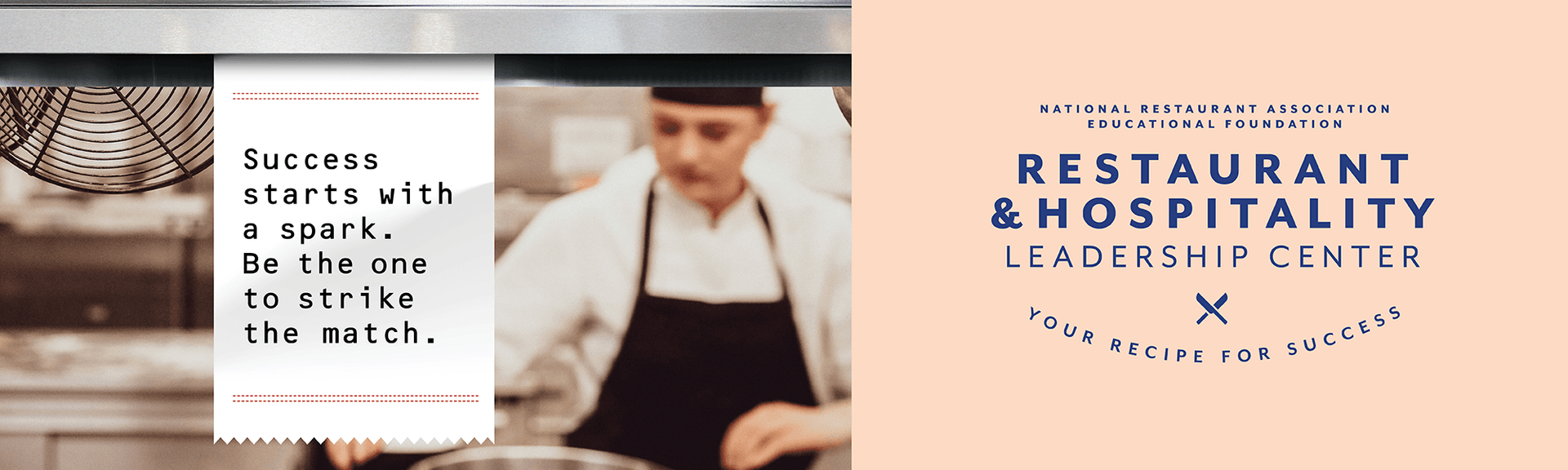
Restaurants have spent years hearing that labor shortages are just a hiring problem. The National Restaurant Association Educational Foundation’s Restaurant & Hospitality Leadership Center pushes back on that idea by treating recruitment and retention as a skills issue, not a slogans issue. The center says operators consistently rank employee recruitment and retention as top challenges, and its answer is accredited training, career guidance, and a clearer route to advancement.
That matters on the floor because turnover is not abstract. It shows up in missed prep, thin coverage, shaky service, and managers burning out because every shift feels like a rebuild. A training center that helps restaurants develop employees, keep them, and move them into stronger roles is really a staffing stability tool, not just an education page.
What the center is designed to do
The Restaurant & Hospitality Leadership Center is built around accredited programs that feed careers in food and beverage. The foundation says operators get one-on-one support to manage administrative burdens, enroll employees, identify trainers, and integrate accredited, competency-based programs. That is the kind of help many independent operators and multiunit managers actually need, because even a good training idea can stall when nobody has time to organize it.
For workers, the practical value is clearer than the branding. The center points toward credentials, advancement, and scholarship support instead of leaving growth to chance. For managers, it offers a framework for promoting from within, building stronger shift leaders, and reducing the churn that makes it hard to schedule, coach, and keep a consistent guest experience.
Why the career path matters more than the recruiting pitch
Restaurant jobs often fail not because people cannot be hired, but because they cannot see how the job becomes a career. That is especially true in a sector where pay can be split between tipped front-of-house work and hourly back-of-house work, and where the path from line cook or host to manager is often informal, inconsistent, or invisible. A worker is far more likely to stick around when the restaurant can show what comes next: certification, cross-training, a new title, or a path into management.
The center’s apprenticeship pathways reflect that reality. The foundation lists line cook, kitchen manager, and restaurant manager roles among the pathways it supports. That is significant because those are the jobs that shape the day-to-day life of a restaurant: the line that has to execute under pressure, the kitchen manager who keeps production moving, and the restaurant manager who has to hold together staffing, service, and compliance.
Coca-Cola’s role in the workforce pipeline
The foundation says The Coca-Cola Company has partnered with it for 20 years to develop leaders and talent. It also says Coca-Cola joined forces with the center to help restaurant operators train and guide employees. That long-running partnership is now tied to Coca-Cola Leader Lab, a people-centric leadership program aimed at frontline retention and leadership development.
The takeaway for operators is straightforward: this is not just about getting more applicants through the door. It is about giving a restaurant a way to identify people who can step up, train them consistently, and keep them on a track that leads somewhere. That kind of investment can pay off in fewer open shifts, better bench strength, and less dependence on last-minute scrambling.

The scholarship side is part of the same strategy
The foundation’s scholarship and grant work makes the center more than a corporate training overlay. NRAEF says it has awarded more than $27 million in scholarships and grants since 1987, reaching more than 6,000 students and educators. It also says it awards more than $1 million in scholarships each year, plus grants for people pursuing industry certifications and for educators.
That matters because restaurants do not solve retention only with a better onboarding binder. They need visible investment in future workers, especially younger people deciding whether the industry is worth staying in. In 2025, close to 200 students at 88 schools in the United States and Canada received NRAEF scholarships, showing that this pipeline is already active and not just aspirational.
The application calendar also signals continuity. Applications for the 2026-2027 scholarship cycle opened on January 27, 2026, and the foundation says applications for 2026-27 scholarships were open from January 15 through March 15, 2026. For a business that often complains about not finding prepared workers, that schedule is a reminder that the talent pipeline starts long before someone applies for a manager job.
ProStart shows how broad the pipeline really is
The center sits inside a much larger workforce strategy. NRAEF says ProStart reaches more than 222,000 students in 2,200 high schools across every U.S. state, Guam, Puerto Rico, and the District of Columbia. That scale matters because it shows the organization is not only focused on existing employees. It is also trying to shape the next generation before those students ever step into a kitchen or a dining room.
For the industry, that is the strongest argument for taking the center seriously. If the restaurant labor problem begins with a weak pipeline, then the solution has to start with youth readiness, entry-level training, scholarships, and actual career ladders. A restaurant that cannot keep a good line cook or turn a solid server into a floor leader is not just facing a staffing headache. It is missing the systems that make retention possible.
What managers can use tomorrow
The center is most useful when operators treat it as a blueprint rather than a brochure. The practical lesson is to make advancement visible and measurable.
- Build a written path from entry-level role to next role, with the skills required at each step.
- Use structured training instead of informal shadowing alone, especially for new trainers and new managers.
- Identify who is ready for line cook, kitchen manager, or restaurant manager pathways before the business is short-handed.
- Tie development to scheduling, so people who complete training see real movement in pay, responsibility, or hours.
- Use scholarships and certification support as retention tools, not just external perks.
That is where this story lands for restaurants. The industry keeps talking about labor shortages, but the stronger question is whether jobs are built to hold onto people once they arrive. The Restaurant & Hospitality Leadership Center argues that retention starts with training, and for operators facing burnout, instability, and endless turnover, that is the more useful diagnosis.
This article was produced by Prism’s automated news system from verified source data, official records, and press releases, then run through automated quality and moderation checks before publishing. The system is built and supervised by the people who set the standards it runs under. Read our full AI policy.
Did this article answer your question?