Breakfast and lunch chains outpace all-day family dining, Technomic says
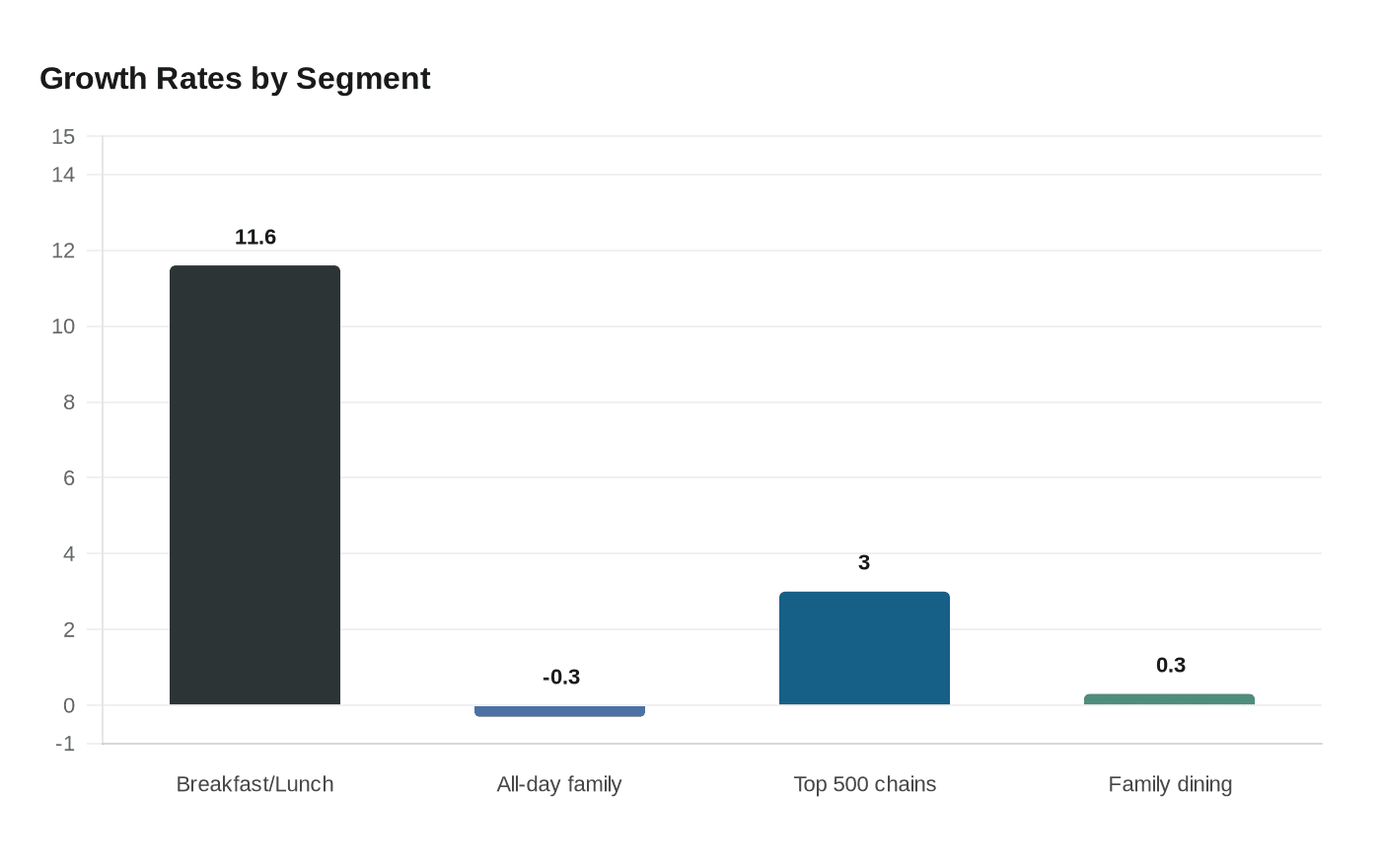
Family-dining chains serving only breakfast and lunch grew sales 11.6% in 2025, while all-day operators slipped 0.3%. The money is shifting to shorter hours.
Family-dining chains are finding that fewer hours can mean better sales. Technomic data cited this week showed breakfast-and-lunch operators growing average sales 11.6% in 2025, while all-day family-dining chains fell 0.3%, a split that underscores how much of the segment’s momentum now sits in the morning and midday rush.
The numbers land at a time when the broader chain business is barely growing. Technomic’s 2025 Top 500 chain report said the 500 largest U.S. restaurant chains increased sales 3% in 2024, the slowest pace in several years. Within family dining, the total category rose just 0.3% in 2025, the smallest increase in five years. That makes daypart strategy less like a menu choice and more like a labor decision: every extra dinner hour has to earn its keep.
The category itself sits in the middle of the market, between quick-service and casual dining, with accessible prices and a sit-down format. It includes heavyweights such as IHOP, Cracker Barrel, Denny’s, Waffle House and First Watch. But the clearest growth is coming from brands that have leaned into daytime only. First Watch, Eggs Up Grill, Another Broken Egg Cafe, Snooze and Keke’s Breakfast Cafe are all positioned around breakfast, brunch and lunch, not the full day.
First Watch is the cleanest example. In early May 2026, the company said 2025 revenue rose more than 20%, same-restaurant sales climbed 3.6% and new restaurant growth was nearly 11%. Its location pages still reflect that daytime model, with many stores closing around 2:30 p.m. Eggs Up Grill shows the same playbook, with location pages listing hours such as 6:00 a.m. to 2:00 p.m. Another Broken Egg Cafe markets breakfast, brunch and lunch, along with a full bar and signature cocktails, while Maple Street Biscuit Company, the smaller concept inside Cracker Barrel Old Country Store, is built around breakfast-and-lunch dayparts.
For workers, the appeal is obvious. Earlier closings can mean fewer late-night shutdowns, less split-shift misery and a schedule that is easier to pair with school, child care or a second job. But the upside is not automatic. Breakfast and lunch volume is compressed into a tighter window, so the lunch rush can be brutal if management misjudges staffing, training or ticket flow. The shift only helps retention if operators use the shorter day to ease burnout instead of squeezing more from fewer hours.
That tension is now showing up inside brands that still rely on dinner. Denny’s said more than 65% of its domestic first-quarter 2025 sales came during breakfast and lunch, even though it remains an all-day chain. Cracker Barrel still serves breakfast, lunch and dinner in its core stores, but its growth-minded Maple Street unit is already tied to the shorter daypart. The tipping point is becoming clearer: once dinner traffic no longer covers the added labor, utilities and management strain, staying open later stops looking like service and starts looking like waste.
This article was produced by Prism’s automated news system from verified source data, official records, and press releases, then run through automated quality and moderation checks before publishing. The system is built and supervised by the people who set the standards it runs under. Read our full AI policy.
Did this article answer your question?