California guide spotlights restaurant worker hazards, training and prevention
Burns, slips and knife cuts sideline restaurant workers fastest. California’s guide turns safety into a shift-by-shift checklist managers can use before the next rush.

Where restaurants most often fail workers on shift
The injuries that take restaurant workers off the line rarely start with a dramatic accident. They start with a wet floor near the dish area, a fryer that spits during rush, a box lifted with a twisted back, or a knife left where a tired prep cook can reach too fast. California’s Restaurant Employees Workplace Safety & Health Guide is built around that reality: the biggest risks in restaurants are the ones that feel routine until someone ends up burned, cut, or unable to work the next day.
The guide covers the hazards that show up most often in kitchens, dining rooms, prep areas, and back halls: burns, cleanup safety, electrical safety, freezer safety, fryer safety, safe knife handling, safer lifting and carrying, slips, trips and falls, chemical hazard communication, machine guarding, ladder safety, and workers under 18. That list matters because it tracks the actual injury patterns in food service, where a dinner rush can turn one missed step into a claim, a missed shift, or a longer recovery.
What the California guide is really for
This is not just a reminder to post a few signs on the wall. The guide is framed as a training tool, with a training guide meant to engage workers in identifying and controlling hazards in their own restaurant, plus a Safety Orientation Checklist for new workers. That makes it useful on both sides of the pass: managers can use it to standardize onboarding, and workers can use it to spot the gaps that show up when a restaurant is understaffed, overbooked, or running on habit instead of process.
The California Department of Industrial Relations also folds the guide into broader Small Business Model/Restaurant materials, which tells you something important about how the state sees the problem. Restaurant safety is not treated as a paperwork exercise. It is part of the daily operations of restaurants, cafeterias, kitchen works, and other eating and drinking establishments, where pressure, speed, and turnover can erode the basics if nobody keeps resetting the standard.
The injuries that sideline the most workers
The Bureau of Labor Statistics says full-service restaurants are part of the food services and drinking places subsector, and it reported 93,800 nonfatal injuries and illnesses in full-service restaurants in 2019. In the 2020 BLS table for full-service restaurants, heat burns, soreness and pain, sprains, strains and tears, and cuts and lacerations were among the leading injury categories. Those are not abstract categories. They are the exact kinds of injuries that keep a line cook from finishing a shift, a server from carrying trays, or a dishwasher from coming back the next day.
The broader numbers show the same pressure in the industry. Private industry employers reported 2.5 million nonfatal workplace injuries and illnesses in the United States in 2024, and private industry employers in California reported 344,500 in 2024. Restaurant work is only one slice of that total, but it sits in a sector where staffing shortages, burnout, and high turnover can push safety habits to the edge. The guide’s value is that it names the ordinary hazards before they become the injuries that change a worker’s week or a business’s payroll.
Why burns, slips and cuts keep happening
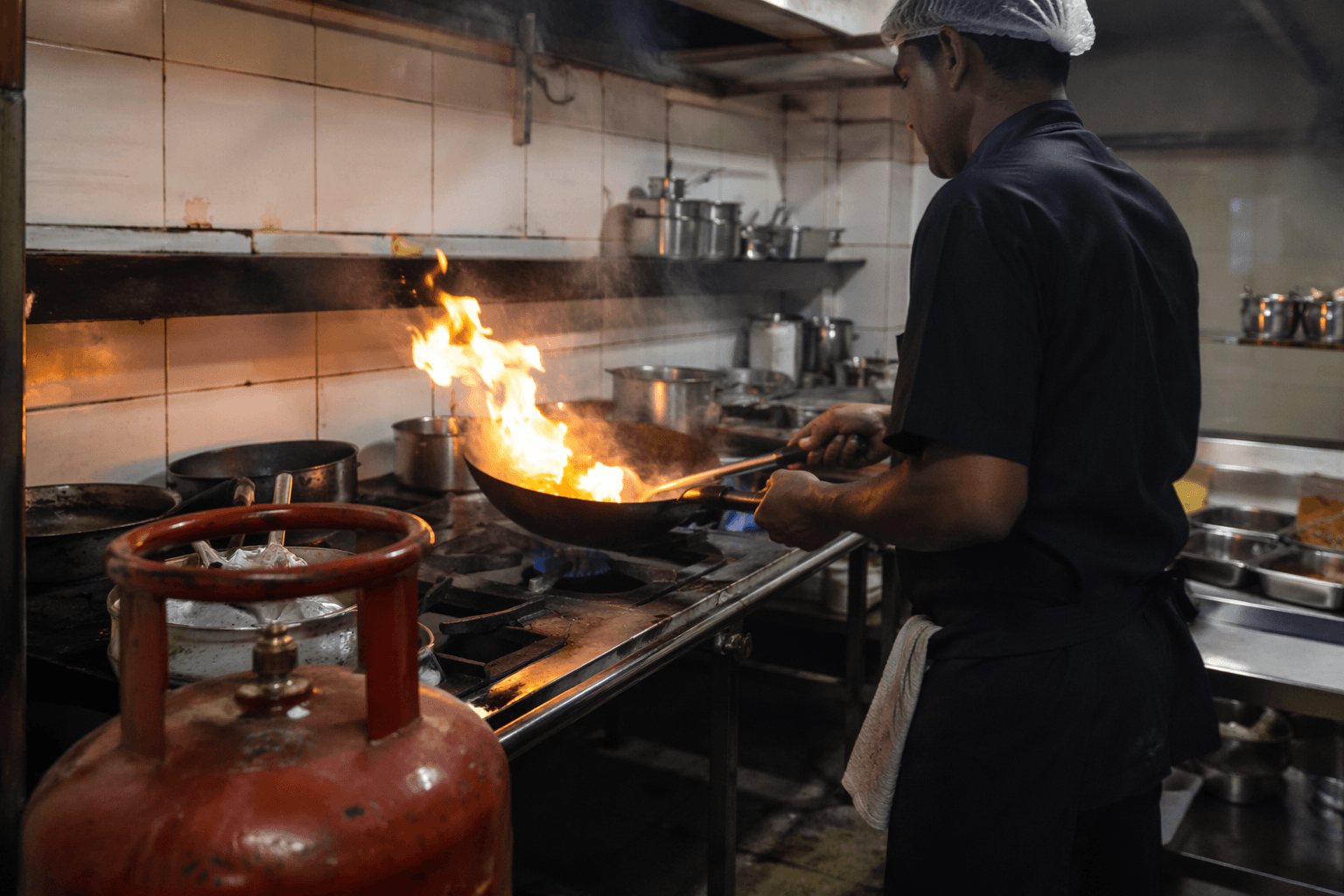
Restaurant hazards often cluster around speed and repetition. Burns happen at the fryer, on the line, around hot pans, or during cleanup when surfaces are still hot. Slips and falls happen when a spill is not marked fast enough, when a hallway stays wet, or when someone is carrying too much to see the floor. Cuts and lacerations happen when knives are dull, stored badly, or used in a hurry, and the guide’s safe knife handling section exists because those injuries are preventable, not inevitable.
The other hazards in the guide fill in the rest of the picture. Chemical hazard communication matters in dish rooms and mop closets, where the wrong mix or the wrong label can make a routine cleanup dangerous. Electrical safety and machine guarding matter where equipment is used constantly and guards get removed for convenience. Freezer safety and ladder safety sound minor until someone is rushed, cold, distracted, or working alone. Safer lifting and carrying matters because backs do not forgive repetition, especially in jobs that require boxes, pans, and containers to move all shift long.

The liability line managers cannot ignore
California’s worker-safety rules make one point plain: employers must have an effective Injury and Illness Prevention Program. That program has to include training, instruction on safe work practices, and a system for communicating with workers. In a restaurant, that means safety cannot live only in a binder or in a one-time orientation. If workers do not know how to report a spill, who is responsible for chemical labels, or how to flag a broken guard on equipment, the restaurant is already exposed.
That exposure is not just internal. Cal/OSHA says it provides free safety and health assistance to employers, and the Labor Enforcement Task Force says it helps employers understand labor, safety, licensing, and payroll-tax laws and can inspect businesses when needed. For operators, that is a reminder that ignoring basic protections is not a harmless shortcut. It can lead to citations, enforcement action, and costly turnover that starts with an injury and ends with a staffing problem.
Young workers need tighter supervision
The guide gives special attention to workers under 18, and that is not a side note. California’s Young Workers Program says high-school-aged youth generally need a permit to work, coordinated through their schools, and the state’s child labor materials cover wage, hour, age, and work-permit requirements. In restaurants, where teens are often pulled into busy service environments, the risk is not only physical injury. It is also assignment, scheduling, and supervision mistakes that can put young workers in jobs or hours that create legal and safety problems.
That is where managers need to slow down. New workers need a clear safety orientation before they are sent into rush conditions, and teen workers need extra attention on what they can do, when they can work, and who is checking in on them. The guide’s checklist approach is useful here because it forces the restaurant to treat youth safety as part of the opening process, not as an afterthought once somebody gets hurt.
What to use on the next shift
The most useful part of the guide is how quickly it can turn into a practical checklist.
- Walk the floor before service and remove slip risks, mark wet spots, and fix clutter in walkways.
- Show every new worker the location of hot surfaces, chemical storage, knives, and emergency supplies.
- Review safe lifting and carrying before anyone starts moving boxes or heavy containers.
- Make sure chemical labels, cleanup procedures, and hazard communication are clear and current.
- Check fryer guards, machine guards, and electrical equipment before the rush starts.
- Reinforce knife safety and ladder safety during onboarding, not after a cut or fall.
- Confirm that workers under 18 are properly permitted and assigned within the rules.
Restaurants run on speed, but the guide makes clear that the cost of skipping safety is paid in burns, sprains, cuts, and missed shifts. The operators who treat prevention as part of service protect the people doing the hardest work in the building, and they also protect the business from the injuries that most often sideline a shift before it is over.
This article was produced by Prism’s automated news system from verified source data, official records, and press releases, then run through automated quality and moderation checks before publishing. The system is built and supervised by the people who set the standards it runs under. Read our full AI policy.
Did this article answer your question?