China cracks down on ghost kitchens after cake complaint exposes fraud
A cake topped with an inedible flower exposed a ghost-kitchen network with nearly 400 fake outlets and forged licenses, triggering a nationwide crackdown.
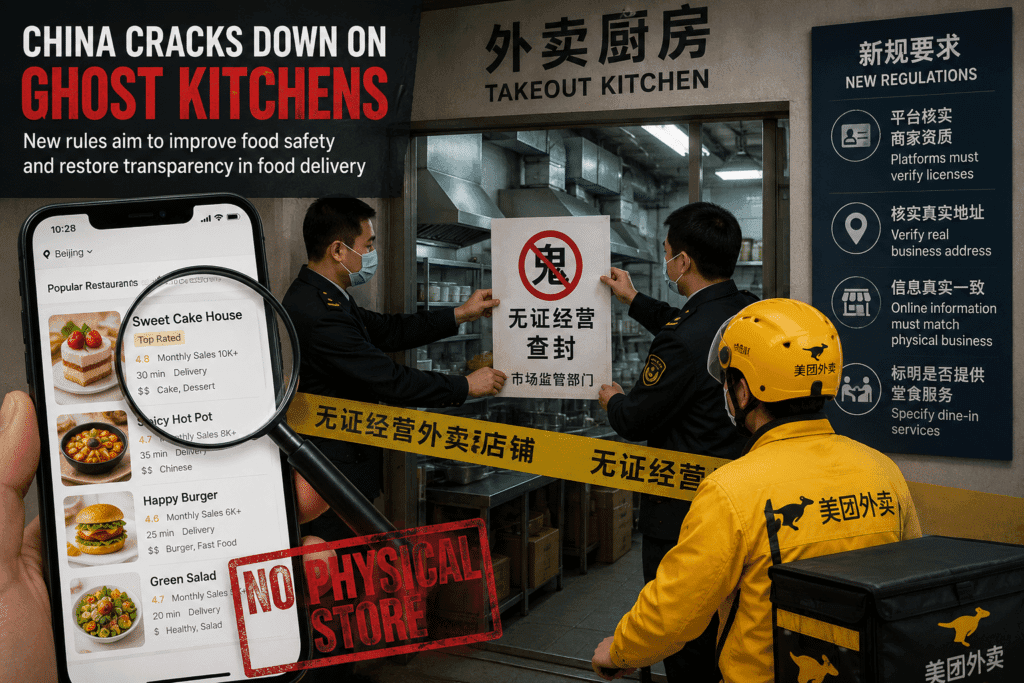
A birthday cake topped with an inedible flower turned into a far wider fraud case, exposing how ghost kitchens can hide behind delivery apps, fake storefronts and forged paperwork. A Beijing resident identified as Liu ordered the cake last summer, and regulators traced the delivery back to a bakery chain that claimed nearly 400 outlets but had no physical storefronts.
What officials say they found goes well beyond one bad order. Investigators said the chain used forged food business licenses and sat inside an order-routing system that pushed deliveries through intermediary platforms, where third-party vendors bid to fulfill orders at the lowest price. That setup cut costs for platforms and merchants, but it also weakened the basic controls restaurant workers know matter most: who is actually cooking, where the food is prepared and whether the kitchen is operating under any real supervision.

Authorities later said they identified more than 67,000 ghost shops or ghost vendors across seven major delivery apps and related order-transfer platforms. State media said those operations collectively handled more than 3.6 million cake orders. For frontline restaurant workers, the scale matters because it shows how easily a hidden operator can bypass the training, licensing and inspection burdens that compliant kitchens carry every day.
China’s State Administration for Market Regulation responded by tightening the rules on online food merchants. The new requirements, which took effect June 1, 2026, require delivery platforms to verify restaurant identities, licenses and operating addresses, make sure online store names match brick-and-mortar shopfronts and require merchants to clearly say if they do not offer dine-in service. The regulator also said platforms must perform periodic checks, placing more responsibility on the apps as gatekeepers of food safety.
The pressure on platforms escalated in April, when regulators fined seven major e-commerce and food delivery companies a combined 3.59 billion yuan, about $524 million to $530 million. The companies named were Pinduoduo, Meituan, JD.com, Ele.me/Taobao Flash Sale, Douyin, Taobao and Tmall. Officials described the penalty as one of China’s largest online food-safety fines since the food safety law was amended in 2015.
Some merchants have already begun leaning into so-called transparent kitchens, using live streams from food-preparation sites to reassure customers. That shift shows how the crackdown could reshape the delivery economy: less room for anonymous operators, more pressure on platforms to verify who is making the food, and higher stakes for the kitchens trying to compete without cutting corners.
This article was produced by Prism’s automated news system from verified source data, official records, and press releases, then run through automated quality and moderation checks before publishing. The system is built and supervised by the people who set the standards it runs under. Read our full AI policy.
Did this article answer your question?