DOL tips guidance explains restaurant pay, tip pools, minimum wage
A tipped paycheck can still be illegal if tips, side work, or a sloppy pool pull pay below minimum wage. Here is how to spot the red flags.
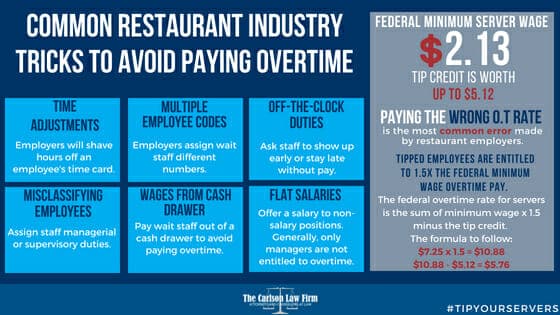
A tipped paycheck can look fine on a busy night and still fall short by the end of the week. Federal law lets restaurants pay tipped workers as little as $2.13 an hour in direct cash wages, but only if tips and wages together bring the worker to at least the $7.25 federal minimum wage in each workweek.
What the federal floor really requires
The Department of Labor’s guidance starts with a basic question that matters on every shift: are you a tipped employee? Under the Fair Labor Standards Act, a tipped employee is someone who customarily and regularly receives more than $30 a month in tips. That matters because it determines whether an employer can use the tip credit at all, and whether your paycheck should be built around a lower cash wage plus tips.
When a restaurant takes the tip credit, the employer must make sure your direct wage and your tips actually equal at least minimum wage for the week. If they do not, the employer has to make up the difference. That is the part workers often miss when they only look at the hourly rate on the schedule and not the full weekly math on the pay stub.
The DOL also says employers must tell tipped employees in advance how pay is structured. That includes the cash wage, the tip credit being claimed, and the rule that employees keep their tips except in a valid tip pool. If a restaurant never explained those basics before you started taking tables, that is not a minor paperwork problem. It is a warning sign.
Questions to ask on day one
Restaurant workers can protect themselves by asking a few direct questions as soon as they are hired. Those questions are simple, but they cut straight to the pay-rights issues that most often lead to wage theft:
- What is my direct cash wage?
- Is the restaurant taking a tip credit?
- Who is included in the tip pool?
- Are managers or supervisors handling any of the tips?
- Do my tips and wages actually bring me to minimum wage every workweek?
If the answers are vague, inconsistent, or different from what appears on the pay stub, it is worth paying attention. In restaurants, wage problems often hide inside the day-to-day grind: a server spends too much time rolling silverware, side work stretches into closing duties, or the tip pool includes people who should not be in it. The federal rules give workers a way to check whether the job is operating legally or just calling it standard practice.
Tip pools, managers, and who gets to touch the money
Tips belong to the employee, not the house, except in a lawful tip pool. That distinction matters because tip pools can be legitimate one day and unlawful the next if management starts expanding the circle. The law bars employers from keeping employee tips, and Congress made that clearer in the Consolidated Appropriations Act of 2018, which prohibited managers and supervisors from taking any portion of employee tips.

The Department of Labor issued a final rule on December 22, 2020 to put those protections into effect. For restaurant workers, the practical takeaway is straightforward: a valid tip pool is not a free-for-all. If a manager, shift lead, or supervisor is sharing in tips, or if house policy is quietly diverting part of the pool, that is the kind of problem that can drain a server’s or bartender’s earnings fast.
Back-of-house participation can also become a flashpoint. The DOL guidance is useful precisely because restaurants often try to blur the line between front-of-house tipping culture and kitchen labor. Workers should know which employees are legally eligible for the pool and which are not, because a pooled system that looks fair on paper can still violate the rules in practice.
Side work is where pay violations often hide
One of the hardest things for tipped workers to track is side work. Cleaning, prep, stocking, restocking, polishing glasses, and rolling silverware may be part of restaurant life, but they can also become a wage issue if too much of the shift is spent away from tipped work. That is why the Department of Labor proposed a rule in June 2021 that would have limited tip-credit use for non-tip supporting work beyond 20 percent of the workweek or more than 30 continuous minutes.
The agency finalized related changes in October 2021, but the rule did not survive judicial review. On August 23, 2024, the Fifth Circuit Court of Appeals struck down the 2021 tip rule in Restaurant Law Center v. U.S. Department of Labor. The DOL then withdrew that rule in December 2024 and restored earlier regulatory language. For workers, the point is not just legal history. It is a reminder to watch whether side work is swallowing the shift while the tipped wage stays stuck at $2.13 an hour.
If you are spending more time on non-tipped tasks than on serving, bartending, or other tipped duties, the issue is not just workload. It can affect whether the restaurant is properly using the tip credit at all. In a business where labor is already stretched thin and turnover is high, these side-work disputes often land right where burnout and payroll meet.
Why state law can change the picture completely
Federal law is only the starting point. The Department of Labor’s state-by-state tipped-wage guidance, updated January 1, 2026, shows how much variation exists across the country. Some states require employers to pay tipped workers the full state minimum wage before tips. Others allow a lower cash wage or a partial tip credit. The federal cash wage remains $2.13 an hour, but that does not mean every restaurant in the United States can legally use that number.
That is why restaurant workers in Washington, DC, or anywhere else should not assume the federal floor controls their paycheck. State and local rules can be more protective, and in many places they are. A restaurant may have to pay a higher cash wage, follow a different minimum wage, or use stricter tip-credit rules depending on where it operates.
For employees, the check is simple: compare the pay stub to the law that applies where you work, not just to what the manager says is “industry standard.” A rule that is legal in one state may be unlawful in another.
Why this fight keeps coming back
The federal tipped cash wage has sat at $2.13 since the early 1990s, and April 1, 2024 marked 33 years since the law set that two-tier wage floor. That longevity is part of why the issue keeps resurfacing in restaurant politics and payroll fights alike. Researchers and worker advocates disagree sharply about what would happen if the tip credit disappeared. Some studies argue eliminating it may not raise total earnings and could reduce jobs. Others argue that tipped minimum wage hikes do not close earnings gaps.
Women and workers of color are central to that debate because tipped work is not evenly shared. In December 2024, the Institute for Women’s Policy Research reported that women make up almost two-thirds of servers, or 65.5%. That means any change to tip credits, pools, or minimum wages lands hardest in jobs that already carry the pressures of unpredictable income, customer bias, and high turnover.
For restaurant workers, the real lesson is direct: the legal rules are not abstract payroll trivia. They decide whether a slow shift, a bad tip pool, or a pile of side work leaves you with a lawful paycheck or a short one.
This article was produced by Prism’s automated news system from verified source data, official records, and press releases, then run through automated quality and moderation checks before publishing. The system is built and supervised by the people who set the standards it runs under. Read our full AI policy.
Did this article answer your question?