Earned Wage Access Gives Restaurant Workers Faster Pay Between Paydays
A server can pull earned wages hours after a shift for around $3 a transaction, but the math gets complicated fast for tipped workers earning $2.13 an hour in base pay.
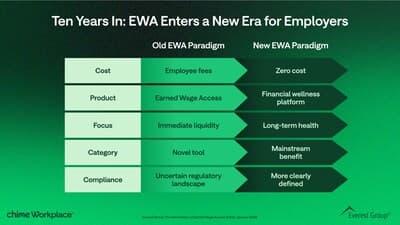
The Scenario That Sells the Product
Picture a server finishing a Friday dinner rush at a full-service restaurant. The section went well, tips were solid, but payday isn't until next Thursday and a car insurance payment hits Monday. The shift paid out in tips at the end of the night, but those cash wages from the employer, maybe $2.13 an hour under federal tip-credit rules, won't land in a bank account for six more days. That gap is exactly where Earned Wage Access (EWA) steps in.
With an employer-integrated app like Tapcheck, DailyPay, ZayZoon, or Payactiv, that same server can request up to 70 percent of net earned wages right after a shift ends. The average transaction clears at around $106 according to Consumer Financial Protection Bureau data, typically arriving via direct deposit or a prepaid card. The cost, when there is one, averages $3.18 per transaction, though fees across providers range from $0.61 to $4.70 depending on transfer speed and platform model.
That sounds cheap. It is, compared to a payday loan. But the CFPB found the average EWA user runs 27 transactions a year. At $3.18 each, that is roughly $86 annually in access fees. For a tipped worker whose employer-paid cash wage sits at the federal floor of $2.13 an hour, $86 represents nearly 40 hours of base pay before tips. The product works. The math deserves attention.
How the Plumbing Works
EWA operates through two distinct models, and which one a restaurant uses has real consequences for accuracy and worker protection.
In the employer-integrated model, the EWA vendor connects directly to the restaurant's payroll or time-and-attendance system. As employees clock in and out, the platform tracks accrued wages in real time and makes a calculated percentage available for advance. The vendor fronts the money; the employer repays it on regular payday. This model is more accurate because wage data comes straight from the source rather than relying on what an employee reports.
Consumer-direct EWA, by contrast, lets workers access advances through a standalone app using self-reported or estimated hours. These platforms, sometimes called D2C providers, are harder for regulators to oversee and carry a higher risk of miscalculation. For a restaurant where tip credits, pooling arrangements, and variable scheduling already complicate payroll, employer-integrated is the safer bet.
Vendors evaluated for quick-service and full-service restaurant use include Tapcheck, DailyPay, ZayZoon, Rain, and Payactiv. Tapcheck and ZayZoon market themselves as zero-cost to employers. DailyPay charges fees that may fall on the employee, the employer, or be split. The differences matter because "free for employers" doesn't always mean free for workers.
The Tip-Credit Complication
This is where EWA intersects with one of the messiest corners of restaurant payroll. Under federal law, tipped employees can be paid a cash wage as low as $2.13 an hour, with the employer claiming a tip credit of up to $5.12 to satisfy the $7.25 federal minimum. Many states set higher cash wage floors; some, like California and Washington, have eliminated the tip credit entirely.
The problem: EWA platforms calculate available advances based on earned wages in the payroll system. For a server whose employer cash wage is $2.13 an hour, the "earned wages" the system sees are minimal until tips are recorded, and tips often aren't logged in payroll in real time. That means EWA access on a given shift may not reflect what the worker actually earned that night. Managers implementing EWA need to confirm with their vendor exactly how tip income is factored into advance calculations, and whether the system accounts for tip-credit state law variations. Getting this wrong creates either underpayment to the worker or advance amounts that exceed what the employer can legally claw back through regular payroll.
The Retention Argument
The business case for EWA centers on turnover, and the numbers are striking enough to warrant attention. Restaurant and hospitality industries run annual turnover rates of 70 to 80 percent, compared to 20 to 25 percent across most other sectors. SHRM estimates the cost of replacing a single hourly employee at $4,700 once recruiting, onboarding, and lost productivity are counted. Toast's internal data from restaurants that adopted EWA showed a 27 percent reduction in turnover. Separate research put the figure at 20 percent, and some hotel and quick-service groups have reported reductions of up to 60 percent.

Even the lower end of that range changes the math substantially. A restaurant that turns over 15 employees a year and saves five of those hires through EWA is looking at roughly $23,500 in avoided replacement costs. That more than offsets the administrative cost of running the program.
Beyond retention, EWA affects attendance. Workers managing cash shortfalls are more likely to pick up extra shifts or call out due to financial stress-related disruptions. That's harder to quantify, but operators who track it consistently report improvement in the first 60 days.
The Decision Checklist
Before rolling out EWA to a restaurant staff, managers need to work through four questions honestly:
- True cost per employee: Ask each vendor for a breakdown of all fees, including optional "tips" to the platform, expedited transfer charges, and any membership tiers. Calculate the annual cost per worker assuming 27 transactions. If the worker bears those fees, that is a pay cut in real terms.
- Tip-credit and compliance interaction: Confirm in writing how the vendor handles tip-credit states, variable-hour schedules, and what happens if a payroll correction creates an overpayment.
- Vendor risk and complaints: Check the CFPB complaint database for the provider. Common issues include payroll integration failures that leave workers unable to access funds, and confusing default "tip" settings that have charged workers unintended amounts. Integration reliability is a documented pain point across several major providers.
- Regulatory clarity in your state: Several states, including California, are actively regulating EWA under lending or money-transmission laws. The federal H.R. 7428, which would exempt EWA from Truth in Lending Act classification while requiring clearer disclosures and a mandatory fee-free option, remains in play. Know what rules govern providers in your state before signing a contract.
What to Track in the First 60 Days
EWA deployed without measurement is just an expense. Track these metrics from day one:
- Voluntary turnover rate compared to the same period the prior year
- Absenteeism and call-out rates by shift
- Percentage of eligible employees who activate the app (low activation means low perceived value)
- Average number of transactions per worker per month (high frequency signals financial stress, not just convenience)
- Repeat users who access wages every single pay period, a sign of dependency rather than emergency use
If turnover isn't moving after 60 days, the program either wasn't communicated well or the fee structure is undermining trust. If frequency is climbing without a corresponding drop in turnover, the product may be filling a gap better addressed by predictable scheduling or a wage increase.
What Makes It Work Versus What Creates Problems
EWA works best as one part of a broader financial-wellness approach. Pairing it with predictable scheduling, written materials explaining costs clearly, and access to benefits enrollment support gives workers a genuine support structure. Deployed alone as a headline benefit without addressing the underlying instability of unpredictable hours and tip-credit minimum wages, it risks becoming a tool workers depend on to bridge a gap that shouldn't exist.
The product has real value. More than seven million workers accessed roughly $22 billion through employer-partnered EWA platforms in 2022 alone, a number that grew over 90 percent in a single year. That adoption rate reflects genuine demand. Whether a given restaurant's EWA program reduces churn or deepens financial precarity depends entirely on how it's structured, what it costs the worker, and what else the employer is doing to stabilize hourly pay.
This article was produced by Prism’s automated news system from verified source data, official records, and press releases, then run through automated quality and moderation checks before publishing. The system is built and supervised by the people who set the standards it runs under. Read our full AI policy.
Did this article answer your question?