Japan Pauses Food Service Visa Program as 50,000 Worker Cap Nears
Japan closes its food service visa pipeline April 13 as 46,000 foreign workers push the SSW program to the brink of its 50,000-worker cap.

With approximately 46,000 foreign workers already filling prep stations and service floors across Japan's izakayas and restaurant chains, the country's Specified Skilled Worker program hit a wall. On April 4, Japan's government confirmed the arithmetic: no new Certificate of Eligibility applications for Type-1 SSW food service workers will be accepted starting April 13, 2026.
The freeze is not incremental. OTAFF, the official body administering SSW food service skills tests, suspended exam reservations domestically and overseas on instruction from the Ministry of Agriculture, Forestry and Fisheries. Prometric, which delivers the computer-based version of the test, also posted a suspension notice. Workers in Nepal, the Philippines, Vietnam, and across Southeast Asia who were preparing to enter Japan's restaurant sector through this pipeline now face an open-ended halt.
The cap hit faster than anyone projected. Launched in 2019 to fill chronic labor shortages across 16 sectors, the SSW Type-1 visa for food service was structured to absorb demand over a multi-year window. Post-COVID tourism recovery accelerated applications sharply, and by the end of February 2026 the food service headcount had reached roughly 46,000. Officials expect to breach the 50,000 statutory ceiling by May. Total SSW holders across all sectors hit a record 390,296 in late March, underscoring how aggressively Japan's industries had drawn on the program.
For operators, the operational hit is immediate. Restaurants and izakaya chains in Tokyo, Osaka, and tourist-heavy corridors that built staffing models around SSW recruits can no longer backfill roles through this channel. The typical pipeline from test to trained worker spans months: candidates must pass a skills evaluation and a Japanese language test at N4 level or higher before a COE is even filed. That runway is now gone for new entrants.
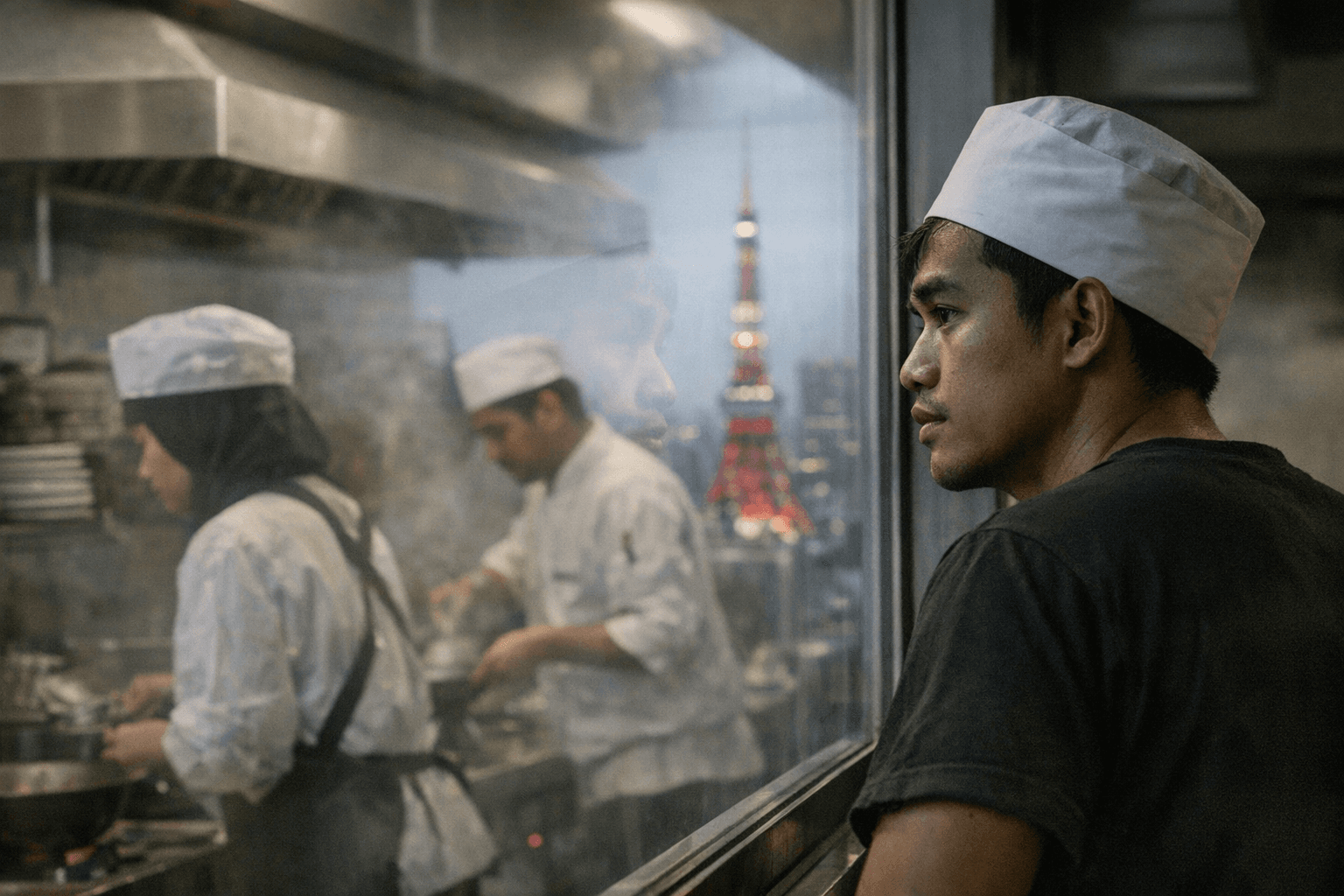
Smaller operators face the sharpest squeeze. Labor costs are expected to rise in the near term, while larger chains will likely accelerate investments in kitchen automation and self-service technology to compensate. Operators cutting shifts rather than paying market-rate premiums for scarce domestic labor is a plausible near-term outcome.
The contingency moves are straightforward but require urgency. Retaining current SSW workers with competitive pay and clear renewal pathways is the first line of defense. Cross-training kitchen and floor staff expands scheduling flexibility when headcount is fixed. Menu simplification reduces prep complexity and dependency on specialized labor. For recruitment, regional workforce boards and partnerships with culinary programs and domestic temp agencies offer supplemental channels, though none replicate the SSW pipeline's scale or speed.
The government has described the pause as temporary, pending policy reassessment. Until the cap is revised or lifted, Japan's food service industry is running a closed pipeline into what remains a structurally short-staffed market.
This article was produced by Prism’s automated news system from verified source data, official records, and press releases, then run through automated quality and moderation checks before publishing. The system is built and supervised by the people who set the standards it runs under. Read our full AI policy.
Did this article answer your question?