Hidden Delivery App Fees Push True Costs Past 30% for Independent Restaurants
On a $25 order, stacked DoorDash fees can silently climb to 33%, leaving an independent restaurant just $5.75 after food cost and labor to cover all overhead.
When New York City's City Council voted last April to allow delivery platforms to charge restaurants up to 43 percent per order, the legislation, Int 762-B, was billed as a measured compromise. For independent operators reading their monthly DoorDash and Uber Eats statements, the math landed differently.
New analysis published this week identified three separate fee layers that major platforms stack on top of their headline commission rates, pushing effective costs well past 30 percent for many independent restaurants. The headline number, 15 to 30 percent depending on plan, is only the beginning.
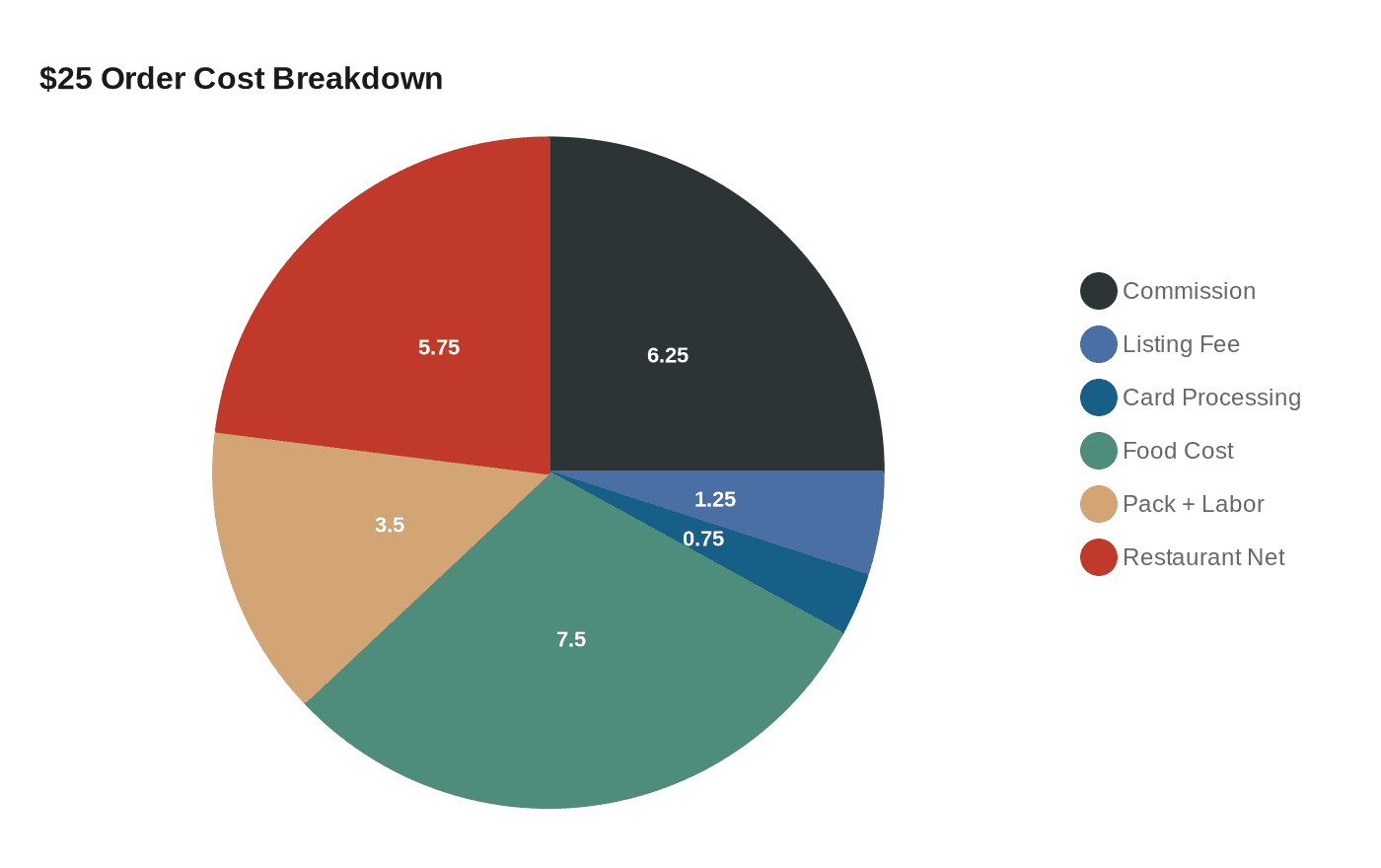
Take a $25 order on DoorDash's Plus plan, where the stated commission is 25 percent. That puts the base commission at $6.25. Add a sponsored listing fee of 5 percent ($1.25) to keep the restaurant visible in search results, and credit card processing at 3 percent ($0.75), and the platform's actual cut climbs to $8.25, or 33 percent of the order, before a single ingredient is purchased. Set against food cost of roughly $7.50 and packaging plus kitchen labor of $3.50, the restaurant nets $5.75. That 23 percent remainder still has to cover rent, utilities, and every other fixed overhead in the building.
The New York City Council passed Int 762-B in April 2025, allowing companies like DoorDash, Grubhub, Uber Eats, and Relay to charge restaurants up to 43 percent in total fees, up from the previous 23 percent cap, structured as 15 percent for core delivery, 5 percent for basic marketing and platform visibility, 3 percent for credit card processing, and an additional 20 percent for enhanced services. Platforms applauded. Most independent operators did not.
Three fee mechanisms drive the gap between the contract rate and actual take. Membership-linked surcharges tied to programs like DashPass attach costs to subscriber orders without changing the listed commission. Marketing and placement fees are nominally optional, but restaurants that decline them are algorithmically deprioritized in search results, losing visibility to chains willing to pay for premium placement. Pass-through processing and regulatory charges, the third layer, vary by city but rarely disappear from the invoice.
For a restaurant operating on a 10 to 15 percent profit margin, a 30 percent commission can quickly erase any potential earnings. Every additional fee percentage point beyond that becomes a staffing decision deferred. Reduced kitchen hours, consolidated back-of-house and front-of-house duties, and trimmed prep labor follow. For line cooks and servers navigating already-thin schedules, fewer shifts and blurred job descriptions are what a platform fee structure looks like from inside the building.
The most immediate action available to any operator is a statement audit: compare total platform fees paid against total revenue generated by channel, then calculate the true effective take-rate rather than relying on the commission percentage in the contract. Several operators have begun treating delivery apps as a discovery channel only, routing repeat customers to first-party ordering systems where margins run significantly higher. Trade associations continue pressing for standardized line-item fee disclosure, arguing that a clear breakdown of every per-order charge would prompt many restaurants to exit tiers that cost more than they produce.
This article was produced by Prism’s automated news system from verified source data, official records, and press releases, then run through automated quality and moderation checks before publishing. The system is built and supervised by the people who set the standards it runs under. Read our full AI policy.
Did this article answer your question?