Five Guys closes 14 U.S. restaurants as labor costs squeeze business
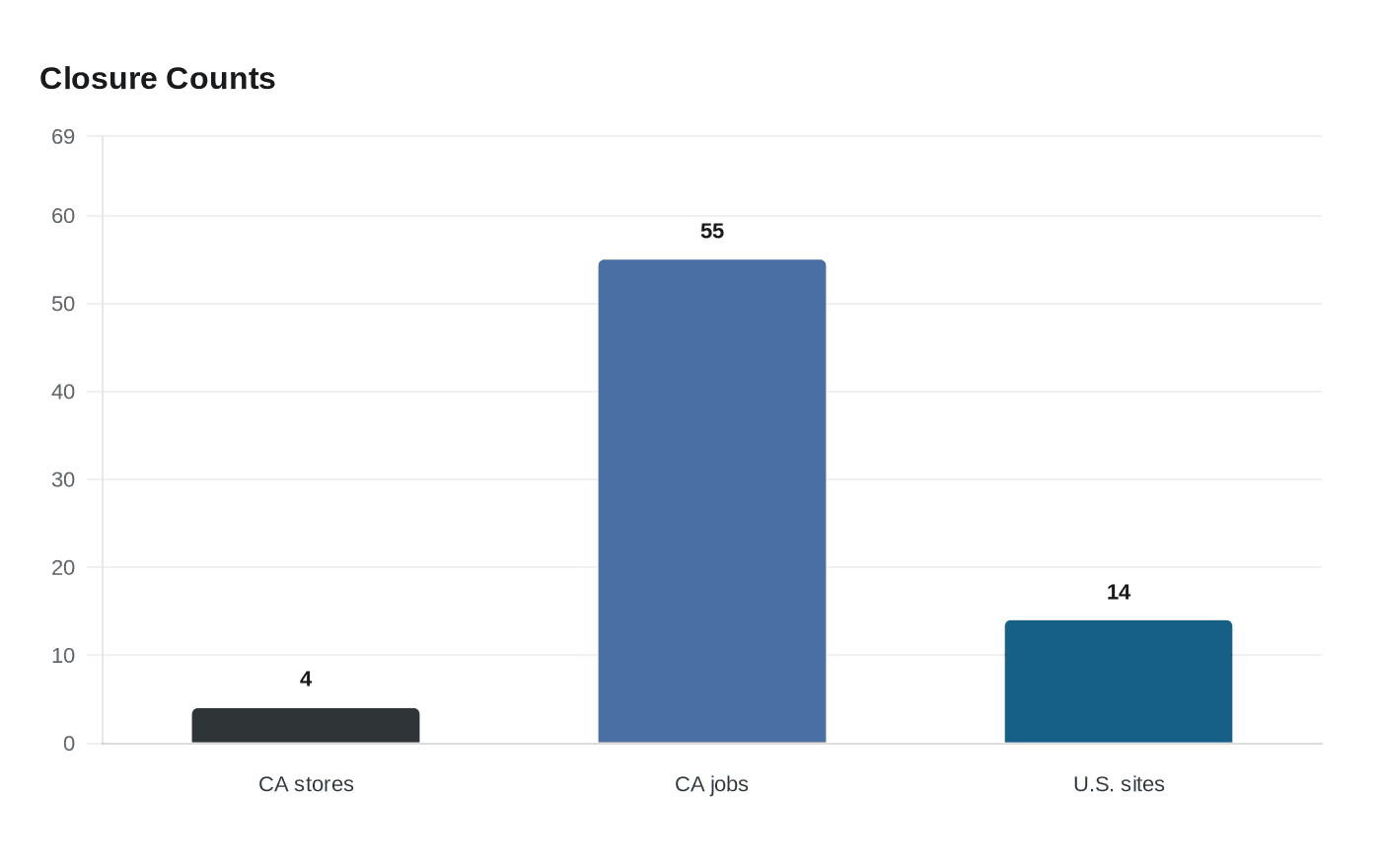
California workers are taking the hit: Five Guys is closing four stores there alone, and WARN filings show 55 jobs lost with no transfers offered.
Five Guys’ closure wave is landing first on workers’ paychecks. In California alone, four stores in Whittier, City of Industry, Merced and Hanford were scheduled to close between late May and early July, and WARN filings show 55 jobs lost at just those locations, with no transfers offered to affected employees.
That matters inside a restaurant because a closure is not just a real estate decision. For managers, cooks, cashiers and shift leads, it means lost wages, lost seniority and a scramble for the next schedule before the rent is due. California’s fast-food minimum wage rose to $20 an hour on April 1, 2024 under AB 1228, and state WARN rules generally require 60 days’ written notice before a mass layoff, relocation or closure. Those notices are supposed to go to workers, the Employment Development Department, local workforce officials and city and county leaders, with Rapid Response support and Work Sharing alternatives available for employees facing layoffs.
The bigger picture is a business model under pressure. At least 14 Five Guys restaurants either closed or were scheduled to close in the first half of 2026 across seven states, with the company citing financial hardship in official filings. The strain comes from the same place restaurant workers have been talking about for years: higher labor costs, rising rents and menu prices that customers can compare in seconds against cheaper burger chains.
Five Guys is especially exposed because it sits in the premium fast-casual lane. A burger, fries and drink can run roughly $17 to $22, a price point that can look steep when households are tightening spending. When traffic softens, the math gets brutal fast: labor costs rise, occupancy stays fixed and underperforming stores become the easiest line item to cut.
The closures also fit a wider industry pattern. Nation’s Restaurant News said the 2026 restaurant outlook pointed to only 1.3% real sales growth, with labor shortages and other cost pressures still weighing on operators. Five Guys, meanwhile, ended 2024 with a net gain of 37 stores even after closing 14 company-run restaurants and 14 franchised locations, a sign that the chain is still expanding in some markets while pulling back where the unit economics no longer work. For restaurant workers, the lesson is blunt: when premium pricing stops covering labor and rent, the first cost-cutting happens on the floor.
This article was produced by Prism’s automated news system from verified source data, official records, and press releases, then run through automated quality and moderation checks before publishing. The system is built and supervised by the people who set the standards it runs under. Read our full AI policy.
Did this article answer your question?