Guthrie’s grows by keeping chicken fingers simple and handmade
Guthrie’s is scaling by keeping the menu tight and the kitchen manual, a labor model that can mean faster training, fewer errors, and steadier shifts.

Simple chicken can be a labor strategy
Guthrie’s is growing in a chicken market where scale usually comes with more complexity, more menu sprawl, and more pressure on the people on the line. The chain’s sales rose 16.8 percent in 2025 and its unit count climbed 7.5 percent, yet it still finished the year just outside Technomic’s Top 500 at No. 537 with about $57 million in system sales. That kind of growth matters not just to owners and franchisees, but to the cooks, shift leaders, and managers who have to keep a fast-moving kitchen from falling apart during the rush.
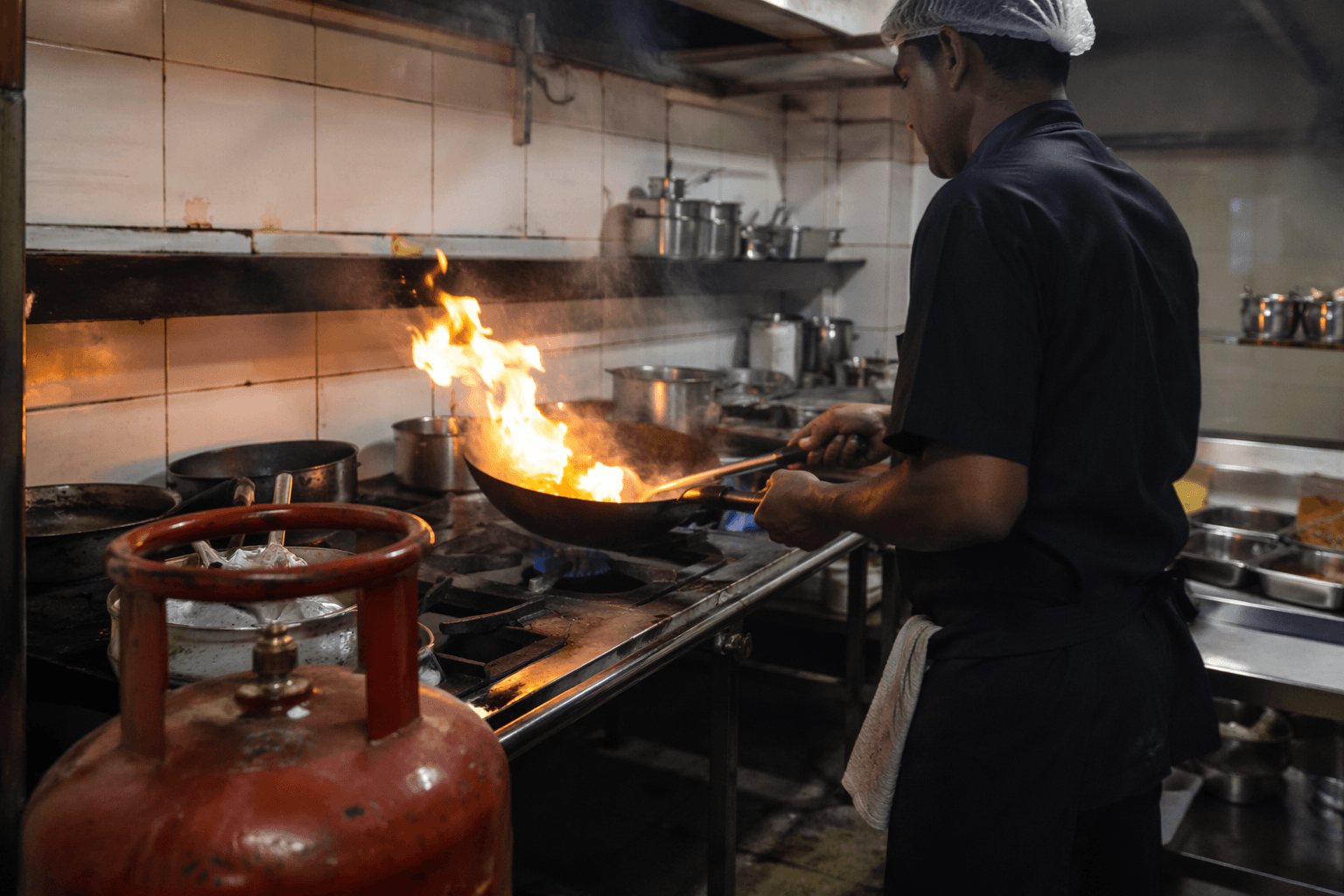
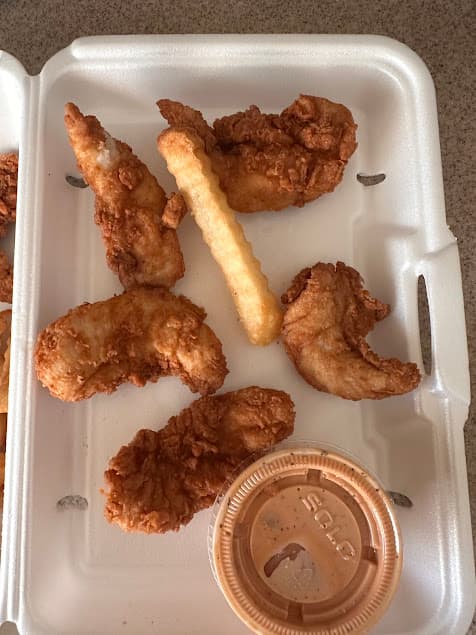
The reason Guthrie’s stands out is not a flashy reinvention. It is restraint. The chain says it still breads chicken by hand rather than leaning on timers or AI functions, and its menu stays centered on fingers, fries, Texas Toast, slaw, sandwich combos, and sauce. In a category often crowded with limited-time offers and heavy customization, that kind of simplicity can cut training time, reduce mistakes, and make scheduling more manageable when staffing is thin.
Why the kitchen model matters to workers
A short menu is not just a brand choice. It changes the day-to-day labor load in ways restaurant workers feel immediately. Fewer items means fewer station handoffs, fewer ingredient substitutions to memorize, and less time spent teaching new hires how to navigate a maze of prep steps before they can hold down a rush.
That can be a real advantage in a business where turnover is high and onboarding is often rushed. Guthrie’s own marketing says the concept’s simplicity helps it be “one of the fastest in the industry,” and its branding leans on “fresh. hot. fast. delicious,” which is really an operational promise as much as a customer pitch. For the people running the fryers and packaging boxes, speed only works if the process stays repeatable.
The contrast with more complex chicken chains is hard to miss. Raising Cane’s, Slim Chickens, and Zaxby’s all compete in the same lane, while legacy giants like KFC and McDonald’s have added tenders to the mix. Guthrie’s is betting that a clear format and a hands-on kitchen can do something many chains struggle to preserve as they expand: keep the job simple enough that workers can actually get good at it.
Growth has stayed rooted in a family identity
Tom Carr, who became president and CEO of Guthrie’s Franchising on January 14, 2026, has framed the chain’s history as part of its advantage. He arrived after a decade at Chicken Salad Chick and brings more than 25 years of leadership and marketing experience, but the company is still tied to the family that built it. Joe Kelly Guthrie, son of founder Hal Guthrie, remains involved with the business.
That continuity matters because restaurant workers know the difference between a brand that changes hands and one that keeps preaching family values while stripping away everything that made the workplace workable. Carr describes Guthrie’s as family-minded and values-driven, which is the sort of language employees hear often during a growth phase. The real test is whether that culture holds up once more stores are added and more hourly staff have to be trained on the same basic playbook.
For managers, a family-style operating model can be a strength if it keeps decision-making close to the kitchen instead of burying it in layers of corporate process. For hourly staff, it can mean fewer moving parts and a better shot at consistency from one store to the next. Those are not small things in a business where a bad process on a Friday night can turn into a line out the door and a stack of remakes.
The brand’s history explains the operating logic
Guthrie’s says it was founded in Haleyville, Alabama, in 1965, when Hal Guthrie ran a full-service menu that included whole chicken, hamburger steaks, and a salad bar. Chicken fingers were added in 1978, and the menu was narrowed to chicken fingers-only in 1982 at the Auburn location, which became the world’s first chicken-finger-only restaurant. The company says the recipe perfected in 1968 is still in use.
That history is important because it shows the menu was not simplified as a marketing stunt. It was narrowed over time into a format that could be repeated, taught, and scaled. A restaurant that knows exactly what it sells can often move faster on the line, reduce waste in prep, and keep labor from getting swallowed by menu drift.
The early expansion path also tells the same story. Guthrie’s later opened in Athens, Georgia, in 1984, then Tallahassee, Florida, in 1992, and Tuscaloosa, Alabama, in 1993. The company’s opening of its 31st Alabama location in Vestavia Hills on May 13, 2025, shows that the brand is still building from a regional base rather than chasing national sprawl for its own sake.
What the numbers say about the chicken business
Guthrie’s is growing inside a category that is still expanding, but not at the feverish pace it had a couple of years ago. Technomic data cited in the coverage shows the broader chicken category grew 5.3 percent in 2025, down from 9.1 percent in 2024 and more than 12 percent in 2023. That slowdown makes operational discipline even more valuable, because chains can no longer rely on category momentum alone.
For workers, slower category growth usually means the pressure shifts from opening new stores at any cost to running better stores with tighter labor control. Chains that can train quickly and keep service clean often have an edge in that environment, because every missed ticket, bad batch, or poorly staffed shift hurts more when the market is less forgiving.
Guthrie’s own franchising materials say the company is focused on expansion in the Southeast and adjacent states. That regional focus matters, because labor strategies can be easier to maintain when growth is concentrated. A chain stretching across the country often has to deal with wildly different labor markets, management pipelines, and staffing realities. A more contained footprint can make it easier to keep the kitchen model uniform and the employee experience more predictable.
What restaurant workers should watch next
The lesson in Guthrie’s growth is that simplification can be a worker-stability advantage, not just a brand identity. A menu built around a few core items can make it easier to train new hires, reduce errors under pressure, and keep the shift moving when the store is short-staffed. In a chicken category full of chains chasing differentiation through extras and add-ons, that kind of clarity can be a real operational defense.
It also puts the burden back on management to make sure “simple” does not become shorthand for squeezing more out of fewer people. If the kitchen is easier to learn, that should translate into better onboarding, more consistent stations, and less chaos on the line, not a reason to underinvest in staffing. Guthrie’s appears to be betting that handmade chicken fingers and a narrow menu can support growth without losing control of the floor, and in restaurant work, control is often what keeps a job sustainable.
This article was produced by Prism’s automated news system from verified source data, official records, and press releases, then run through automated quality and moderation checks before publishing. The system is built and supervised by the people who set the standards it runs under. Read our full AI policy.
Did this article answer your question?