Independent restaurants cut costs with smarter scheduling, in-house repairs
Two independents are protecting margins by scheduling tighter, cross-training harder and fixing gear in-house, so the cost squeeze lands less on the line.
Margins show up first in the schedule
The fastest way to see restaurant economics is not in a boardroom, but on a Tuesday night when the prep list is too long, the host stand is short, and a walk-in cooler starts acting up. That is the pressure Chicago’s Adalina Prime and Atlanta’s Talat Market are trying to manage by making labor work harder and by repairing equipment in-house before a small problem becomes a service failure.
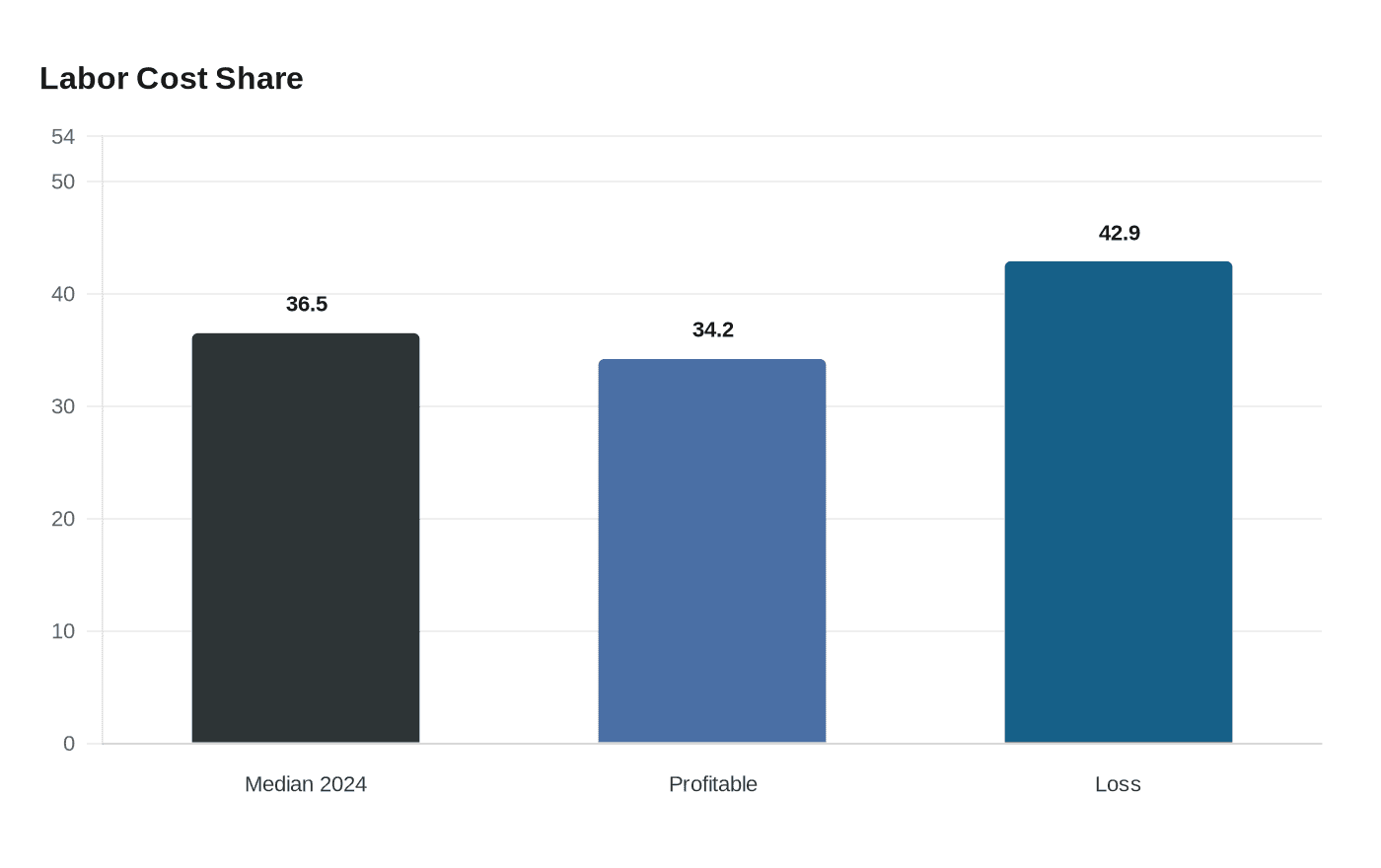
The bigger picture is brutal. The National Restaurant Association says food and labor each take about 33 cents of every dollar in sales at a typical independent restaurant. In its 2025 operations data, full-service operators reported median salaries and wages of 36.5% of sales in 2024, while profitable operators were lower at 34.2% and operators reporting a loss were much higher at 42.9%. Higher-volume full-service restaurants with annual sales of $2 million or more also had lower food and non-alcohol beverage costs, at 31.0% of sales, compared with 33.7% for restaurants below that threshold. When the U.S. Bureau of Labor Statistics says food prices rose 3.1% from December 2024 to December 2025 and food away from home climbed 4.1%, the room for sloppy scheduling or broken equipment gets even smaller.
Smarter scheduling is really about matching labor to demand
Labor optimization sounds like a finance term, but on the floor it usually means better scheduling, tighter cross-training, less downtime between tasks and more deliberate use of skilled employees. In a restaurant, that can translate into fewer unnecessary overlaps, more precise prep timing and a staff that is deployed where the rush actually is instead of where the schedule used to say it might be. For a server, that can mean fewer dead stretches and fewer frantic midservice section changes. For a line cook, it can mean a prep list that arrives when it is useful, not just when it is long.
There is a worker-level tradeoff here, and it is the one people in restaurants know too well. Smarter scheduling can make a shift feel more organized and less chaotic, which matters when every extra task competes with guests, tickets and cleanup. But it can also mean leaner staffing, broader job descriptions and less room for error if the forecast is wrong. In tipped front-of-house work, tighter schedules can shift more side work onto fewer people; in back of house, it can compress prep into smaller windows and raise the cost of one missed delivery or one callout.
That is why the best version of labor optimization is not just fewer hours. It is a schedule that keeps the room covered, the line moving and the most skilled people on the work that actually needs judgment.
Keeping repairs in-house saves more than a service call
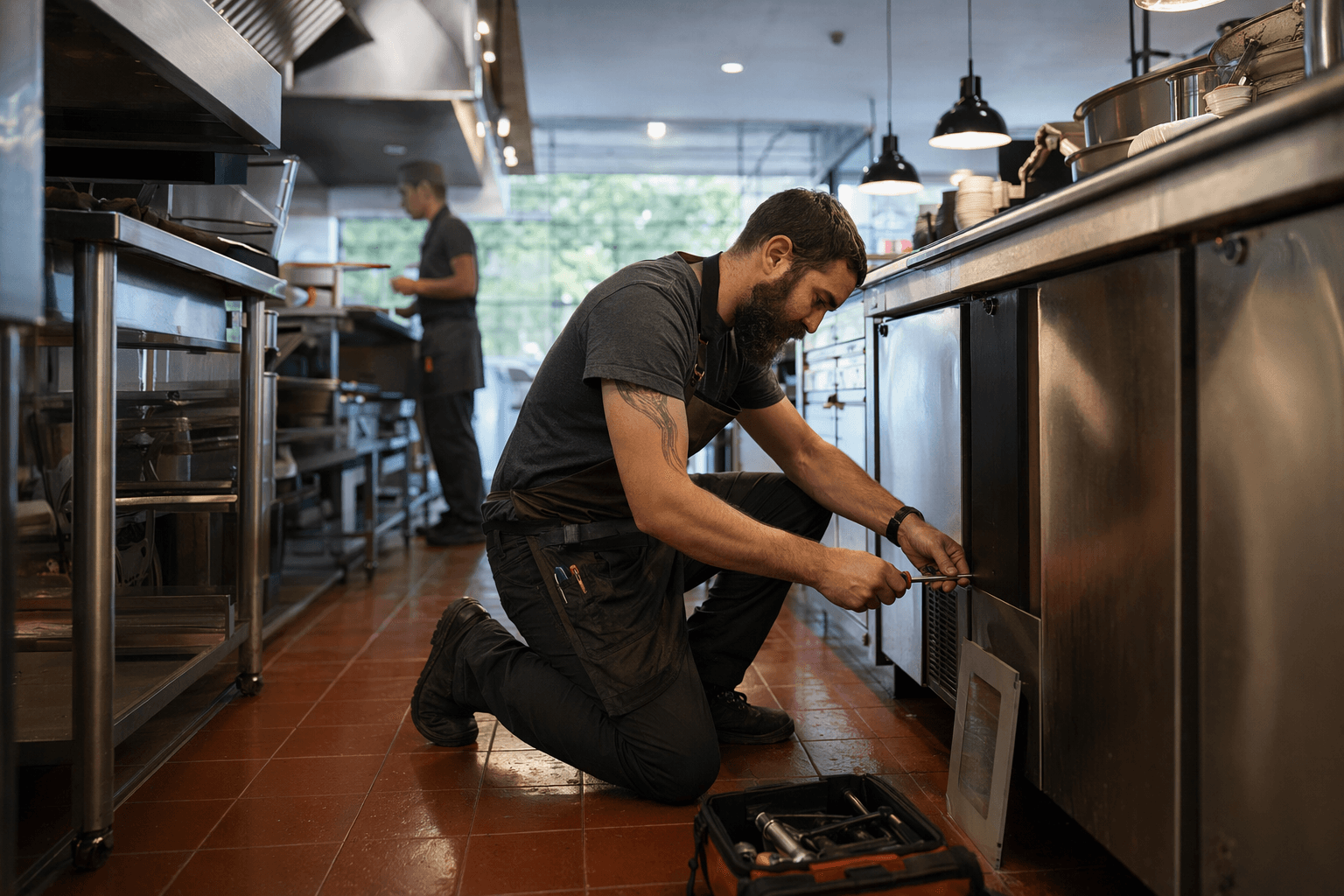
Fixing equipment in-house is another move that sounds dull until a refrigerator fails midservice or the POS system freezes with tickets hanging in the air. A broken oven or a dead terminal is not just a maintenance issue. It can become lost tickets, upset guests and a stressed-out team trying to keep pace while the room keeps turning. When restaurants handle some repairs internally, they can reduce service interruptions and keep the night from unraveling.
That approach also changes what restaurants expect from the people already on payroll. Independent operators often need staff who can do a little of everything, and the research notes point to exactly that reality: a line cook may help with maintenance basics, a manager may jump into the dining room and a chef may have to make purchasing decisions with real budget pressure in mind. The upside is resilience. The risk is that maintenance quietly becomes another task piled onto an already full shift.
For workers, the question is whether in-house repairs are a genuine support system or just another way to shift labor downward. If the restaurant teaches people enough to prevent small breakdowns and pays them to use that knowledge, it can reduce chaos. If it simply assumes everyone should improvise when the freezer sputters, then the burden lands on the crew while the equipment keeps aging.
Talat Market shows how the numbers get cleaner when the system does
Talat Market offers a clear example of why this matters. SpotOn describes the Atlanta restaurant as a 30-seat neighborhood spot, and the MICHELIN Guide places it in Atlanta’s Summerhill neighborhood, where it is known for traditional Thai flavors built with Georgia produce. Co-owners Rod Lassiter and Parnass Savang had been thinking about switching POS systems for years before moving to SpotOn, and the company says its Profit Assist tool flagged a QuickBooks P&L error within 24 hours of installation.
That kind of correction matters because small accounting mistakes can distort the whole operation. If the books overstate or understate labor, food cost or cash flow, the response can be the wrong one: too many cuts in one area, too much spending in another, or a schedule that does not match reality. At a 30-seat restaurant, one bad assumption can move from theory to payroll quickly. Talat Market’s path from early pop-ups to a restaurant the owners hoped could eventually support employee benefits and even a second location shows why cleaner numbers are not just about margin. They are about staying open long enough to build a better job.
Adalina Prime shows what discipline looks like during expansion
Adalina Prime adds the other side of the story. The restaurant opened in Chicago’s Fulton Market in summer 2025 as an expansion from Adalina, which debuted in Chicago’s Gold Coast in 2021. Growth like that raises the stakes on every operational choice. More seats mean more prep, more purchasing and more chances for a mismatch between labor and demand to show up in the dining room.
That is why smarter scheduling and tighter cost control are not separate from expansion. They are what make expansion possible without burning out the crew. A restaurant that grows but never tightens its systems can turn every new cover into more pressure on cooks, servers and managers. A restaurant that invests in systems can turn scale into stability, even when food inflation and wage pressure keep narrowing the gap.
What this playbook means for the people on the shift
- schedules built around actual volume, not habit
- cross-training that helps staff move across stations without constant panic
- maintenance knowledge that keeps a service problem from becoming a full stop
- menu and purchasing decisions that respect the real cost of each plate
The most durable independents are not just cutting. They are operating with more intention. That means:
Done well, that can mean more organized work, less chaos and a better chance the restaurant stays open long enough to keep paying people. Done badly, it becomes a prettier version of the same old squeeze, with fewer idle minutes and more responsibility pushed onto the same crew. The restaurants that survive this cost climate will be the ones that treat labor, tech and repairs as one operating system, not three separate headaches.
This article was produced by Prism’s automated news system from verified source data, official records, and press releases, then run through automated quality and moderation checks before publishing. The system is built and supervised by the people who set the standards it runs under. Read our full AI policy.
Did this article answer your question?