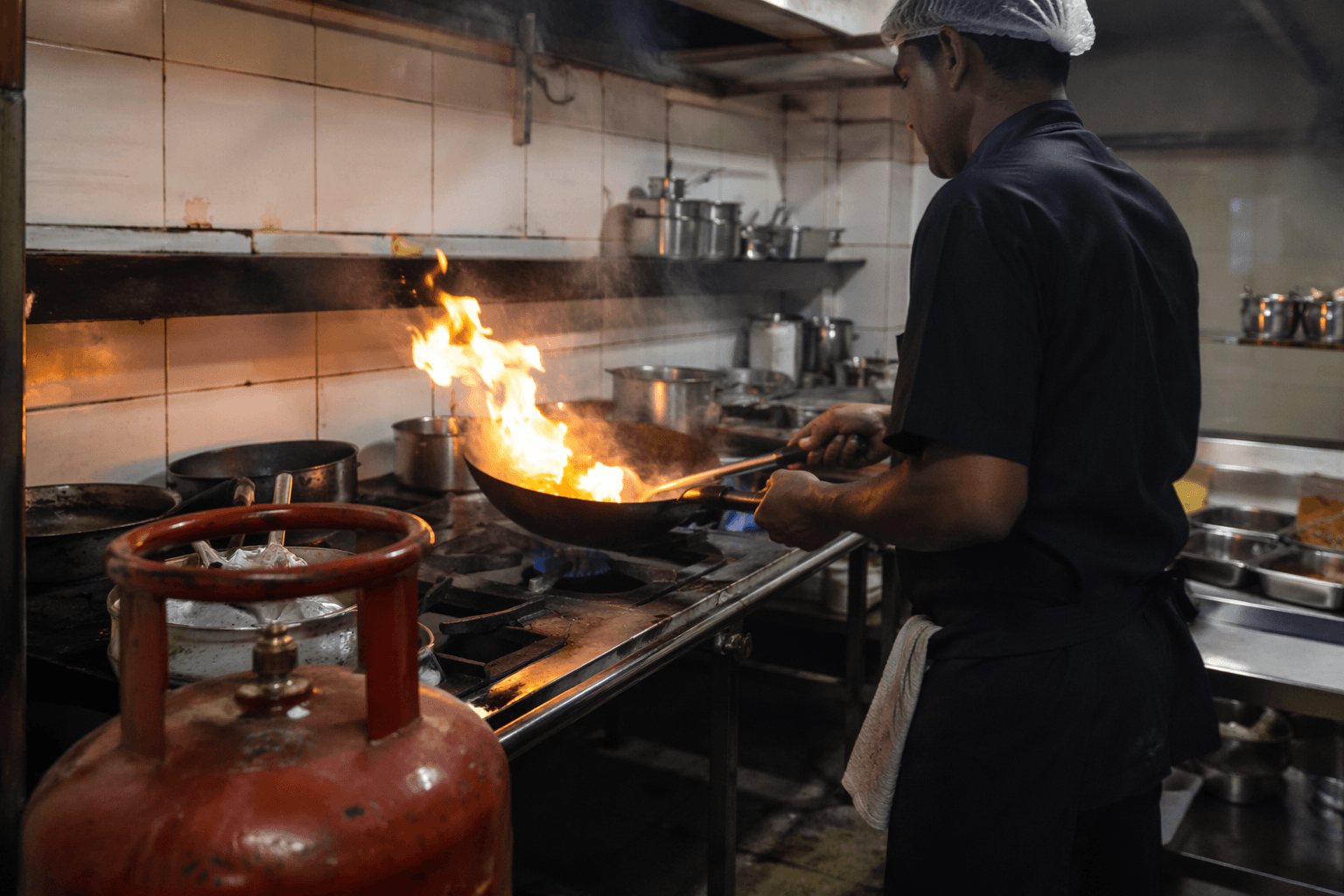
India’s quick-service restaurant expansion slows to three-year low
India’s biggest QSR chains opened far fewer new outlets in FY26, shrinking the pipeline for first jobs, shift-lead promotions and new franchise deals.

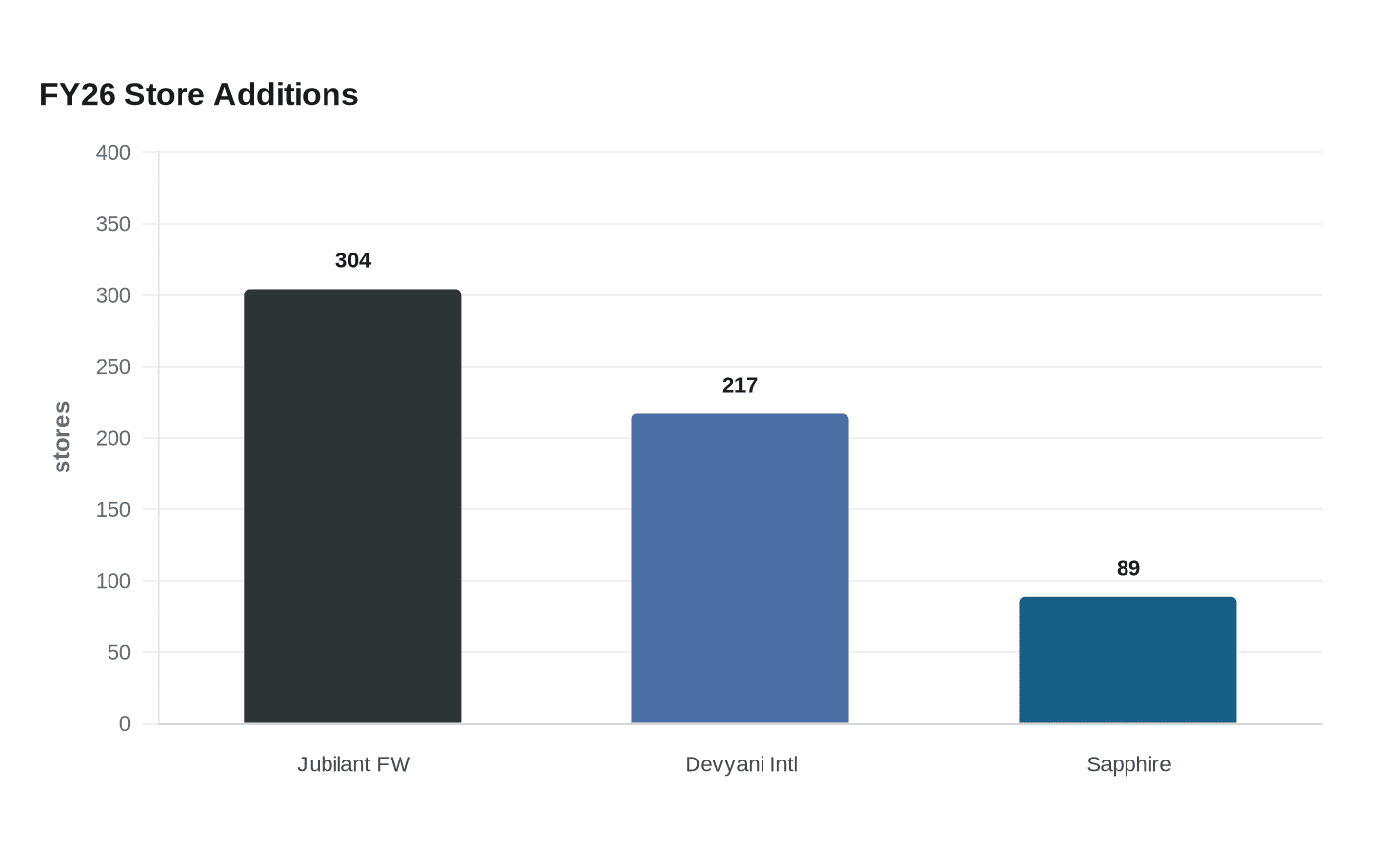
India’s quick-service restaurant boom cooled sharply in FY26, and the slowdown has a direct workplace cost: fewer new stores to staff, fewer franchise slots to sell, and fewer rungs on the promotion ladder for crew members trying to move from counter work to shift lead, store manager or area roles. Jubilant FoodWorks, the country’s largest QSR chain and Domino’s Pizza operator, added 304 net new stores in the year ended March 2026, down from 325 in FY25 and 356 in FY24.
Devyani International, which runs KFC, Pizza Hut and Costa Coffee, added 217 stores in FY26, a 15.5% drop from 257 a year earlier. Sapphire Foods also slowed, with net additions falling from 129 in FY24 to 89 in FY26. Restaurant Brands Asia, Burger King’s India operator, was the exception, posting a slight rebound after two weaker years. But across the sector, the message was the same: the era of hyper-expansion after Covid-19 has given way to caution.
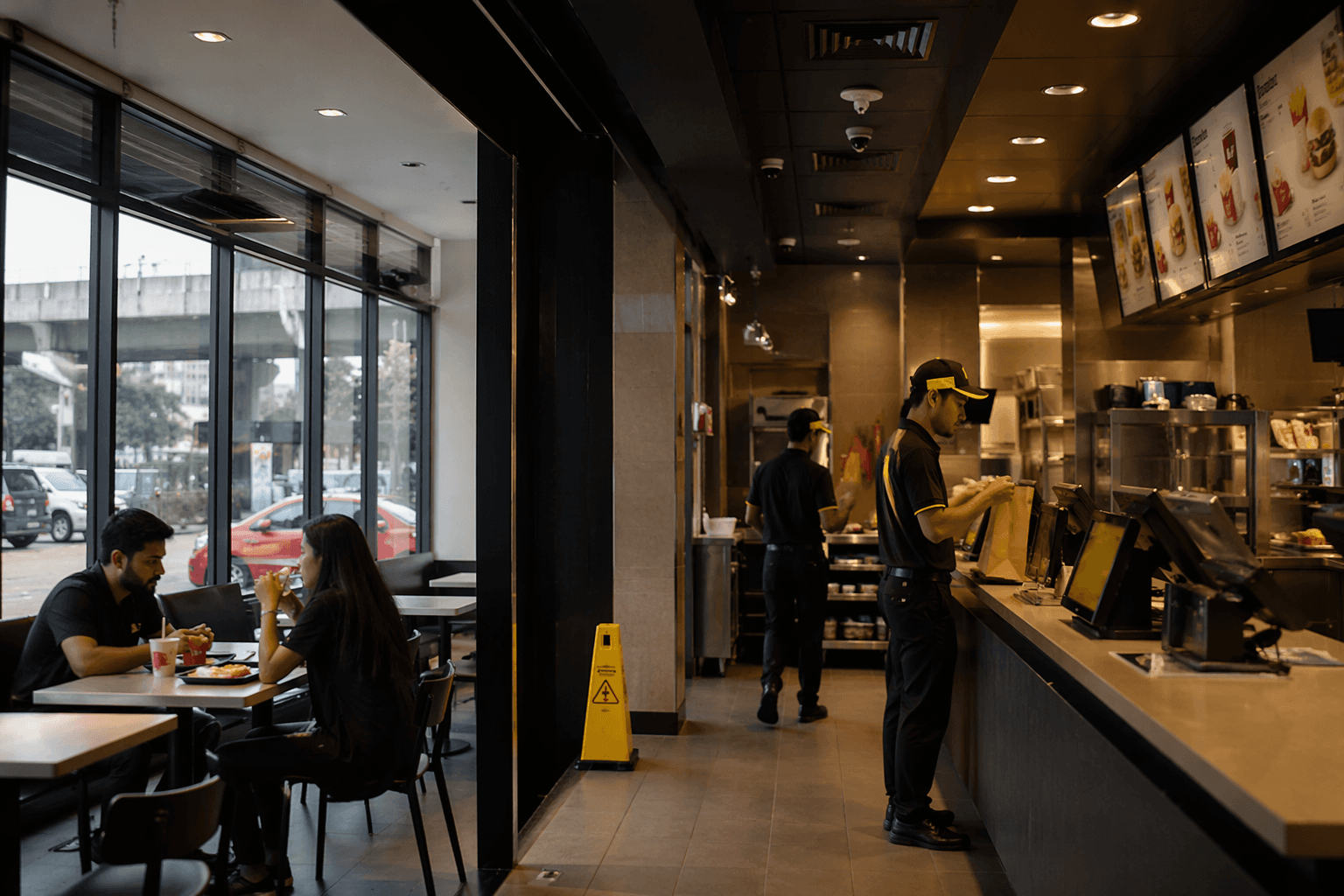
For restaurant workers, that change matters because new openings are where chains typically do their biggest hiring pushes. A fresh outlet means recruiting cashiers, cooks, delivery hand-off staff, trainers and supervisors, then filling the management bench behind them. When the rollout slows, the hiring pipeline narrows too. Existing stores still need crews, but promotions increasingly depend on turnover and same-store growth rather than a steady stream of new locations.
ICRA said the domestic QSR industry is in a normalisation phase after two difficult years. The ratings agency estimated industry revenue rose 10% in FY2025 and 11% in the first half of FY2026, even as same-store sales growth stayed negative because of subdued consumer demand and intense competition. Margins have also been squeezed, falling to 17.3% in FY2025 and 15.9% in H1 FY2026 from around 20% in FY2023. ICRA expects margins to stay range-bound at 15% to 17% through FY2026 and FY2027.
The strategic shift is now clear inside the chain operators. Crisil Intelligence’s Anjali Nathwani said players are focusing more on same-store sales, site selection, unit-level economics and sustainable margins. EY-Parthenon’s Angshuman Bhattacharya said food-delivery apps account for nearly half of sales in some cases, with 40% to 60% of sales online in some markets. That cuts the need for dense physical expansion and makes dark kitchens and delivery reach more attractive than opening every incremental outlet.
The slowdown is especially visible against the aggressive plans chains were still talking about last year. Jubilant FoodWorks said in May 2025 it planned 250 more Domino’s stores and 30 Popeyes outlets in FY26. Restaurant Brands Asia targeted 60 to 80 new restaurants a year and about 800 restaurants by FY29, while Westlife Foodworld was aiming for 580 to 630 restaurants by 2027. By Q3FY26, though, net additions had already weakened across the board. The growth story has not disappeared, but for restaurant workers it is no longer about how fast the map fills in. It is about how many jobs, shifts and promotions the existing stores can still support.
This article was produced by Prism’s automated news system from verified source data, official records, and press releases, then run through automated quality and moderation checks before publishing. The system is built and supervised by the people who set the standards it runs under. Read our full AI policy.
Did this article answer your question?