Labor Department clarifies pumping breaks, privacy rights for restaurant workers
Restaurant workers do not have to pump in bathrooms or wait for a slow shift. The Labor Department says break time, privacy, and flexibility are legal rights, not favors.
What nursing restaurant workers can actually demand
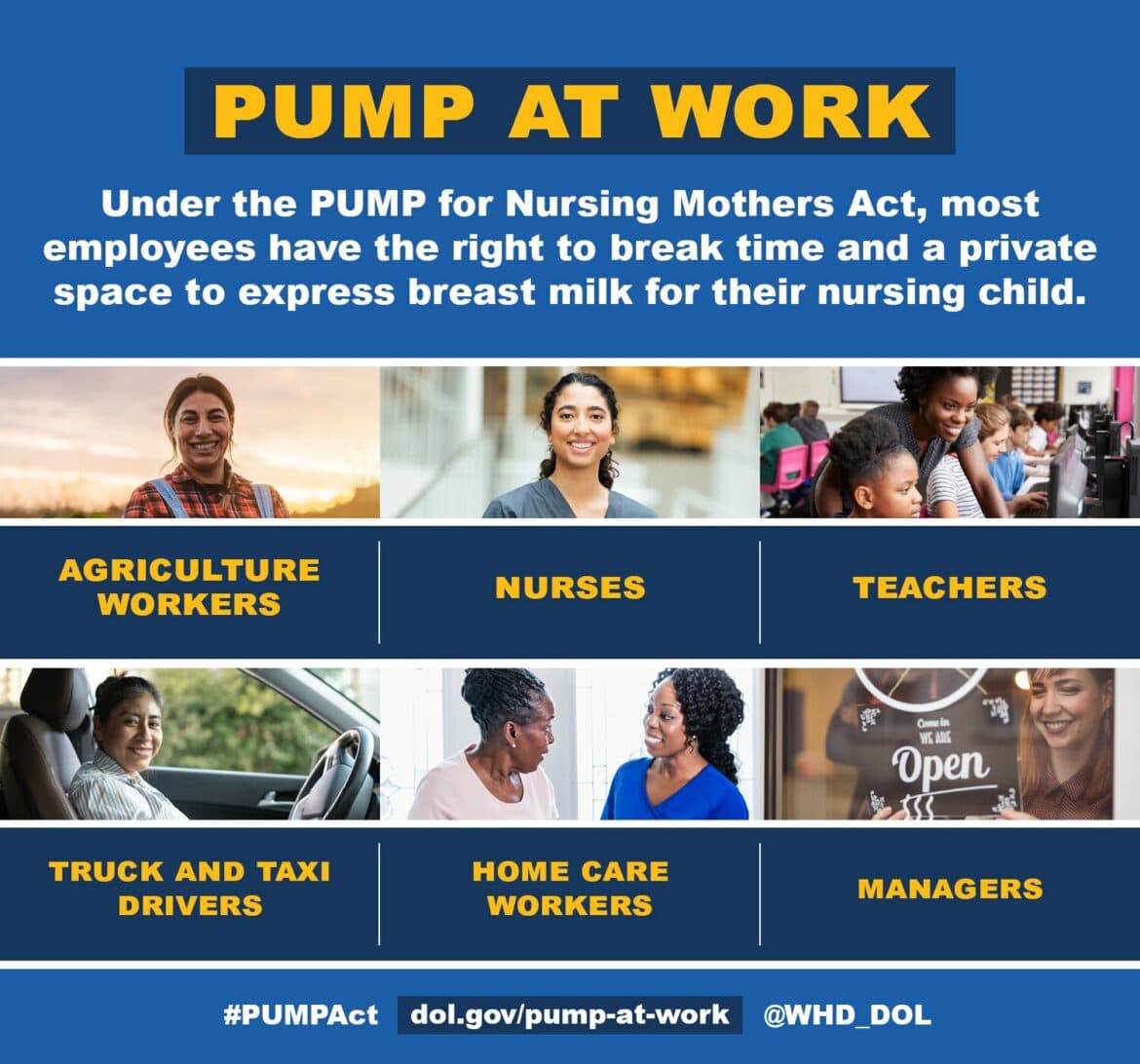
A brunch rush, a short-staffed dinner line, a packed bar, none of that erases the right to pump. Under the Labor Department’s guidance, covered nursing employees are entitled to reasonable break time each time they need to express breast milk, for up to one year after the child’s birth, plus a private place that is not a bathroom, is shielded from view, and is free from intrusion.
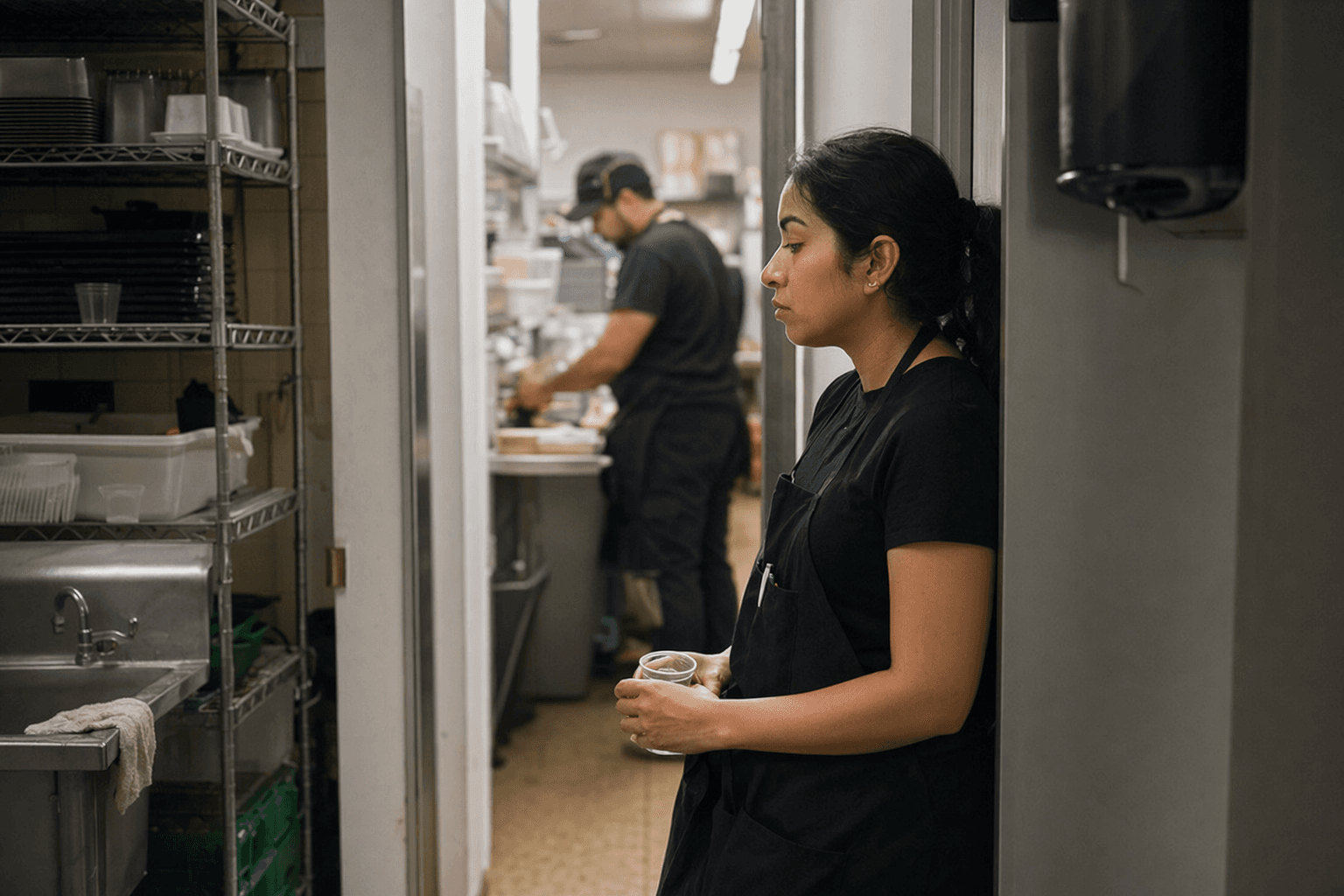
That matters in restaurants because the work rarely happens in tidy, office-like blocks. Shifts are built around rushes, prep, service, turnover, and clean-up, which means a worker’s need to pump can collide with a slammed pass, a two-top that just turned into a six-top, or a line cook who is already stretched thin. The law is built for that reality, not for a fantasy version of restaurant life where everyone has a spare office and a predictable afternoon lull.
The basic rights, in plain language
A nursing restaurant employee can ask for three things that matter most on the floor:
- Reasonable break time whenever pumping is needed
- A private space other than a bathroom
- A schedule that fits actual nursing needs, and can change if those needs change
The Department of Labor says the break schedule can be worked out between the employee and employer, but it does not have to be rigid or identical every day. That is a big deal in food service, where a shift can go from dead to chaotic in minutes. A server on the patio, a shift lead running expo, or a cook tied to the grill should not have to gamble on a break that only works if the room stays quiet.
The privacy rule is just as important. The law does not require a restaurant to magically create a spare office, but it does require a place that is shielded from view and free from intrusion. In a small restaurant with shared back-of-house space, that may mean managers have to plan ahead, because a storage closet with a lock that everyone ignores, or a corner of a break room people keep walking through, is not enough if it does not actually protect the worker.
Where restaurants are most likely to fall short
Restaurants tend to miss on the same pressure points. They assume the worker can just wait until the next slow period. They send people to a bathroom because it is the only enclosed space nearby. They forget that front-of-house and back-of-house coverage is thin, so one person stepping away can ripple through an entire service period.
The Labor Department’s guidance makes clear that pumping time should not become a performance penalty. Employers cannot require employees to make up the time spent on pump breaks to meet productivity measures. In a restaurant, that means no hidden quota system, no "catch up later" rule that turns a protected break into unpaid pressure, and no expectation that a server or cook should sacrifice privacy to protect the flow of tickets.
The risk is highest in workplaces that are already running lean. A line cook on a one-person station, a host managing the door, or a bartender working solo on a slow crew may have no obvious relief coverage. That is exactly why the law puts the responsibility on management to plan for it instead of treating pumping as a personal inconvenience.
Who is covered, and why that matters in food service
The PUMP Act expanded workplace pumping protections to more workers, including restaurant employees. The Labor Department and the Equal Employment Opportunity Commission say the rules apply to part-time, temporary, and seasonal workers too, which matters in restaurants because those schedules are everywhere, from summer patios to holiday banquet teams.
That broader coverage is one reason the law reaches so deeply into food service. The U.S. Bureau of Labor Statistics classifies food services and drinking places as a major subsector that includes full-service restaurants, limited-service eating places, special food services, and drinking places. It is also a large, still-growing part of the labor market, adding an average of 12,000 jobs per month in 2025.
That scale is the story. This is not a niche office-policy issue. It is a frontline labor rule touching one of the country’s biggest hourly workforces, in a business where schedules are unstable, turnover is high, and people often move between part-time, temporary, and seasonal shifts.
What else nursing workers can ask for
The pump law often overlaps with other protections. The EEOC says the Pregnant Workers Fairness Act can require reasonable accommodations for pregnancy, childbirth, or related medical conditions, and those accommodations can overlap with pumping-related needs.
In restaurant settings, that may mean changes that sound small but matter in the middle of service: a more flexible break pattern, more frequent bathroom breaks, or an adjustment to no-food rules when needed. The point is not to give special treatment. It is to make sure a nursing worker can keep doing the job without choosing between health, pay, and privacy.
The Centers for Disease Control and Prevention says workplace breastfeeding support can include designated private space, flexible scheduling, breast pumps, refrigerated storage, and lactation management support. That is a useful checklist for restaurants because it turns a legal obligation into an operations problem managers can solve before a shift blows up.
Why enforcement and public-health data matter here
This is not just theory. The Labor Department launched its Power to Pump campaign on August 1, 2023, and explicitly listed restaurant workers among the groups covered. It has also pursued restaurant-specific enforcement actions, including a Whataburger case in 2023 and a Napa, California restaurant case in 2024.
That enforcement history tells managers something simple: the rules are being watched. It also tells workers that the right is real, not aspirational. The law became effective on December 29, 2022, when President Joseph R. Biden Jr. signed the Consolidated Appropriations Act, 2023, which included the PUMP for Nursing Mothers Act. Additional remedies for violations apply to conduct on or after April 28, 2023.
The public-health backdrop is just as important. CDC research says breastfeeding duration rates in the United States fall below national targets, especially among mothers with less education, lower incomes, non-Hispanic Black mothers, and those in nonmetropolitan areas. That makes workplace support an equity issue, not just a scheduling issue. In restaurants, where pay is often tight and staffing gaps are constant, the difference between a supported nursing worker and an unsupported one can be the difference between staying in the job and quitting it.
For restaurant managers, the practical lesson is straightforward: build pumping into coverage, privacy, and scheduling from the start. For nursing workers, the key right is equally clear. You can ask for the time, the space, and the flexibility to pump without losing your paycheck or being pushed into a bathroom, a supply closet, or a productivity penalty.
This article was produced by Prism’s automated news system from verified source data, official records, and press releases, then run through automated quality and moderation checks before publishing. The system is built and supervised by the people who set the standards it runs under. Read our full AI policy.
Did this article answer your question?