Mandatory Service Charges vs. Tips: What Restaurant Workers Need to Know
That 20% service charge on your bill might never reach your paycheck, and under federal law it now costs workers more in taxes than a regular tip.

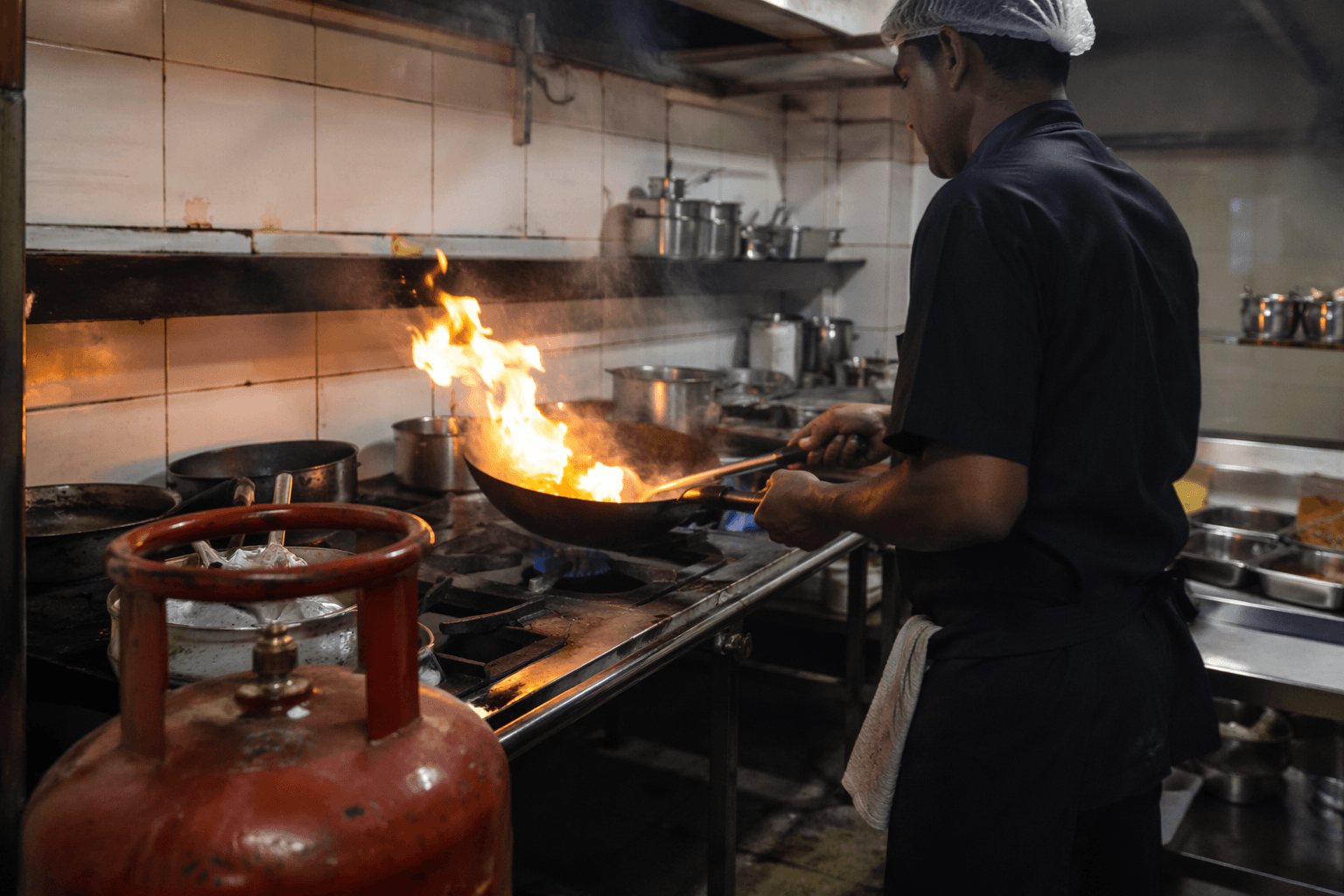
A line cook who has worked the same Friday night rush for three years has never seen a tip line on their pay stub. A server at the table next to the pass-through, however, walked home last weekend with an extra $180 in credit-card gratuities. That divide is exactly what mandatory service charges were designed to close, but as more restaurants add these fees to every check, a more complicated reality is emerging for the workers on both sides of the kitchen door.
Service charges are not considered tips. They are mandatory fees set by the business owner and paid by the customer, and because the employer controls the amount and distribution, the IRS requires that service charges be included in the employer's payroll, not handed directly to staff as gratuities. That single distinction carries enormous consequences for take-home pay, tax liability, and whether workers have any legal protection if the money disappears into operating costs.
The Legal Line Between a Tip and a Service Charge
The difference is not semantic. A tip is voluntary: the customer chooses to leave it, and under longstanding legal interpretation, it belongs to the tipped employee (subject to lawful pooling arrangements). A mandatory service charge, by contrast, is restaurant revenue. The employer collects it, recognizes it as income, and may distribute some, all, or none of it to staff unless a written policy or state law requires otherwise.
The One Big Beautiful Bill Act, signed into law on July 4, 2025, introduced a new tax deduction allowing employees to deduct up to $25,000 in qualified tips per year, retroactive to January 1, 2025 through 2028. "Qualified tips" are defined as voluntary cash or charged tips received from customers or through tip sharing. Only voluntary tips are included in this deduction; mandatory service charges and automatic gratuities are excluded. That exclusion is not a loophole oversight. It reflects how the IRS has classified these fees for decades, and it has real dollar consequences: a server who earns $40,000 in tips and $10,000 in hourly wages could potentially deduct up to $25,000 of that tip income, cutting taxable income significantly, while a worker at a restaurant running a mandatory service charge model would not qualify for any portion of that deduction on those same dollars.
Why Restaurants Are Adding Service Charges
The business case is straightforward, even if the worker impact is not. Many operators add a mandatory service charge to create more reliable funding for back-of-house compensation, to replace a tipping culture that has historically paid front-of-house employees well while leaving kitchen staff chronically underpaid, or to cover rising labor costs without the visibility of a menu price increase. Restaurants trying to offer stable wages across both front and back of house sometimes use an automatic service charge to build a consistent pool that runs through payroll, giving line cooks and dishwashers access to income streams that tips never reached.
Switching to service charges can create a more equitable pay model for all restaurant workers, and that equity argument is genuine. The problem is that the mechanism for achieving it, running the money through the employer's books before redistributing it, also creates the conditions for that money to be diverted, delayed, or simply kept.
What Happens to the Money on the Payroll Side
When a service charge hits your pay stub instead of your tip line, the tax mechanics shift in ways that aren't always visible until tax season. Money distributed through payroll is subject to payroll taxes, withholding, and standard wage treatment. For workers accustomed to receiving tips as a direct income stream, an auto-gratuity that routes through payroll can arrive smaller than expected, even if the gross amount looks the same on paper.
There is, however, a legitimate upside for workers who were previously excluded from tip income entirely. Routing the charge through payroll can enable employers to give back-of-house employees access to benefits, healthcare contributions, and stable hourly rates that the old tip model structurally denied them. The question is whether the employer is actually using the service charge that way, or whether the money is being absorbed into overhead.
The Transparency Problem
This is where workers are most exposed. If a restaurant adds an 18% or 20% mandatory charge to every check but does not clearly communicate how that money is allocated, the situation can quickly become indistinguishable from wage theft. Workers who are used to seeing tips flow through on credit-card receipts can be blindsided when the auto-gratuity never appears in their pay. Operators have an obligation to disclose whether a service charge is distributed to staff and how, because confusion creates disputes, and disputes create legal exposure for everyone involved.
State legislatures have begun to respond. California's Senate Bill 648, signed into law on July 30, 2025, and effective January 1, 2026, amends Labor Code section 351 and empowers the state labor commissioner to investigate and issue citations and fines for tip theft, adding civil penalties and private enforcement rights to existing labor protections. SB 648 also requires employers to pass on the full amount of any tip paid by credit card, without any deductions for credit card processing fees or other costs. While California's law addresses tips specifically, the broader principle, that workers have enforceable rights over gratuity-related income, is expanding across state legislatures.
What to Ask Your Manager Before the Next Pay Period
If your restaurant has introduced or is considering a mandatory service charge, these are the questions that matter:
- Does the service charge appear on my pay stub as a separate line item, or is it folded into hourly wages?
- What percentage of the charge is distributed to front-of-house versus back-of-house staff, and is that split documented in a written policy?
- Is any portion of the charge retained by management to cover overhead, and if so, how much?
- Does the restaurant's written policy comply with the state wage-and-hour rules that apply to mandatory fees?
These are not aggressive questions. They are the same questions any worker should ask about any income stream that depends on employer discretion.
Know Your Recourse
If an employer refuses to answer transparently, or if a service charge that should appear in your pay simply does not, workers have real options. State wage-and-hour agencies are the first stop, and in states like California and Illinois, those agencies now have sharper tools and higher penalties to enforce compliance. Private counsel is another route, particularly in states where workers have the right to sue directly for unpaid wages or misappropriated gratuities.
The federal landscape is also shifting. The "No Tax on Tips" provision under the One Big Beautiful Bill applies only at the federal level; employees will still pay state income tax on tips unless similar laws are passed at the state level, which means the value of staying in a tip-based model rather than a service-charge model varies significantly depending on where you work.
The service charge is not inherently a bad deal for restaurant workers. Used correctly and transparently, it can bring kitchen staff into an income model that tips never accommodated. Used as a revenue management tool with no clear distribution policy, it can quietly strip workers of income they earned and expected. Knowing the difference, and knowing how to ask the right questions, is the most durable protection any restaurant worker has right now.
This article was produced by Prism’s automated news system from verified source data, official records, and press releases, then run through automated quality and moderation checks before publishing. The system is built and supervised by the people who set the standards it runs under. Read our full AI policy.
Did this article answer your question?