NLRB Filings Reveal New Union Drives, Labor Disputes Hitting Restaurants Nationwide
New union petitions and unfair labor practice charges hit restaurant employers nationwide this week as the NLRB works through a backlog traced to a 43-day federal shutdown.
Food service workers filed fresh representation petitions and unfair labor practice charges with the National Labor Relations Board this week, landing on a docket that is simultaneously more active than it has been in years and burdened by backlogs the agency's own leadership traces to a 43-day federal government shutdown and dwindling staff.
The NLRB's publicly accessible recent filings page, updated through early April, showed restaurant and hotel dining operations among the employers named in new cases. Representation petitions cover both front-of-house workers, including servers and bartenders, and back-of-house workers, including line cooks and dishwashers. They sit alongside unfair labor practice charges alleging unlawful interrogation, threats, and retaliation during organizing drives. Each case listing includes a filing date, the NLRB region assigned, the number of employees in the proposed bargaining unit, and a basic unit description.
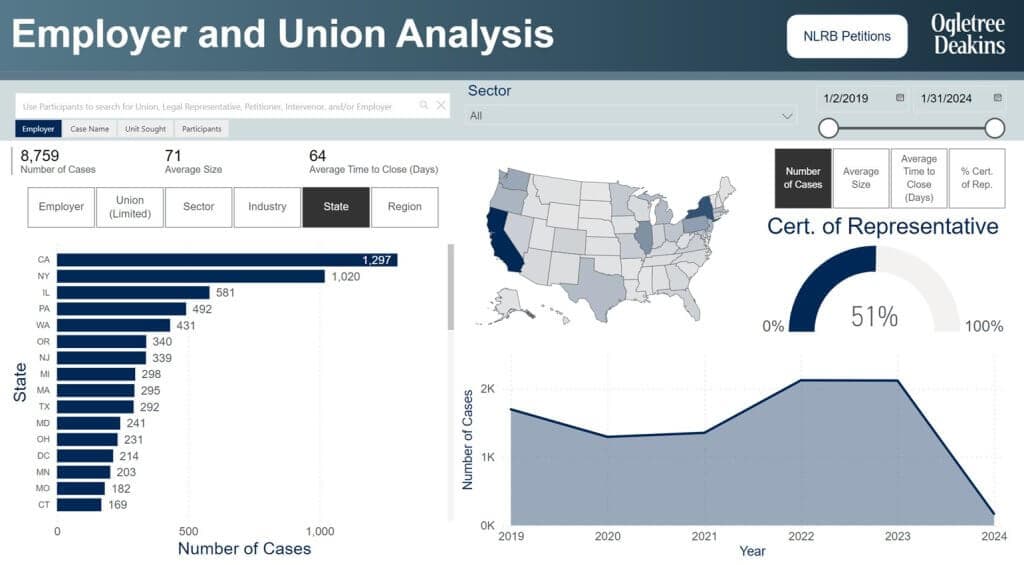
The restaurant industry climbed to the top of all sectors for union petition filings during 2022 and 2023, and the pace has not slowed. California, New York, and Illinois have led the country in petition activity, joined by Oregon and Washington. Nationally, the NLRB processes between 20,000 and 30,000 charges per year across all industries.
Against that backdrop, General Counsel Crystal S. Carey released Memorandum GC 26-03 on February 27, reinforcing case handling procedures that require charging parties to submit supporting evidence within two weeks of filing. The rule was designed to reduce a backlog that Acting General Counsel Cowen had attributed to the federal shutdown and shrinking agency staffing. The practical effect for workers: a charge that once got assigned to a board agent automatically now sits on a waiting list until evidence is submitted and evaluated. Fail to file documentation in time, and the case risks dismissal before investigation begins.
For restaurant employees who see their employer's name appear in a new petition, the filing marks only the start of a process. Workers need at least 30 percent of their proposed bargaining unit to have signed authorization cards before a petition can be accepted, and a majority of votes in an NLRB-conducted election to win certification. Union elections ran at a 77 percent win rate in 2024, with nearly 100,000 workers organized through NLRB elections that year.
For managers, the obligations are specific. A petition or ULP charge landing in a regional office is not an internal HR matter; it is a federal proceeding. Retaliation against workers for union activity can convert a representation case into an enforcement case, and a bargaining order compelling employer recognition without an election remains a possible remedy in cases of serious misconduct.
The NLRB filings page is searchable by case type, region, and employer name and updated daily, making it among the most transparent tools in American labor law. How quickly the agency behind it can act on those filings is a different question entirely.
This article was produced by Prism’s automated news system from verified source data, official records, and press releases, then run through automated quality and moderation checks before publishing. The system is built and supervised by the people who set the standards it runs under. Read our full AI policy.
Did this article answer your question?