McDonald’s manager left in ICU after coworker allegedly throws hot oil
A McDonald’s shift manager was left with severe burns and in the ICU after a coworker allegedly threw hot oil during a late-night closing shift.
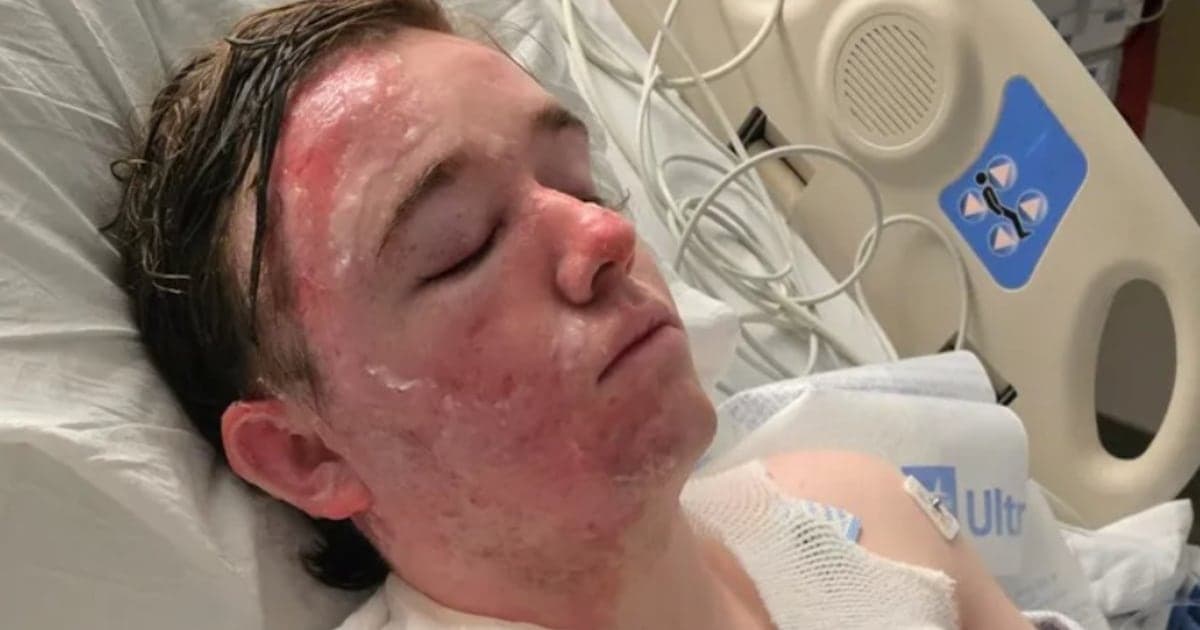
A late-night closing shift at a McDonald’s in Yuba City turned into a burn emergency when a 20-year-old shift manager was allegedly hit with hot cooking oil and left in intensive care. Jacob Smith suffered burns to his face, neck, right arm, back, hands, shoulder and upper body after the incident at the restaurant on Harter Parkway and Colusa Highway, a reminder that the most dangerous moments in a kitchen are often the least visible.
Yuba City police responded after 11 p.m. on Saturday, May 30, 2026, and found Smith with significant burn injuries. Police identified the suspect as Jalani Bluett, who faces felony battery with serious bodily injury, mayhem and assault with a deadly weapon. Local reports said Bluett was being held at the Sutter County Jail.

Smith’s injuries were severe enough to send him into the ICU burn unit at UC Davis, where doctors were trying to reduce the size of the burns to limit how much skin grafting he might need. That kind of treatment turns a shift-ending confrontation into a long medical crisis, with recovery measured in procedures, not hours.
For restaurant workers, the facts of this case land in the places that already carry the most pressure: closing time, cash handling and the back office. Smith was reportedly attacked while finishing his shift and counting money, a moment when staff are often tired, alone with one other worker, and focused on getting the drawer closed, the fryer turned off and the doors locked. In a restaurant, that is exactly when a disagreement can escalate before anyone has time to step in.
The case also puts the burden back on operators and managers to think beyond theft prevention and into violence prevention. U.S. Occupational Safety and Health Administration guidance says employers should assess the threat of violence and build a site-specific prevention program, especially in late-night settings where workers handle cash and work in close quarters. That means training managers to de-escalate conflict, separate employees before tensions spike, document threats and have a plan for emergency response when something goes wrong on the line or in the back office.
The broader risk is not rare. The U.S. Bureau of Labor Statistics says there were 57,610 nonfatal workplace violence cases requiring days away from work, restriction or transfer over 2021-2022, an annualized rate of 2.9 per 10,000 full-time equivalent workers. It classifies food services and drinking places as a distinct subsector that includes full-service restaurants, limited-service eating places, special food services and drinking places. For restaurant crews, the lesson is blunt: a closing shift is not just about speed and labor, it is also where safety systems either hold or fail.
This article was produced by Prism’s automated news system from verified source data, official records, and press releases, then run through automated quality and moderation checks before publishing. The system is built and supervised by the people who set the standards it runs under. Read our full AI policy.
Did this article answer your question?