McDonald’s says it will miss 2030 emissions target
McDonald’s said it will miss a key 2030 emissions target tied to its supply chain and franchise restaurants, even as it keeps pushing packaging and agriculture changes.
McDonald’s said it does not expect to hit the 2030 emissions goal tied to its supply chain and franchised restaurants, blaming faster-growing energy demand, slow clean-energy rollout and fragile global supply chains strained by geopolitical shocks. The company still says it is on track to beat its Scope 1 and Scope 2 goals, but the miss pushes the hardest part of its climate plan deeper into the restaurant system, where franchisees, suppliers and store managers have the least control over costs and the most day-to-day pressure to absorb them.
The chain’s target, set alongside its October 2021 net-zero-by-2050 pledge, calls for a 50.4% cut in absolute Scope 1 and 2 greenhouse-gas emissions from company-owned restaurants and offices from a 2018 base year. It also calls for a 50.4% reduction in Scope 3 energy- and industrial-related emissions from restaurants, facility operations, logistics and plastic-packaging emissions by the end of 2030. In practice, that means the company is still pressing ahead where it has the most direct leverage, while acknowledging that the franchise network and supply chain are where the plan gets harder to execute.
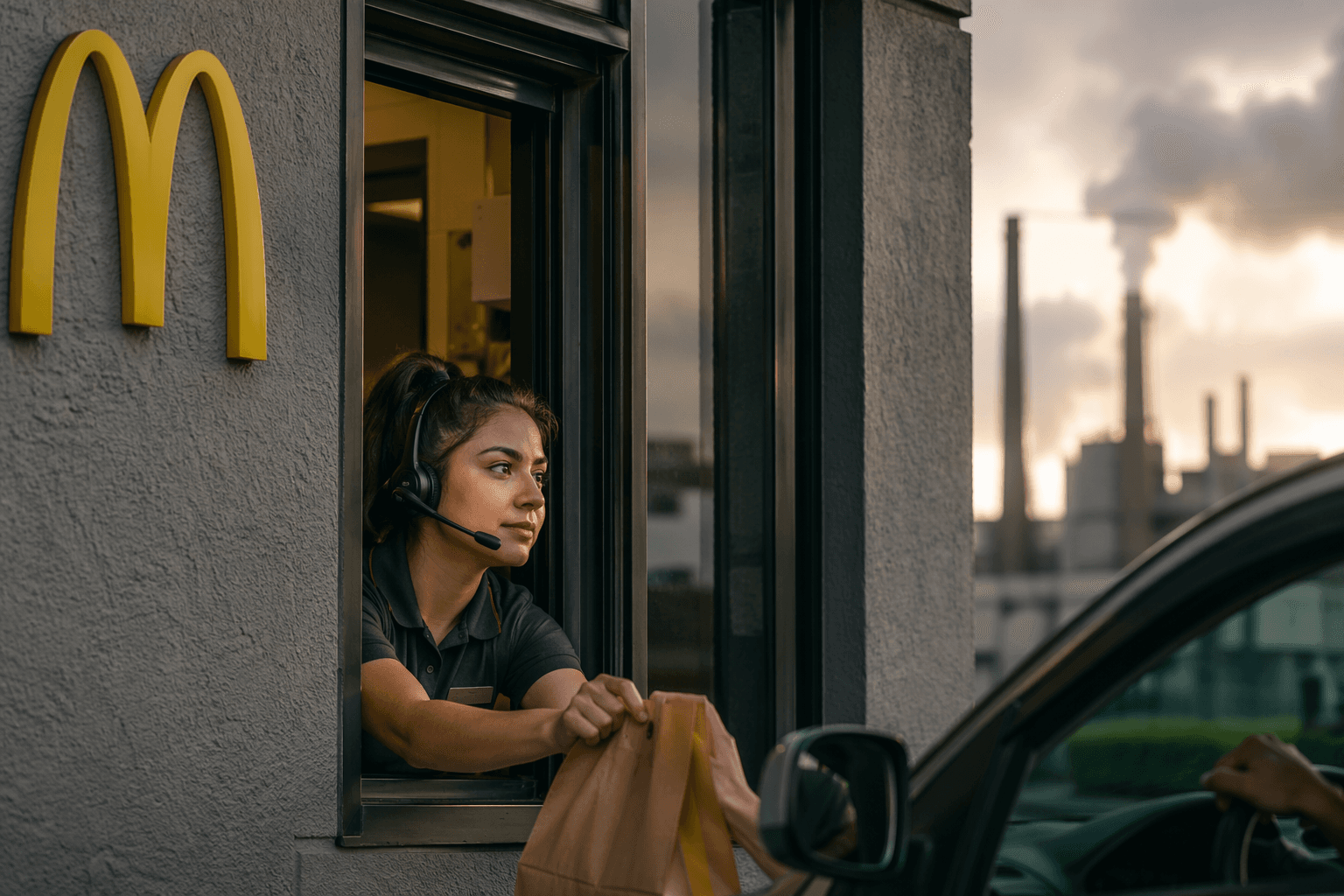
Packaging is one place that pressure shows up fast in restaurants. McDonald’s says it wants 100% of its primary guest packaging to come from renewable, recycled or certified materials by the end of 2025, and said it had reached 86.7% of that goal by the end of 2023. The company also said it has substantially achieved its packaging, toys and waste commitments. For crews, packaging changes are not abstract. They affect what gets stocked, how orders are assembled, how quickly drive-thru and counter service move, and how much room stores have to manage supply without slowing down during a rush.
McDonald’s is also putting money behind the shift, saying it plans to invest $1 billion over the next decade in supply-chain initiatives, including regenerative agriculture and landscape solutions for key commodities, along with programs that support farmers. The company has said it is prioritizing energy efficiency, renewable energy and lower-impact refrigerants in company restaurants, while recognizing that the toughest work sits upstream in the supply chain. That is where emissions targets collide with the restaurant reality of commodity prices, equipment upgrades and vendor rules that can ripple all the way to labor scheduling and training.
The miss matters because McDonald’s was one of the earliest restaurant companies to win approval for a science-based target to cut emissions intensity across its supply chain. That history makes the gap between the pledge and the performance harder to brush off. For the people running restaurants, the signal is clear: the climate plan is still alive, but the operational burden is moving closer to the line where crew work, franchise economics and supplier demands meet.
This article was produced by Prism’s automated news system from verified source data, official records, and press releases, then run through automated quality and moderation checks before publishing. The system is built and supervised by the people who set the standards it runs under. Read our full AI policy.
Did this article answer your question?