NYC FAQ explains delivery worker rights and restaurant impacts
NYC’s delivery-worker rules set pay floors, complaint rights and anti-retaliation protections that also shape restaurant orders, tips and pacing.
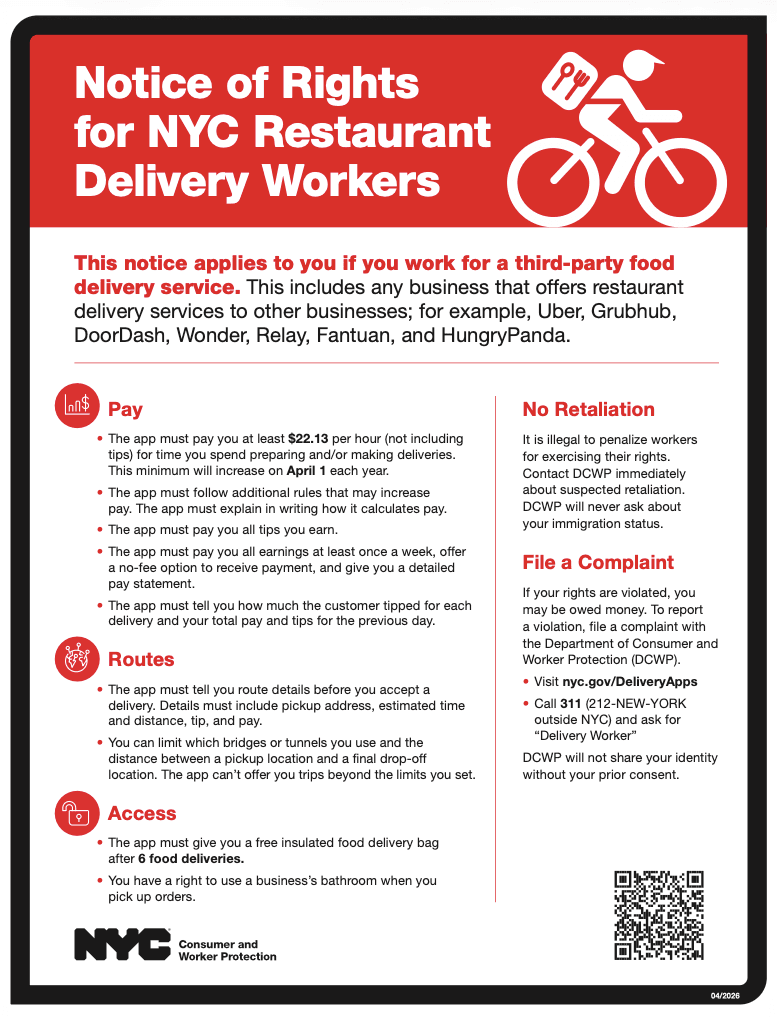
Delivery workers in New York City can file complaints without giving up their identity or their immigration status, and the city’s delivery-worker FAQ lays out the rules that now shape restaurant orders, tip handling and app-based labor across the city. DCWP enforces those protections.
What the FAQ covers
The city built the FAQ as a working tool, not a legal memo. It covers what delivery workers are entitled to, how enforcement works, and what to do when an app, intermediary or platform ignores the rules. For restaurant workers, delivery no longer sits outside the dining room: hosts see the surge in order volume, cooks feel it in ticket pacing, and managers have to decide whether to rely on in-house drivers, third-party marketplaces or a hybrid setup.
The FAQ also sits alongside DCWP’s broader materials for delivery workers, restaurant workers and delivery apps. The same business can touch several rule sets at once, especially when a delivery platform controls assignments, pay calculations and account access while the restaurant controls the food and the floor.
Pay floors now shape the delivery side of the business
The biggest practical issue for workers is pay. New York City announced a minimum wage for app-based restaurant delivery workers in June 2023, and a DCWP worker-rights PDF listed the rate at $19.56 per hour for delivery time, not including tips. The rule affected about 65,000 delivery workers when it took effect on July 12, 2023.
When apps must meet a minimum, restaurant operators feel the change in how much delivery activity flows through app-based channels versus direct pickup or dine-in, and in how aggressively platforms batch or route orders. By April 2025, Mayor Eric Adams said the full minimum pay rate for app-based restaurant delivery workers was in effect, and grocery delivery apps in New York City must pay at least $21.44 per hour.
How to complain when an app or platform crosses the line
Delivery workers can file a complaint through the city’s delivery-app complaint channel or by calling 311 and asking for “Delivery Worker.” The agency will not share a worker’s identity without prior consent.
The city bars retaliation. If a worker thinks pay was shorted, a schedule-like assignment system was manipulated, a platform ignored delivery-distance rules or an account was deactivated unfairly, the worker should contact the agency right away. The city also requires delivery apps to submit reports, and DCWP analyzes them to monitor compliance with the pay rules.
Managers who depend on app-driven delivery should know that disputes can spill into the restaurant if a platform slows order volume, changes assignment patterns or removes a worker from service.
Why restaurant workers should care even if they never courier
Delivery rules now shape kitchen labor, customer wait times and tip transparency. A host dealing with a packed pickup counter feels the same app surge that a courier sees on the street, and a cook on the line feels it when a platform bunches orders into a short window. If the delivery side is unstable, the rest of the operation pays for it in burnout, missed prep and more frantic ticket times.
The city’s 2021 package of six bills, passed on September 23, 2021, set standards that included delivery distances, minimum payments per order, tips and account deactivation. At the peak of the COVID-19 pandemic, the City Council said delivery workers helped restaurants survive when dining rooms were closed.
A restaurant that leans on apps needs to track how those apps handle pay, assignments and customer flow, because any slowdown or lockout can hit the front of house and back of house at once.
What changed from 2021 to the current rules
The 2021 City Council package was the foundation. It moved city policy away from vague platform promises and toward minimum standards for the work itself, including the distance a delivery could be sent and the pay floor for each order.
In June 2023, the city announced a wage floor for app-based restaurant delivery work. By 2025, the city said the full minimum pay rate was in force, and its materials expanded the conversation to grocery delivery as well.
New York City later extended just-cause protections to app-based ridehail and delivery workers, a win celebrated by the New York City Central Labor Council, the AFL-CIO and the National Employment Law Project after years of organizing led by groups such as the New York Taxi Workers Alliance and Los Deliveristas Unidos.
What remains unstable
Even with a pay floor and complaint rights, the delivery system still runs on platform control. App companies have raised compliance concerns, while workers have said the higher pay rules did not solve everything, especially when tips are unclear, safety is weak or accounts are cut off without much warning.
A platform that misses the pay mark or mishandles deactivations can create labor friction in the kitchen, change customer demand at the door and complicate the way tips and service charges move through the business.
This article was produced by Prism’s automated news system from verified source data, official records, and press releases, then run through automated quality and moderation checks before publishing. The system is built and supervised by the people who set the standards it runs under. Read our full AI policy.
Did this article answer your question?