Oracle outlines 10 technology trends reshaping restaurant operations and guest experiences
Oracle’s trend list mostly confirms what restaurant workers already feel: AI, scheduling, and mobile ordering are real, while flashier tools still look like vendor hype.
1. AI is moving from buzzword to kitchen back office
The biggest shift in Oracle’s restaurant roadmap is not a robot on the dining room floor. It is software that ties together inventory, procurement, scheduling, production, and cash management in one AI-enhanced system, so managers can spend less time chasing spreadsheets and more time covering the line. Oracle says its new Restaurant Operations platform is built for an industry that has to do more with less while still keeping service moving and guests satisfied.
That matters to hourly workers because bad back-office data shows up as bad shifts: short staffing, over-ordering, missed prep, and managers scrambling during a dinner rush. When Oracle says the platform is meant to reduce repetitive tasks and surface operational trends, it is pointing to the kind of work that quietly shapes every host stand, expo line, and closing checklist.
2. Labor management and recruiting are becoming core operating systems
If a restaurant cannot hire fast enough, nothing else works for long. A March 2025 Restaurant Dive summary found that 37% of operators planned to adopt labor management and recruitment systems, while 28% were interested in AI-driven tools, which shows how quickly staffing software has moved from nice-to-have to survival gear.
The clearest proof comes from Southern Rock Restaurants, which cut hiring time from 14 days to 24 hours using automated scheduling and mobile-first recruiting tools. For workers, that can mean faster onboarding and fewer empty shifts, but it can also mean more standardized screening, tighter scheduling discipline, and less room for the informal, hand-wavy hiring that used to define many restaurant jobs.
3. Mobile order and pay is now a guest expectation, not a novelty
Oracle’s broader restaurant stack includes mobile order and pay, online ordering, POS, end-to-end payment processing, restaurant analytics, supply chain management, human capital management, and loyalty tools. That mix tells you where the company thinks the real action is: the handoff between a guest deciding to buy and a restaurant getting the order into the kitchen without friction.
The National Restaurant Association’s 2024 Technology Landscape Report backs that up. It found that 76% of operators believe technology gives them a competitive edge, and customers most want tools that make ordering and paying easier and faster. For restaurant staff, that translates into fewer payment bottlenecks at the register, less confusion at the counter, and more pressure on the team to keep mobile and in-person orders synchronized.
4. Table tablets and smartphone apps are changing the pace of service
The speed story is not just about takeout. The same National Restaurant Association report found that a majority of full-service customers would likely order or pay using a table tablet, while 7 in 10 limited-service customers would likely order using a smartphone app and 8 in 10 delivery customers would order delivery through a smartphone app.
That is a major shift in guest handoff. Servers and hosts are no longer only managing conversation and hospitality, they are also managing device-driven decisions, payment prompts, and order timing that can arrive before a table has even settled in. In practice, this means restaurants are redesigning how fast food moves from guest to kitchen and from kitchen to table, with the front of house increasingly acting as a traffic controller for digital orders.
5. Loyalty is becoming a live operating tool, not just a marketing afterthought
Oracle says its restaurant technology stack includes CrowdTwist for loyalty, and it says thousands of operators worldwide use its tools to automate operations and personalize guest experiences. That personalization is one of the more concrete trends on Oracle’s list because it touches real behavior, not just boardroom strategy.
When loyalty data is connected to ordering and payment systems, restaurants can recognize repeat guests, push targeted offers, and adjust service based on what people actually buy. For workers, that can mean more regulars expecting the same experience every visit, more upsell pressure at the counter, and more data flowing into the kinds of decisions managers used to make by memory alone.
6. Analytics and cash management are becoming part of the shift, not just the close
Oracle’s newer platform is built to unify cash management with inventory, procurement, scheduling, and production, which is a sign that the company sees operations as one continuous workflow rather than separate chores. That is a meaningful change for closing managers, assistant GMs, and anyone who has had to reconcile comps, voids, labor, and product counts after a long night.
The practical effect is that restaurants can spot operational trends faster, rather than waiting for end-of-week paperwork to reveal the damage. For workers, that can mean fewer surprises when a manager walks the floor with numbers in hand, and more pressure to keep service clean because the data trail is now sharper than ever.
7. AI-based location planning is real, but it still lives higher up the chain
Oracle’s older Restaurant 2025 report surveyed more than 250 operators, and 60% said AI-based restaurant location planning would be mainstream or in mass adoption by 2025. That is important, but it is also a reminder that some of Oracle’s trend list is aimed more at development teams and corporate planners than at the team setting tables or dropping baskets of fries.
Location planning affects where the next unit opens, how many labor hours a market gets, and whether a restaurant can support the volume it was built for. Workers feel those decisions indirectly through transfer opportunities, staffing levels, and whether a new store is opened with enough training and support to avoid the usual opening-month chaos.
8. Biometrics and voice activation still look more experimental than everyday
Oracle’s earlier restaurant outlook also tracked biometrics and voice activation, two technologies that sound futuristic but have not become standard operating gear across the industry. They can help with identity checks, orders, or hands-free interactions in certain settings, but most restaurants are still much more focused on getting labor, payment, and order flow right.
That is why these tools remain closer to vendor promise than floor reality for most hourly workers. They may eventually reduce friction at the host stand or back office, but today the bigger wins are still coming from software that helps managers schedule smarter, fill shifts faster, and keep tickets moving.
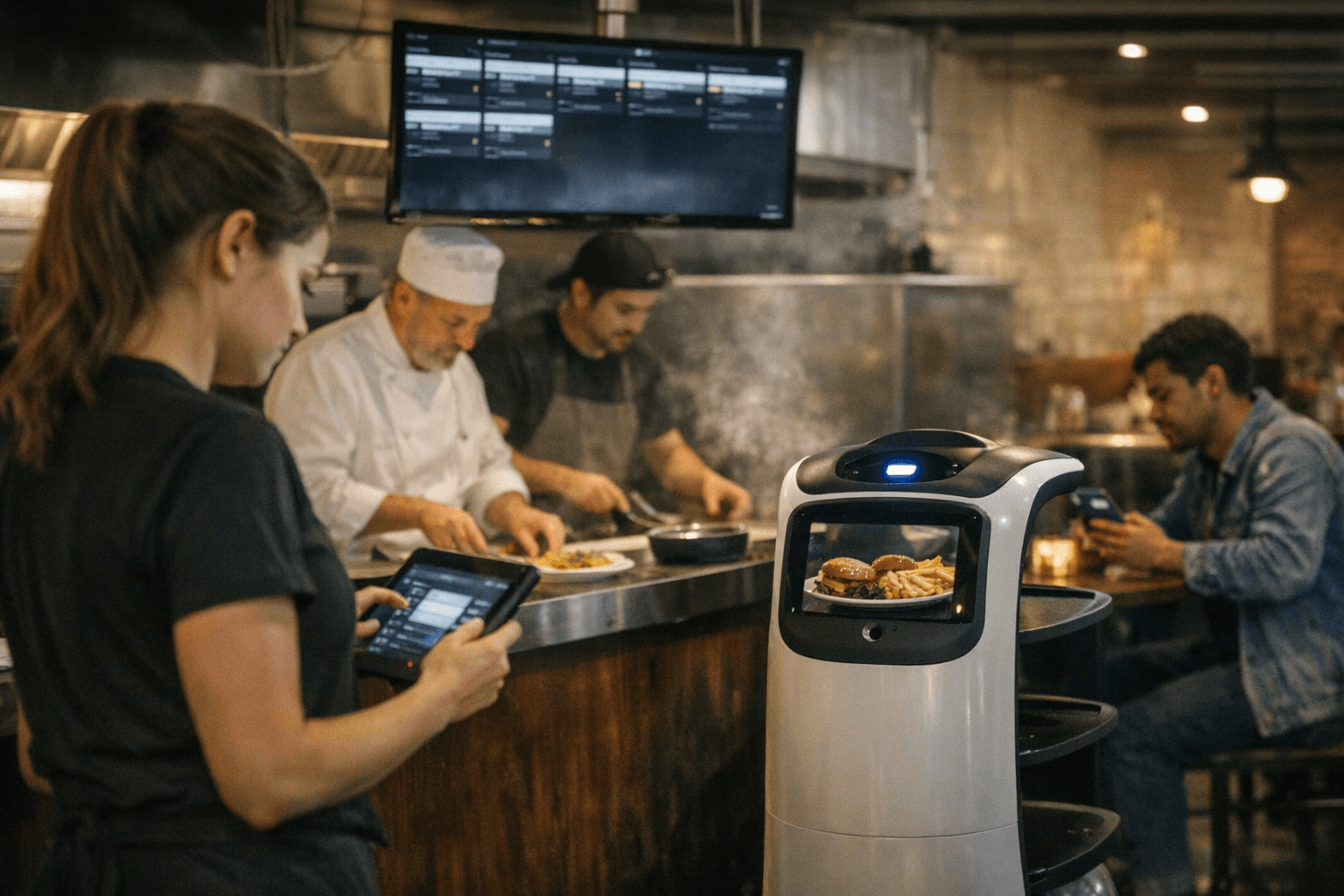
9. Robotics can help with repetitive work, but they are not replacing restaurant labor
Robotics has been part of Oracle’s restaurant tech vision for years, and it still sits on the long list of tools the company has associated with the future of foodservice. In the real world, though, most operators are not rebuilding the line around robots. They are using automation to support repetitive tasks, not eliminate the need for cooks, servers, bartenders, or hosts.
That distinction matters to workers who have seen plenty of hype cycles come and go. The near-term reality is less about fully automated restaurants and more about partial automation that trims prep, speeds back-office work, and lets a smaller team hold the line during a rush.
10. VR, drones, wearables, and 3D printing are still the outer edge of the story
Oracle’s long-running tech tracking has also included virtual reality, drones, wearables, and 3D printing, which shows how broad the company’s imagination has been about restaurant change. Those ideas are useful as signals, but they are not the trends most likely to reshape a server’s tip-out, a cook’s station, or a host’s waitlist this year.
The real center of gravity is much narrower: AI in the back office, labor software on the people side, and mobile ordering and payment at the guest handoff. That is the part of Oracle’s forecast that already shows up on restaurant floors, and the part workers will keep feeling first as operators keep pushing for speed, control, and fewer empty shifts.
This article was produced by Prism’s automated news system from verified source data, official records, and press releases, then run through automated quality and moderation checks before publishing. The system is built and supervised by the people who set the standards it runs under. Read our full AI policy.
Did this article answer your question?