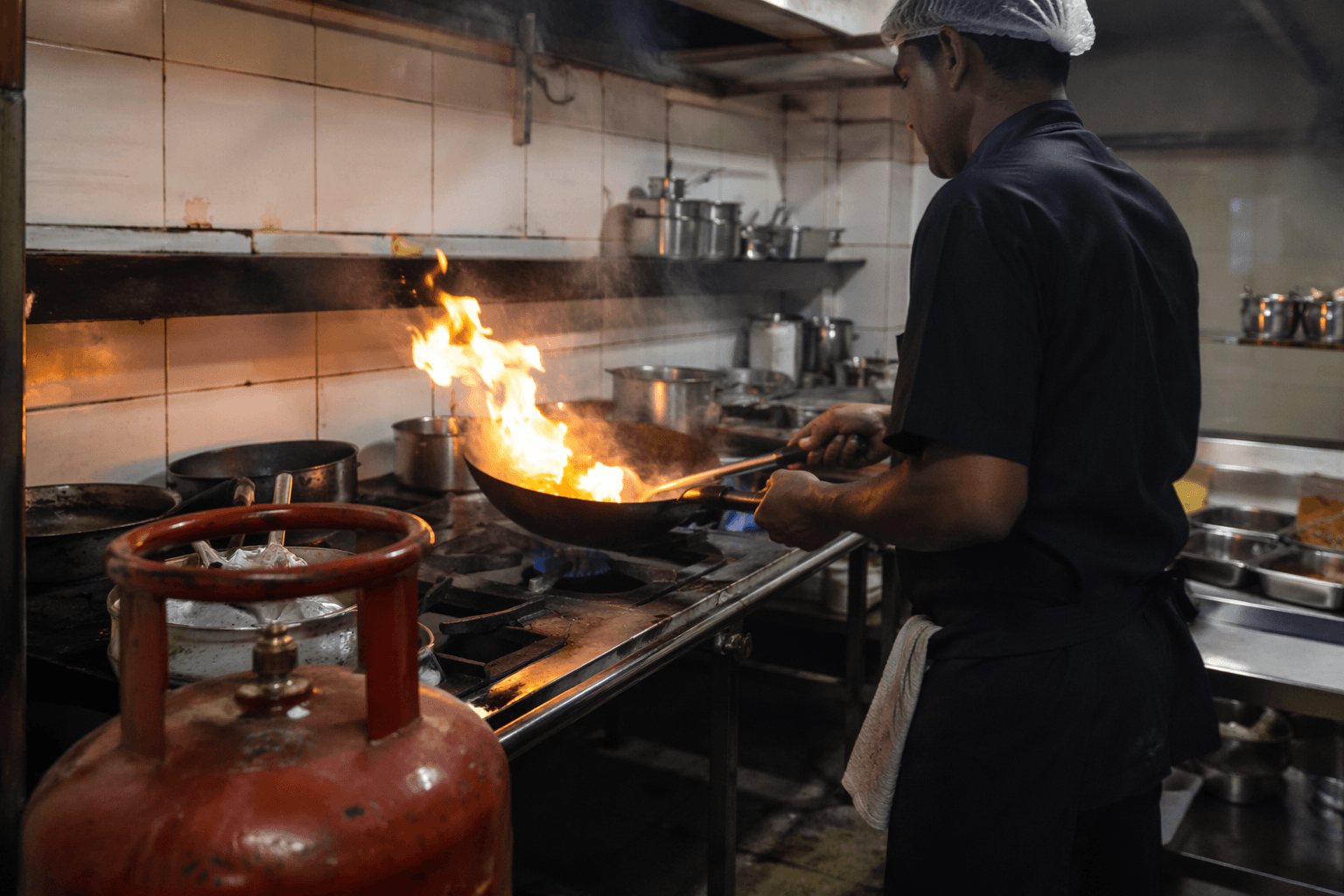
OSHA warns dining-room staff face burns, violence, and cuts
Dining-room work is not just smiling and carrying plates. OSHA says the first rush can bring burns, cuts, slips, cash risk, and angry guests before service even settles.

The friendly face of the dining room hides a harder reality
A server can start a shift by balancing a tray of hot drinks, weaving through a crowded aisle, and dodging a guest who is already upset about the wait. OSHA’s warning is blunt: the serving area is a place where young workers get customer-facing experience and money-handling practice, but it is also where burns, cuts, slips, strains, and workplace violence show up fast.
That gap between the image of “people work” and the actual floor is why dining-room safety matters long before the check drops. In the first hour of a typical shift, the risks are already there, from hot plates and espresso machines to broken glass, tight spaces, and customers who decide that a seating delay or incorrect tab is personal.
What the serving area puts on the floor
OSHA treats serving as a real skill set, not a soft skill. The agency says the serving area exposes workers to burns and scalds, knives and cuts, slips, trips and falls, strains and sprains, and workplace violence. That mix is especially relevant in restaurants, where hosts, servers, bussers, runners, and bartenders often have to keep moving even when the room turns chaotic.
Burns are one of the most obvious hazards, but they are not limited to the kitchen pass. OSHA says they can happen while serving hot foods or drinks, or while using coffee, tea, or espresso machines. Add candles, narrow walkways, and fast-paced service, and a simple handoff can become a serious injury if staff have not been trained to slow down and protect themselves.
The same is true for cuts and slips. Knives, broken glass, spilled drinks, and wet floors are routine dining-room problems, not unusual events. A runner who is trying to save time by cutting through a crowded section or a busser who reaches too quickly into a glass rack can turn a normal service problem into an injury.
Why young workers carry so much of the risk
Restaurants are one of the largest work settings in the country, and OSHA says eating and drinking businesses employ 11.6 million people in the United States. Nearly 30% of them are under age 20, which makes the dining room a young-worker workplace as much as a hospitality workplace.
That matters because OSHA says young workers suffer a disproportionate share of injuries and fatalities, especially in their first year on the job. In 2017, 22 youths under 18 died from work-related injuries, and another 27,070 were sickened or injured. OSHA also says the service industry ranks highest among U.S. industries for injury in workers ages 16-19.
For restaurant managers, that should change how onboarding works. New hires often learn the floor from a rushed shadow shift or by being told to “just jump in.” But a dining room is full of hazards that are easy to miss until something goes wrong, especially when the worker is still learning the layout, the rhythm of the room, and the people who are likely to need help first.
The violence risk is not abstract
Front-of-house workers are the people most likely to absorb a guest’s frustration. OSHA’s serving guidance notes that workplace violence is part of the serving-area risk because servers and hosts deal directly with customers, handle money, and work in environments with late hours and cash on hand. OSHA says workers who exchange money with the public are among those at higher risk.
That is not just a broad warning. It is a description of restaurant life, where arguments can start over seating, wait times, split checks, comped items, tip expectations, or alcohol service. A guest who is intoxicated or aggressive can move from rude to threatening in seconds, and the person taking the order or delivering the bill is often the first one in the blast radius.
The federal public-health language is just as clear. CDC and NIOSH say workplace violence can range from verbal abuse to physical assault, and its impact can include psychological harm, physical injury, or death. A federal report covering 13 indicators of workplace violence counted 17,865 workplace homicides from 1992 to 2019, with a peak of 1,080 in 1994 and 454 in 2019.
OSHA also points to an older Bureau of Labor Statistics study that found 14% of overall youth workplace injuries were attributed to assaults or violent acts. In a restaurant, that statistic is a reminder that the danger is not limited to theft or rare worst-case incidents. It includes the everyday reality of being the face of the business when tempers flare.
What managers often overlook on the floor
The biggest mistake in dining-room safety is assuming that good service and good safety are the same thing. They are not. A fast, polished room can still be unsafe if staff are carrying hot drinks through a bottleneck, crossing wet floors without warning, or being told to keep serving while a guest is escalating.
- how to carry and set down hot plates and hot liquids
- how to use coffee, tea, and espresso equipment safely
- how to move through crowded aisles without rushing
- how to spot broken glass, spills, and other trip hazards quickly
- how to get backup when a guest becomes threatening
Safer management starts with training that matches the actual work:
It also means giving workers permission to pause service when needed. A dining room that punishes staff for asking for help creates exactly the conditions OSHA is warning about: a lone worker, a public-facing conflict, and no clean way to stop an incident before it spreads.
Why this is a restaurant issue, not just a safety issue
Restaurant culture often treats endurance as part of the job. People are expected to smile through pain, move faster than the room, and absorb customer behavior that would be unacceptable anywhere else. OSHA’s guidance pushes back on that mindset by treating serving as a hazardous job that requires real controls, not just attitude.
That is especially important in an industry built on low margins, high turnover, and constant churn between front and back of house. When a host is handling money, a bartender is juggling hot equipment and angry customers, or a server is carrying a tray through a packed aisle, the business is depending on skilled labor that deserves the same seriousness as any other dangerous worksite.
The bottom line is simple: dining-room safety starts with the recognition that the floor is not harmless. It is a place where burns, cuts, slips, cash handling, and conflict can all collide in the same shift, and the people taking the risk are often the youngest workers in the building.
This article was produced by Prism’s automated news system from verified source data, official records, and press releases, then run through automated quality and moderation checks before publishing. The system is built and supervised by the people who set the standards it runs under. Read our full AI policy.
Did this article answer your question?