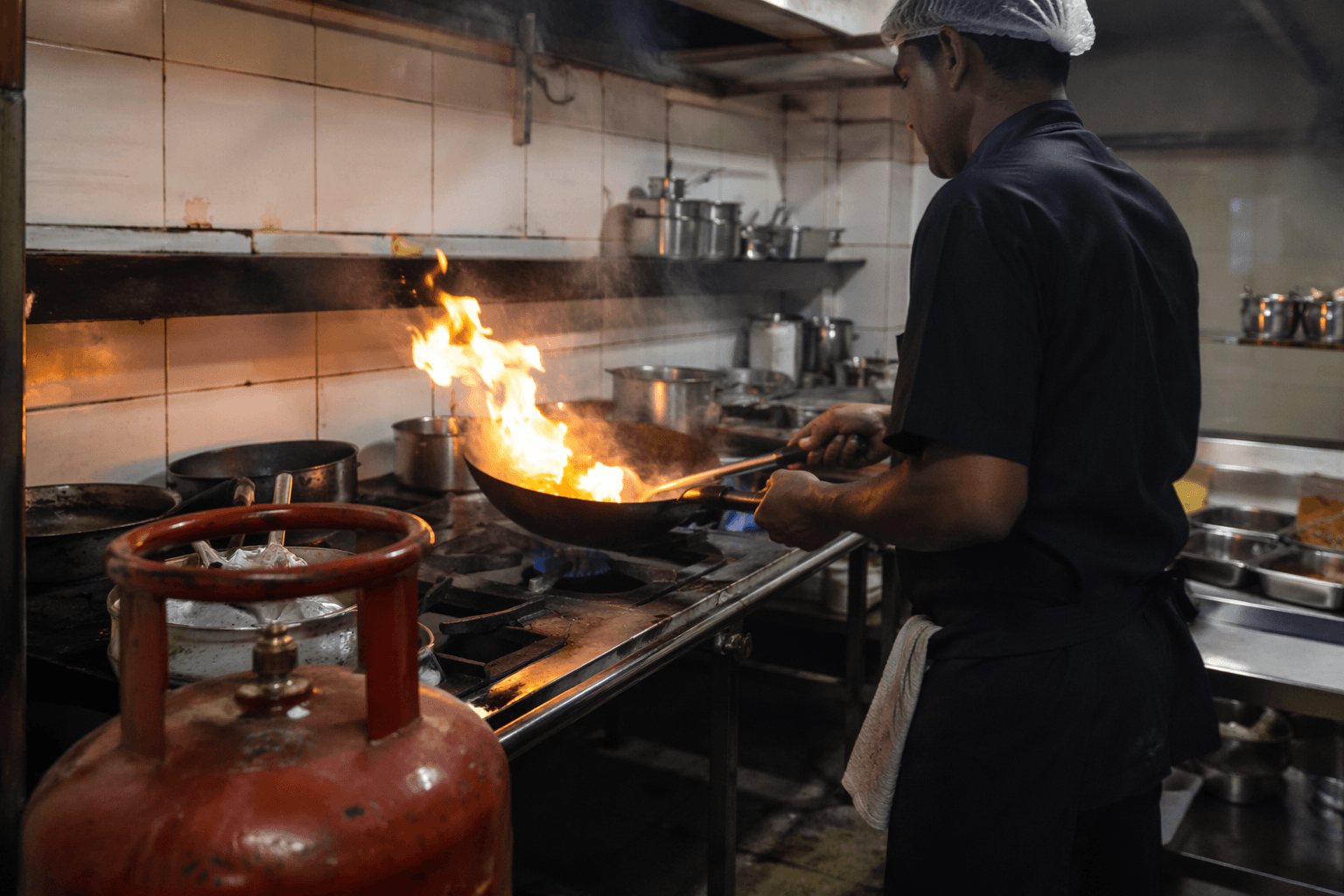
OSHA warns restaurant cooking stations pose major injury risks
Hot oil, wet floors, and rushed movement make the cooking line a top injury zone, especially for young workers learning the station on the fly.
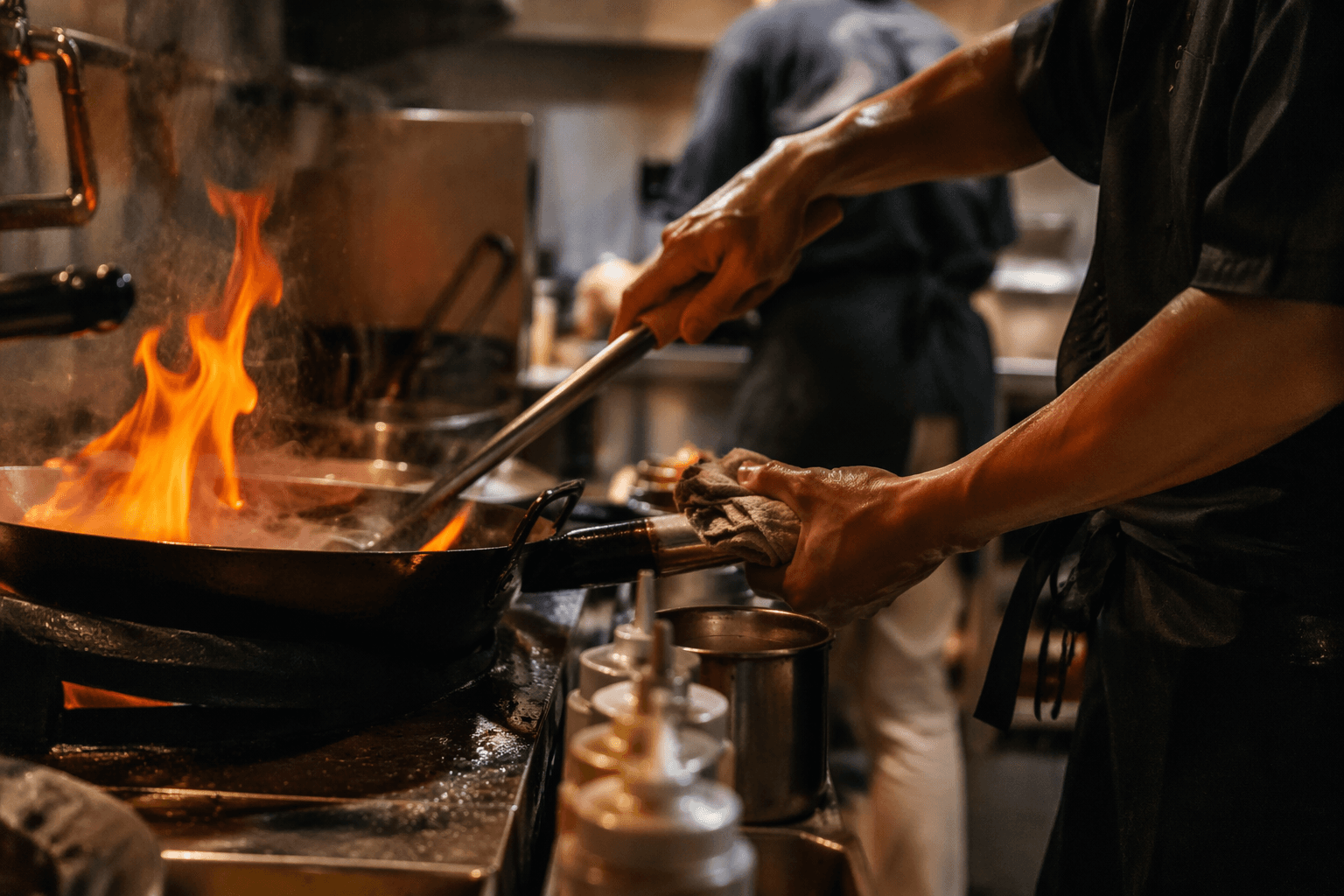
A slick floor, a pan handle turned the wrong way, fryer splatter, a careless reach across hot equipment, or a heavy load carried too quickly can injure a cook fast. OSHA flags burns, deep-fat fryers, electrical hazards, fire hazards, heat hazards, slips, trips, falls, and strains and sprains as the core risks in restaurant kitchens.
Why the cooking line is such a high-risk station
In restaurants, the cooking area is both a training ground and a danger zone. OSHA says restaurants and other eating and drinking businesses employ 11.6 million people in the United States, and nearly 30% of those workers are under 20. That makes this a young-worker issue as much as a general kitchen-safety issue. The basic problem is not one dramatic accident, but repeated exposure to heat, grease, movement, and tight spacing over an entire shift.
Station design matters as much as individual caution. When walkways are blocked, floors are wet, cords are worn, or equipment is not maintained, a normal service period becomes a string of avoidable hazards.
Burn prevention starts with fryer, stove, and steam habits
Burns remain one of the most serious kitchen injuries because the cooking station is built around heat. The Centers for Disease Control and Prevention has long identified work-related burns as a major occupational injury, and it has specifically noted that a substantial share occurs among restaurant workers, often adolescents in fast-food settings. In a CDC case report, a 20-year-old fast-food worker suffered second- and third-degree burns over 10% of her body after falling while cleaning above a deep fryer.
Scalds are especially dangerous in restaurants because hot liquids and steam can hit skin in an instant. Scald burns are one of the most common causes of burns in restaurants. Hot oil typically causes more severe injuries than hot water because it reaches higher temperatures and sticks to skin longer. That means managers need more than a warning sign near the fryer: they need clear habits around fryer safety, controlled movement around hot pans, and a hard rule against rushed reaches across active heat sources.
Practical prevention at the station level is simple but non-negotiable:
- Keep handles turned inward so pans are less likely to spill into walkways.
- Keep floors dry so a small slip does not become a burn.
- Keep hot containers and fryer traffic separated from crowded pass-through areas.
- Make sure workers know exactly which tasks are too risky for speed.
Cuts, slips, and strains are the everyday injuries
The U.S. Bureau of Labor Statistics reported 93,800 nonfatal injuries and illnesses in full-service restaurants in 2019, and about one-third of those cases required at least one day away from work. The incidence rate for days-away-from-work cases was 88.3 per 10,000 full-time workers, and 8,110 of those cases were cuts and lacerations.
Keep floors dry. Clean spills immediately. Wear the right footwear. Avoid blocked walkways. Do not force someone to carry a load that is too heavy for the pace and spacing of the station. OSHA’s hazard list includes strains and sprains for a reason: a line cook who is sprinting, twisting, and lifting at the same time is exposed even when knives and flame are not in the picture.
Electricity and grease need their own controls
Electrical hazards in kitchens often show up where water and power meet. OSHA identifies worn or damaged cords as a source of shock risk. Ground-fault circuit interrupters can help prevent serious injury or death when electricity and wetness coexist. Routine inspection is part of safety, not maintenance trivia.
For managers, the station-level fix is to treat cords, plugs, and equipment placement as a daily hazard check. Damaged equipment should not be left in service, and wet work areas should never be treated as normal around powered appliances. Equipment should be used correctly and maintained, because a crowded, improvised station can turn one fault into an injury chain.
Fire hazards belong in the same conversation. Grease, heat, and tight quarters leave little margin for error, especially when a young worker is still learning the pace of service. The safest stations are the ones where there is room to move, clear paths to pass hot items, and no need to dodge around clutter to do a routine task.
Young workers need training that matches the station
Young workers have the right to receive hazard information and training in a language and vocabulary they understand. That matters in restaurants because many first jobs happen on the line, in the dish area, or on prep, where speed and slang can hide a serious warning. Employers also have to follow federal and state youth-employment rules, and some state plans are more stringent than federal OSHA requirements.
A quick shadow shift is not enough. Training has to cover where the hot spots are, how to move through the kitchen, which tasks are off-limits, and when to slow down instead of pushing through the rush. Young workers are especially likely to underestimate hazards or confuse speed with competence, so managers need to make safety part of the station routine, not a one-time orientation slide.
OSHA’s eTools are advisory and do not create new legal obligations, but they are built to help employers create practical prevention programs for each workplace.
What safer kitchen management looks like
A safer cooking station is not defined by one piece of equipment. It is defined by habits: dry floors, clear walkways, working cords, proper footwear, controlled fryer use, and training that matches the worker’s experience.
This article was produced by Prism’s automated news system from verified source data, official records, and press releases, then run through automated quality and moderation checks before publishing. The system is built and supervised by the people who set the standards it runs under. Read our full AI policy.
Did this article answer your question?